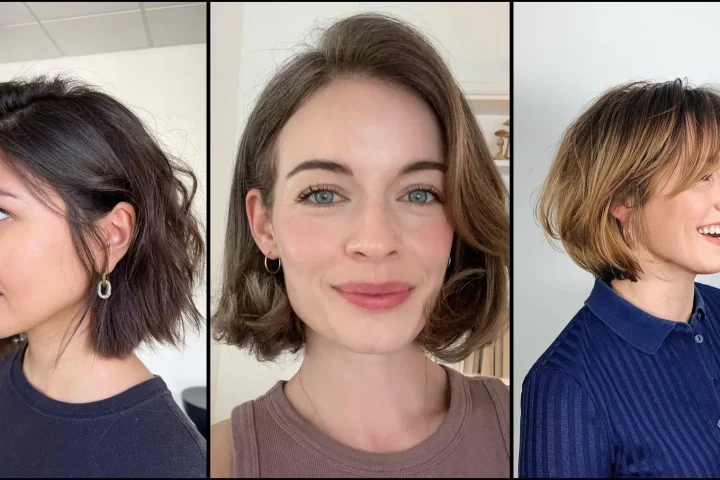
A pixie bob lives between two cuts. It keeps the short, tapered back of a pixie and adds enough length at the front and sides to read as a bob. The result is lighter than a bob and softer than a pixie, and it suits people who like short hair but are not ready for a full crop. Some versions lean toward the bob, with longer sides that tuck behind the ears. Others lean toward the pixie, with a close nape and a lifted crown. The name on the label matters less than that balance, and the photos below show both ends of it.
Look for the back of the cut first, because that is where the hybrid shows. A stacked back builds a rounded crown, while a softer taper keeps the nape light. Then look at the front. A long front piece changes the whole cut, and it gives you somewhere to tuck or sweep the hair. Pay attention to the fringe too, and to how the ends sit at the ears. A pixie bob should feel easy. If a photo looks like it needs constant fussing, it probably does, and it may not be the right reference for a normal week.
Decide which part of the hybrid you prefer
- A close nape and lifted crown emphasize the pixie side. Ask to see the back because a front photograph may hide that difference.
- Longer sides and a fuller perimeter feel closer to a bob. Check whether they reach behind your ears without needing a pin.
- A sweeping fringe changes the outline without requiring a longer back. Consider how it falls when you wear glasses or look down.
Plan the transition between lengths
Explain whether this is a destination cut or part of growing out a pixie. During a grow-out, the nape may need tidying while the crown catches up; cutting everything evenly can delay the shape you want. Ask which sections you should leave alone between appointments. Use your normal texture as the starting point before copying a highly polished blowout.
Finding your place between pixie and bob
Decide how much of each cut you want. If you lean toward the bob, keep the sides long enough to fall over the ears and ask for a fuller perimeter. The shape will feel like a short bob from the front, and only the back will show its pixie roots. If you lean toward the pixie, ask for a close nape and height at the crown. The cut will feel short and light, and the length at the front keeps it from looking severe. Neither choice is wrong. The wrong choice is the one that fights your hair and your week.
The undercut is worth a thought. It takes the hair short underneath at the nape, so the top looks longer and fuller by contrast. It keeps the neck cool, and it makes thick hair much easier to manage. The price is upkeep. An undercut grows out quickly, and it needs a tidy-up every few weeks to keep its edge. Without that, the shape softens and the line at the nape disappears. If you are not sure, ask for a tapered nape first. It gives you some of the lightness without the same commitment, and your stylist can go closer later.
Think about where the cut is going. A pixie bob is often a step on the way from a pixie to a bob, or the other way around. During a grow-out, keep the front a little longer while the back catches up, and tidy the nape between visits so the shape stays deliberate. Trims every six to eight weeks will keep the hybrid looking like a choice rather than a stage. If you want to stay at this length for a while, say so. The cut can be shaped to hold its balance for months.
1. Soft Layered Pixie Bob for Fine Hair
Feathery layers are cut just past the ears, with wispy pieces curving along the cheekbones and airy ends tapering at the nape. this look keeps a rounded outline with gentle lift at the crown. Fine, thin strands gain body from the short layers, and a volumizing mousse at the roots before blow-drying keeps the top full.

2. Textured Pixie Bob with Curtain Bangs
Center-parted fringe falls as two wispy curtains on either side of the forehead, framing the eyes. Below, this look reaches ear length with feathery, choppy layers and a lived-in finish.

3. Asymmetrical Pixie Bob with Face-Framing Layers
One side is cut short and close to the nape, while the other sweeps into a long, silky piece that falls across the cheek. Feathery layers add movement through this look from crown to ends.

4. Voluminous Pixie Bob for Thick Hair
Layering at the crown removes bulk while length stays around the face, falling in a rounded shape just below the ears. This look has piecey, face-framing ends and lift on top.

5. Curly Pixie Bob with Defined Ringlets
Tight ringlets bounce through a rounded, ear-length shape, with wispy curls pulled forward around the temples. Layered volume keeps this look full on top rather than wide at the sides.

6. Long Pixie Bob with Wispy Side Pieces
Silky, feathery layers reach chin length at the front, with wispy side pieces running alongside the cheekbones. At the back, this look tapers into a clean nape.

7. Pixie Bob with Soft Side-Swept Bangs
Fringe sweeps across the forehead in a smooth arc, while feathery layers fill out the ear-length bob below. This look draws attention to the eyes and cheekbones with its diagonal line.

8. Undercut Pixie Bob with Edgy Nape Detail
Clipped close at the nape, the undercut contrasts with longer, swishy layers on top and feathery pieces falling forward around the face. This look stays light at the back and full above.

9. Shaggy Choppy Pixie Bob with Feathery Ends
Choppy layers are cut at varied lengths through this ear-length style, with airy ends that flip and separate and curtain pieces at the temples. This look has a full, tousled outline. Medium to thick straight or wavy hair carries it, and a texture spray scrunched into dry hair keeps the ends piecey.

10. Blonde Pixie Bob with Airy Highlighted Layers
Warm honey and icy platinum tones run through flowing, layered lengths, with wispy ends and face-framing pieces brightening the face. Airy volume through this look shows off the dimensional color. Ask for finer babylights at the hairline for a softer grow-out, and use purple shampoo weekly to keep the platinum cool.

11. Pixie Bob for Round Face Clean Shape
Longer face-framing layers sit at the sides, wispy pieces add lift at the crown, and the nape is tapered clean. This look uses that vertical height and side length to elongate the jawline. Ask for the side pieces to fall below the cheekbones, and blow-dry the crown upward with a vent brush.

12. Sleek Straight Silky Pixie Bob Korean Style
Razor-straight, silky strands are cut to a blunt ear-length line, with face-framing pieces falling in a smooth, shiny curtain against the cheeks. This look finishes with a fine, feathered nape. Straight, thick hair holds the clean line best, and a C-curl iron on the front pieces adds a slight inward bend.

13. 90s Layered Pixie Bob Voluminous Throwback
Feathery layers through the crown flip and fan outward, while face-framing pieces curl under and wispy ends finish the ear-length shape. This look builds height with a retro blowout. Use a medium round brush and root-lift spray, then set the crown with velcro rollers for ten minutes on medium to thick hair.

14. Gray Silver Pixie Bob with Textured Layers
Cool platinum and warm pewter tones blend in silky silver layers, with airy texture at the crown and tapered sides. Face-framing waves curve around the cheeks on this look.

15. Wavy Tousled Pixie Bob Natural Movement
Loose waves run through ear-length layers, with wispy pieces curling outward around the face and feathery ends moving in different directions. This look has an airy, undone outline.

16. Pixie Bob with Micro Fringe Effortless Style
Short, straight bangs are cut just above the brows in a clean line across the forehead. Silky layers fill out the ear-length bob behind the fringe on this look.

17. Red Copper Pixie Bob with Flowing Layers
Warm auburn and burnt copper tones run through flowing, face-framing waves, with airy layers at the crown and wispy ends at ear length. This look stays vivid against fair and olive skin.

18. Stacked Pixie Bob with Defined Clean Structure
Tightly stacked layers at the back build a rounded crown, while longer front pieces fall in feathery sections toward the jawline. this look keeps a short, crisp nape. Straight, medium to thick hair holds the stacking, and a round brush under the back while blow-drying keeps the lift.

19. Feathery Bixie Cut Airy Wispy Crown Layers
Ultra-light crown layers give this pixie-bob hybrid an airy, almost weightless outline, with wispy face-framing pieces sweeping forward. This look finishes with piecey ends around the ears. Fine to medium straight hair takes the feathering well, and a light mousse at the roots lifts the crown.

20. Side-Part Pixie Bob Polished Lived-In Look
A deep side part sweeps silky layers to one side, with face-framing pieces falling in a wispy arc across the forehead. Feathery ends graze the ears on this look.

For another perspective on length, texture and shape, compare bixie haircuts for 2026 with long bob haircuts before choosing a reference to take to your stylist.
Styling and upkeep
A pixie bob is styled mostly with the fingers. Warm a little styling cream in your palms and run it through the top, lifting the crown as you go. A matte paste gives the layers separation and a little grit. A light cream keeps the finish soft. Dry the front pieces with your fingers, sweeping them where you want them to fall. A round brush is useful at the crown if you want more height, and a flat iron can smooth the front pieces. Keep the heat low. Short hair shows damage quickly, and the ends are close to your face.
The cut needs a trim every six to eight weeks to keep its balance. The nape grows first, and the crown starts to lose its shape soon after. Wait too long and the hybrid tips toward a shaggy bob, which may be fine if that is where you are heading. The common mistake is over-texturising the top. A pixie bob needs weight to hold its outline, and too much thinning makes the ends look wispy and the crown fall flat. Ask your stylist to keep the perimeter full, and to texture only where the hair feels heavy.
Frequently asked questions
What is the difference between a pixie bob and a bixie?
There is no clear difference. Bixie is just a shorter name for a pixie bob, and the two words are used for the same cut. Both describe a hybrid with a short back and bob-length front pieces. The name on the label matters less than the balance between the two sides of the cut.
Is a pixie bob good for thick hair?
Yes, and it is often a better choice than a full bob for thick hair. The tapered back and the crown layers take out weight where it matters most. Ask your stylist to thin the bulk at the back rather than at the front, so the shape stays full around the face.
How long does a pixie bob take to grow out?
Hair grows about a centimetre a month, so a pixie bob takes many months to reach a lob. The shape changes as it grows, and regular trims keep it looking deliberate. Keep the front a little longer while the back catches up, and tidy the nape between visits.
Can I wear a pixie bob if my hair is fine?
Yes. The stacked back and the tapered nape give fine hair a fuller shape, and the layers at the crown add height. Keep the ends full rather than heavily textured, because wispy ends make fine hair look thinner. A little styling cream at the roots helps the crown hold its lift.
Should I get an undercut with a pixie bob?
An undercut suits thick hair and anyone who wants the neck to feel light. It also needs the most upkeep, with a tidy-up every few weeks. If you are unsure, start with a tapered nape. It gives some of the lightness without the same commitment, and it grows out more gently.
A pixie bob works because it is two cuts at once. The back is short and easy, and the front is long enough to style, tuck and sweep. Decide which side of the hybrid you want to lean toward, think about the undercut honestly, and agree on the trim schedule before you sit down. Then save two or three photos from this article that match your hair, and show them to your stylist. Point to the nape, the crown and the front pieces you like. A good pixie bob is not about the name. It is about a balance that suits you.