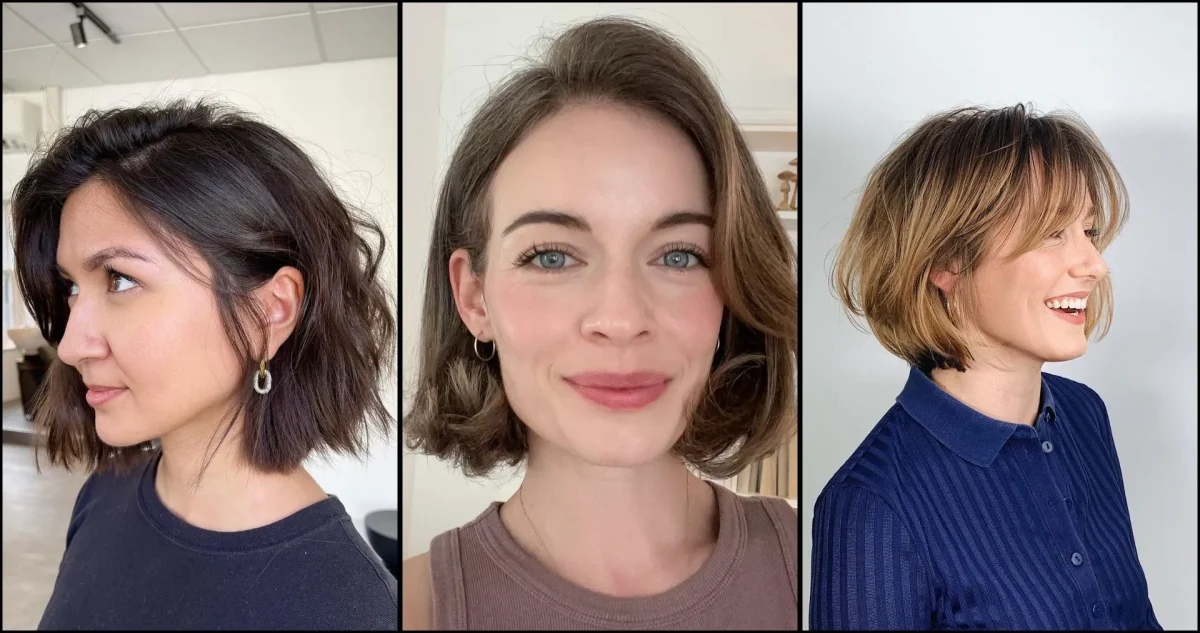
The Italian bob is a full, rounded bob with plush ends and movement at the roots. It usually falls between the jaw and the collarbone, with enough weight around the bottom to look soft and expensive rather than wispy. A good version still has shape when you skip the salon blowout, and it works on fine, thick, wavy and curly hair — the same foundation changes shape with the fringe, the parting and the texture. The trick is the perimeter: a soft-blunt line that stays connected, minimal visible layers, and movement through the interior that keeps the ends full rather than thinned.
The difference from a French bob is the weight: an Italian bob keeps a fuller, longer perimeter with rounded, bouncy ends and root lift, while a French bob is often shorter, around the cheekbone or jaw, and frequently paired with wispy fringe. The twenty-six looks below show how the same foundation changes with fringe, parting, colour, texture and length. As you look through them, notice the length, the ends and the part — those three details decide whether the cut reads as Italian. Bring a reference in daylight, not a styled salon finish, and tell the stylist what you like about the ends, the part and the fringe.
Italian bob vs. French bob: what changes?
An Italian bob generally keeps a fuller, longer perimeter with rounded, bouncy ends and root lift. A French bob is often shorter, around the cheekbone or jaw, and frequently paired with wispy fringe or a more undone finish. Neither label has one universal salon definition. Bring photos showing the front, side and back, and describe the finished length when dry.
What to tell your stylist
Ask for a soft-blunt jaw-to-collarbone outline, minimal visible layers and movement through the interior. Explain how much time you normally spend styling. Fine hair may need more perimeter weight; dense hair can need discreet internal debulking. Curly hair should be assessed dry for shrinkage. Decide on bangs separately, because fringe changes the maintenance schedule.
How to choose an Italian bob that holds its shape
Start with the length and the perimeter. An Italian bob sits between the jaw and the collarbone, with a soft-blunt line that stays connected and minimal visible layers. The bottom should look plush rather than wispy, so the stylist keeps weight at the ends and shapes the interior instead of thinning the edge. If the perimeter is cut too short or too thin, the rounded shape disappears and the cut reads as a French bob or a blunt lob. Ask where the bottom line will sit when your hair is dry, because a bob that looks right wet can dry an inch shorter.
Then choose the fringe and the part by your face. A long curtain bang or a sweeping side fringe suits a round face because it opens up the cheeks, while a full fringe gives a long face more width and a wispy eyebrow bang softens a square jaw. For fine hair, keep the weight at the perimeter and ask for restrained internal shaping rather than heavy thinning, so the ends stay full. For thick hair, the stylist can remove weight from the inside without shortening the outline, and for curls the cut has to be shaped to its dry shape, because trimming curls as though they hang straight will dry shorter than expected.
Finally, think about the grow-out and the upkeep. A full bob may need a tidy-up every six to ten weeks, depending on growth and the outline you prefer, and the shape starts to grow out at the ends first — the rounded line softens and the layers show more. Between appointments, the version that survives is the one shaped to your natural texture, not the one that depends on a round-brush blowout. Bring one reference you like and another showing a feature you would rather avoid, and ask the stylist to show you where the shortest layers will sit.
1. Glossy espresso Italian bob with a deep side part

View Instagram post by @jesseditshair
Ask for a full, softly blunt perimeter that sits around the jaw or upper neck. Blow-dry the roots away from the deep part, then turn the ends inward with a large round brush. Espresso color shows the shine and curved outline clearly. Fine hair can keep the edge solid; thick hair may need hidden internal weight removal so the bottom does not flare.
2. Collarbone-grazing Italian bob with turned-under ends

View Instagram post by @hairmechanicsltd
This longer variation reaches the top of the collarbone while keeping a substantial rounded edge. It is useful if you want to try the Italian silhouette without committing to a chin-length cut. Dry the ends under in broad sections and keep the top smooth. Too many short layers will weaken the full outline that makes this different from a layered lob.
3. Bouncy Italian bob for fine hair

View Instagram post by @haircollectiontokyosubiaco
Keep most of the weight at the perimeter and ask for restrained internal shaping rather than heavy texturizing. Apply lightweight mousse at the roots, lift sections with a round brush and cool them before releasing. The resulting bend gives fine hair more apparent fullness without teasing. A very oily finishing serum can flatten the roots, so use it only on the ends.
4. Softly debulked Italian bob for thick hair

View Instagram post by @yourfriendlibby
Thick hair can carry the plush Italian bob shape, but a solid edge may become triangular. Ask your stylist to remove weight inside the cut while preserving the visible bottom line. Blow-dry in medium sections so the interior dries completely. The ends should turn under gently, not stack into a heavy shelf at the neck.
5. Naturally wavy Italian bob with a full edge

View Instagram post by @diamondhairandbeauty_official
Keep the length near the jaw or neck and preserve enough weight to prevent the waves from separating into wispy ends. Scrunch a light cream through damp hair and let it settle before touching it. A diffuser on low airflow can add root lift. Ask for the final shape to be checked dry, since wavy hair can spring up after cutting.
6. Curly Italian bob cut to its dry shape

View Instagram post by @dontforgetyoureprecious
An Italian bob on curls needs a full, rounded outline rather than a straight-haired blowout copied exactly. Have your stylist assess shrinkage and the dry perimeter before cutting. Keep layers long enough to maintain weight at the ends. Define curls in small sections with a suitable leave-in and gel, then diffuse gently or air-dry without disturbing the clumps.
7. Italian bob with long curtain bangs

View Instagram post by @waxxamsterdam
Curtain bangs add movement around the cheekbones while the bob remains full through the ends. Ask for the fringe to blend into the front without creating short shag layers at the crown. Blow-dry the bangs away from the face with a round brush, then turn the bob ends under. The fringe needs more frequent trimming than the main length.
8. Italian bob with a sweeping side fringe

View Instagram post by @melburmesterhair
A long side fringe can sit just below the eyebrow and flow into the front of a jaw-length bob. Keep the opposite side tucked behind the ear for an asymmetric finish. Direct the fringe across the forehead while drying, then lift the roots slightly. This works particularly well when a straight center part makes your hair fall flat.
9. Center-part Italian bob with rounded ends

View Instagram post by @luxhairstudiosaugerties
A clean center part makes the two curved sides of the cut visible. Keep the bottom line soft-blunt and finish each side with the same inward bend. Use a paddle brush at the crown and a large round brush only on the last few inches. A center part is easiest when the natural growth pattern allows it; forcing a cowlick flat can take more effort.
10. Jaw-length Italian bob with tucked sides

View Instagram post by @schatziehair
Cut the perimeter around the jaw and leave enough length in front to tuck behind the ears. A small amount of root lift keeps the style from looking like a flat one-length bob. Tucking one side reveals the rounded volume on the other. This version suits someone who wants a polished silhouette that can be restyled quickly.
11. Honey-brown Italian bob with soft movement

View Instagram post by @summerosehair
Warm brown highlights can emphasize the bend through the ends without changing the structure of the haircut. Ask for a full lower edge and subtle internal movement. Use a large brush to create one broad curve rather than many small curls. The cut should still look rounded when the hair is straight, not rely entirely on color for definition.
12. Black Italian bob with a smooth sculpted curve

View Instagram post by @plantiful_gem_sapphire
A glossy black finish makes the shape of the bob easy to read. Keep the perimeter strong, and ask the stylist to refine any bulk near the jaw so the curve sits close to the neck. A light smoothing cream can control surface frizz. Avoid overusing a flat iron, which may straighten away the soft rounded end.
13. Italian bob with wispy eyebrow bangs

View Instagram post by @jinmurano
A light fringe can soften the front while leaving the bob itself thick and full. Ask for bangs that separate naturally instead of a dense blunt curtain. The rest of the haircut should remain jaw-to-neck length with limited layers. Dry the fringe first, then work on the ends. If your hair has a strong front cowlick, discuss the maintenance before cutting bangs.
14. Italian bob with long face-framing pieces

View Instagram post by @carli__f
Keep the front pieces slightly longer than the back, but avoid a steep angled-bob line. The subtle length difference frames the jaw while the bottom remains rounded. Blow-dry the front sections away from the face, then roll the tips inward. This is a practical compromise for anyone who likes a fuller bob but wants more room around the cheeks.
15. Italian bob with a gentle flipped finish

View Instagram post by @sabrinaduparcqhairartistry
Use the same full perimeter as a classic Italian bob, then turn just the last inch outward for a playful finish. A large round brush or a brief pass with a styling iron can create the flip. Keep the crown lifted so the result feels bouncy. This is a styling variation rather than a different structural haircut, useful for changing the look between trims.
16. Italian bob with soft root lift and no bangs

View Instagram post by @jordan.the.stylist
Ask for a softly blunt line at the jaw or upper neck and skip fringe entirely. Work volumizing mousse into damp roots and dry against your usual part before settling the hair back. The extra lift creates the airy Italian shape without short layers. This version is easy to tuck behind the ears and suits a low-fuss daily routine.
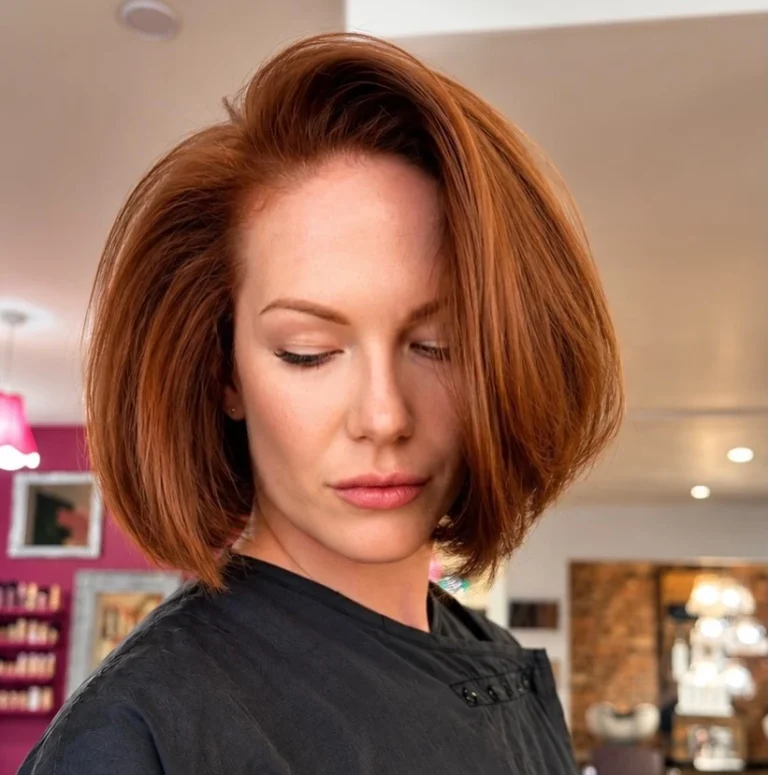
17. Copper Italian bob with curved ends
View Instagram post by @kaysmallwoodhair_makeup
A muted copper shade makes the rounded ends stand out, especially when the hair is blow-dried smooth. Preserve the weight at the lower edge so the cut stays recognizably Italian. Use a heat protectant before styling and keep the iron temperature appropriate for your hair. Color upkeep varies, so ask a colorist about fading before committing.
18. Italian bob for a round face with side volume

View Instagram post by @playhaussalon
Keep the front just below the jaw if you prefer a slightly elongated outline, and use a soft side part for movement. The full ends can still curve inward. Face shape does not dictate a haircut, but changing the part and length can alter its proportions. Bring a side-view reference to your stylist so the volume sits where you like it.
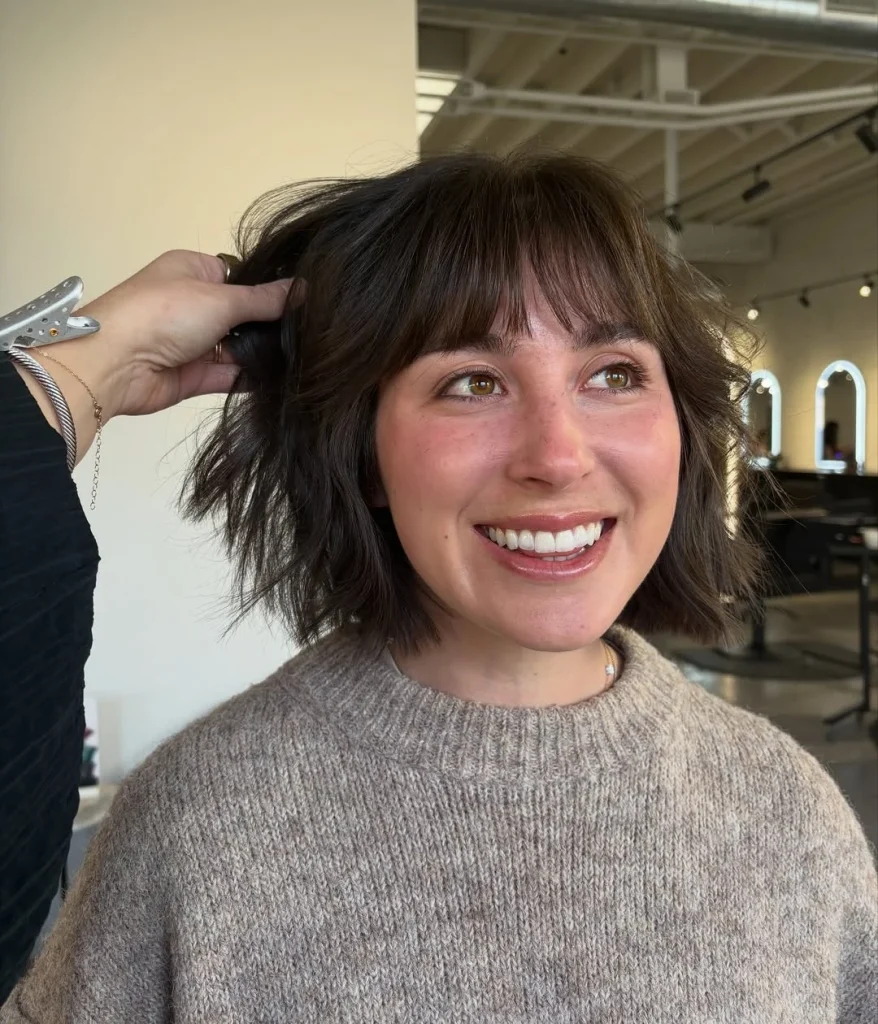
19. Italian bob for an oval face with full bangs
View Instagram post by @jordandoinghair
An oval face can carry a stronger fringe without needing to change the bob’s rounded base. Keep the bangs at a comfortable brow length and the rest near the jaw. A full fringe adds more styling work on humid mornings, so ask for a shape that works with your hair’s natural fall. The ends should remain soft, not sharply geometric.
20. Italian bob for a square jaw with soft corners

View Instagram post by @parrucchiere_fuoriditesta
A curved front section can sit just below the jaw and move gently inward. Ask the stylist to soften the corners of the perimeter while keeping enough weight for bounce. A side part or long curtain fringe can add movement if you prefer it. Avoid excessive thinning at the ends; the Italian bob depends on a substantial outline.
21. Silver Italian bob with a plush perimeter

View Instagram post by @curlyjacques
Natural silver hair can look striking with a full jaw-length bob and soft root volume. Discuss texture and density rather than assuming gray hair needs the same cut for everyone. A lightweight conditioner can help if the ends feel dry, while too much oil may flatten fine silver strands. The softly rounded edge keeps the cut intentional without elaborate styling.
22. Italian bob with a low side part and ear tuck

View Instagram post by @taya.hair
Move the part just off-center and tuck the lighter side behind the ear. Blow-dry the fuller side with a round brush for a smooth, lifted curve. This asymmetry gives the haircut a different mood without changing its shape. A small pin can help if the tucked side slips out, but avoid pulling tightly against the scalp.
23. Neck-length Italian bob with a hidden undercurve

View Instagram post by @alexisaenriquezz
Ask for the bottom edge to hug the neck with a subtle inward bevel, while the outer hair remains full. This is a useful option when a jaw-length bob feels too short. The undercurve can be shaped during the blow-dry with a large brush. Keep the nape neat; a very heavy stacked back changes the silhouette into a graduated bob.
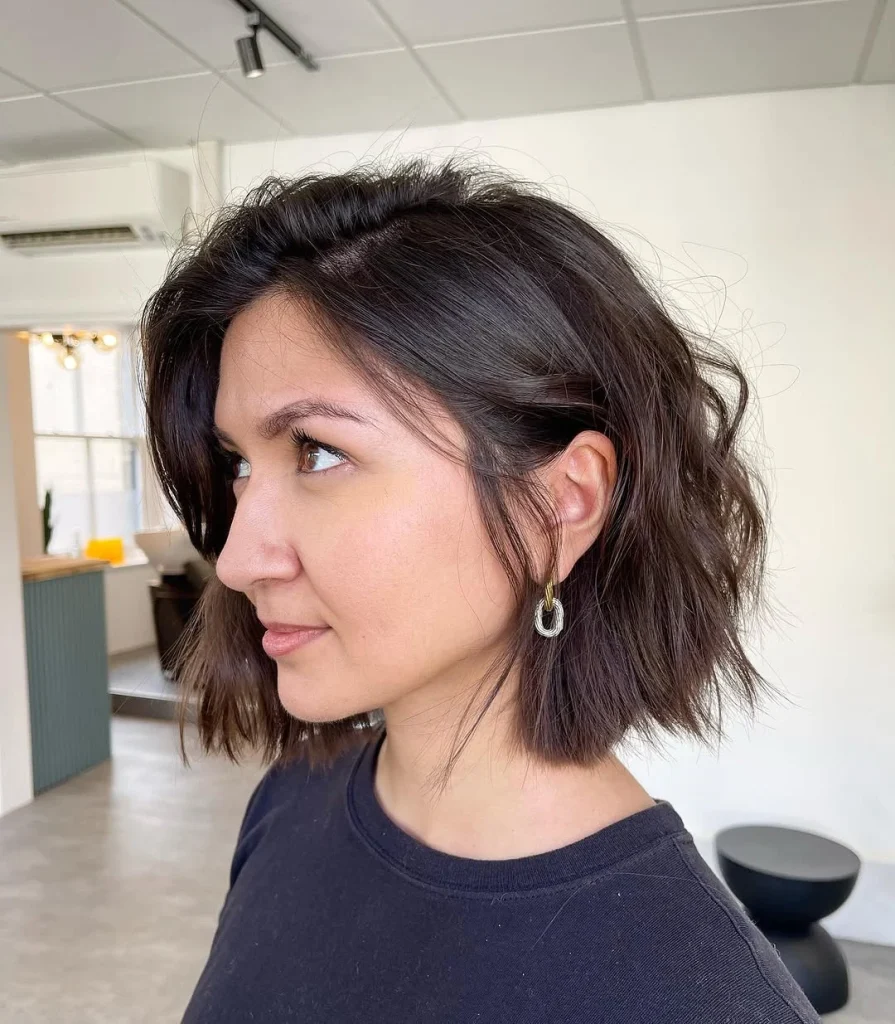
24. Italian bob with relaxed 1990s volume
View Instagram post by @laurarobertsonhair
Create a broad, airy bend through the ends and lift at the crown for a relaxed 1990s-inspired finish. Use large rollers or a round brush on almost-dry hair, then allow the sections to cool before combing through. The shape should move rather than form tight curls. A flexible spray helps hold the volume without a rigid shell.
25. Italian bob with soft balayage through the ends

View Instagram post by @jessicadraicchio
Subtle painted highlights can emphasize the bob’s curve, especially around the front and lower edge. Keep the cut itself full and minimally layered so the color does not carry the entire design. Ask for blended tones that grow out softly. Finish with a rounded blow-dry and a small amount of serum on the tips.
26. Italian bob with defined natural coils
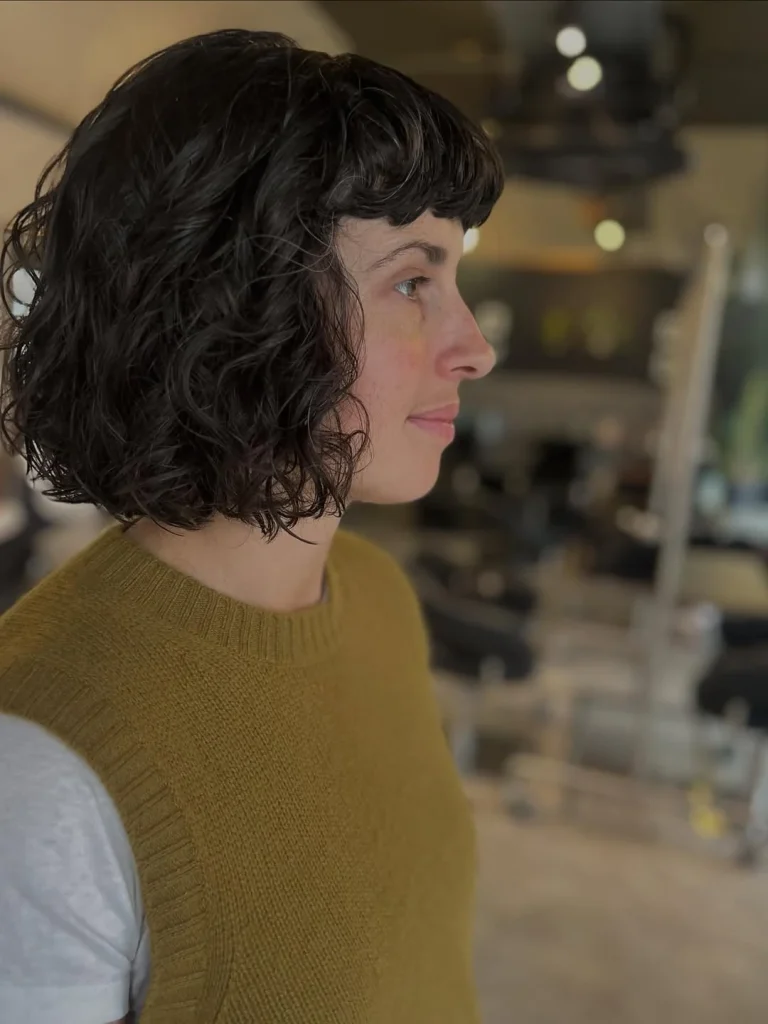
View Instagram post by @sarahdoeshair.glasgow
For tighter coils, the Italian influence comes from the rounded, substantial perimeter and balanced volume rather than a straightened undercurve. Ask for the silhouette to be assessed in its natural dry state, with enough length for shrinkage. Work in sections with a moisturizing styler and let the coils set. A shape-up should respect the natural curl pattern instead of forcing a sharp blunt line.
How to style the Italian bob at home
For a rounded blowout
Start with damp, detangled hair and a heat protectant suitable for your hair. Apply a small amount of mousse near the roots if you want lift. Rough-dry until mostly dry, then work in sections with a large round brush. Lift the roots and roll only the last few inches under. Let each section cool before releasing it, or use large rollers while it cools. Finish by separating the hair gently with your fingers.
For waves, curls and coils
Keep the natural texture visible. Work a light styling cream or gel through damp sections and define the curls without pulling them straight. Air-dry or diffuse at a comfortable temperature and low airflow. The rounded perimeter matters more than a perfect blowout. Ask your stylist to assess the cut after the hair has dried and settled.
When the shape starts to grow out
A full bob may need a tidy-up every six to ten weeks, depending on growth and the outline you prefer. Fringe usually needs attention sooner. If you want to grow toward a lob, preserve the front length and refine the back rather than cutting the front repeatedly. Compare long bob haircuts for a longer direction.
Frequently asked questions
Is an Italian bob good for fine hair?
It can be. A solid lower edge and restrained layering help preserve visible fullness. Root lift adds movement, but avoid heavy oils that weigh the hair down.
Can you wear an Italian bob without heat styling?
Yes, particularly with naturally wavy or curly hair. The result will look softer than a round-brush blowout. Ask for a cut that suits your natural dry shape.
Does an Italian bob need bangs?
No. Curtain bangs, a side fringe and a no-bangs version can all work. The fuller perimeter and rounded movement define the style more than the fringe.
How long does an Italian bob take to grow out?
Plan on a tidy-up every six to ten weeks, depending on how fast your hair grows and how crisp you want the outline to stay. The rounded line softens first as the ends grow out, and the layers become more visible with length. If you want to grow it longer, the cut moves toward a long bob naturally, so you can let it grow rather than reshaping it each visit.
Can an Italian bob suit a round or square face?
Yes. The fuller perimeter works for round, square and oval faces alike; what changes is the fringe and the part. A curtain bang or a side sweep lengthens a round face, a wispy fringe softens a square jaw, and an oval face can take a full fringe without changing the bob’s rounded base. Ask your stylist which fringe suits your face, and keep the length near the jaw or neck rather than cutting the whole cut shorter.
Related bob haircuts
Compare the sharper edge of blunt bob haircuts, the shorter French bob, and the more outward-facing flipped bob before your next appointment. The best reference shows the length and volume you want when your hair is dry.
Styling and upkeep
The Italian bob is styled around the ends, not the crown. Start with damp, detangled hair and a heat protectant, then apply a small amount of volumizing mousse at the roots and blow-dry with a round brush, turning the ends under for the rounded shape. A little texture spray at the crown gives the style its lift without making the ends stiff, and a flexible-hold hairspray finishes it. If your hair is fine, a root-lifting spray and a quick diffuse give the perimeter the height it needs; if it is curly, a curl cream and a diffuser let the rounded ends form their own shape.
A tidy-up every six to ten weeks keeps the rounded line in place, or sooner if the ends start to lose their fullness. Between appointments, wash with a light shampoo and a conditioner that does not weigh the hair down, and avoid heavy oils at the roots. The easiest test is the morning one: if the bob still shows a rounded outline after air-drying, it is working. If the shape starts to outgrow its line, let it grow toward a long bob — the shape you already have gives it a good starting point.
The right Italian bob is the one that holds its rounded shape with your texture and your mornings: a plush perimeter, a fringe that suits your face, ends that turn under without a fight. The twenty-six looks above cover fine and thick hair, waves and coils, round and square faces, so there is a version for every texture and every face. Before your appointment, save two or three photos you like and take them to your stylist, along with a note of what you want from the length, the ends and the part — that is the conversation that turns a name into a cut that works.


