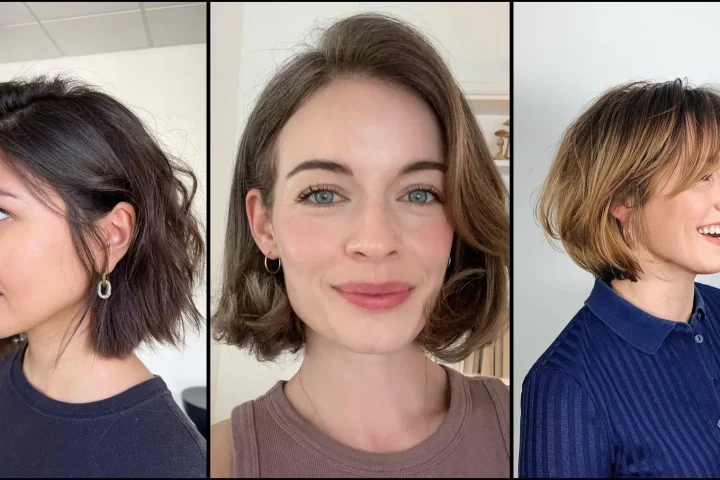
Face-framing layers are the part of a long haircut that everyone actually sees. The back can stay long and full while the pieces beside the face do the work, softening the outline and adding movement. The 29 styles below are all built on that idea, but they are not the same cut: some start high at the cheekbones with a curtain-bang effect, others begin at the jaw or collarbone and blend quietly into the length.
The starting point is the detail that matters most. Short pieces that begin at the cheekbones make a strong frame, but they can slip out of a ponytail and need a little styling each morning. Pieces that start at the jaw or below are easier to live with: they stay in tied styles and grow out quietly, while still giving the front some shape. Look at how wide the section is in each photo, too. A narrow section keeps the sides full, while a wide one takes more weight out of the front.
Your parting changes how the layers sit. A centre part splits the frame evenly on both sides, while a side part pushes more length across the forehead and can soften one side of the face. If your hair is curly, judge the shortest pieces dry, since they spring up higher than they look when wet. The styles worth saving are the ones where the front pieces work with your natural texture.
Pick a starting point you can live with
- Cheek-level pieces make a visible frame but may escape ponytails. Longer pieces near the jaw or collarbone are easier to incorporate into tied styles.
- A narrow face frame keeps more density through the sides. A broad section creates a stronger layered effect and removes more weight from the front.
- Compare both your usual part and a center part. The same cut can distribute its shorter pieces differently when the part moves.
Explain the movement, not just the photograph
Show where you want the front to bend and ask whether that movement comes from the cut, a blowout or both. If your hair curls, judge the shortest pieces in their dry shape. Ask for a demonstration of the front section you will style at home. The rest of your hair does not need the same amount of layering as the face frame.
How to choose your face-framing layers
The starting point is the decision that shapes everything else. Pieces that begin at the cheekbones make the strongest frame: they open up the face, they read as curtain bangs when the hair is parted in the middle, and they are the first thing anyone notices. They need the most care, since short pieces slip out of ponytails and need a little styling each morning. Jaw-length pieces are the easiest middle ground: they still frame the face, they stay in tied styles, and they grow out without making the front look uneven. Collarbone pieces are the quietest option, adding movement to long hair without changing the outline much.
Texture and density decide how wide the section should be. A narrow section keeps the sides full, which suits fine hair and anyone who wants subtle layers. A wide section takes more weight out of the front and creates a stronger layered look, which suits thick hair that would otherwise feel heavy. Straight hair shows the line of each layer clearly, so ask for softened ends rather than steps. Wavy hair picks up its wave from the shortest pieces down, and curly hair should be cut with its dry shape in mind, since the shortest pieces spring up and sit higher than they look when wet.
Face shape is the last piece, and it is simpler than it looks. If your face is round, layers starting at the jaw or below usually suit better than very short cheekbone pieces, which can add unwanted width. If your face is long, cheekbone pieces add width at the right place and balance the length. Either way, ask your stylist to show you how the front pieces will sit with your usual part and how the cut will grow out. A trim every eight to ten weeks keeps the shortest pieces in shape without losing length at the back.
1. Soft Curtain Bangs With Long Layers
Chest-length hair falls in wispy layers that fan outward, with honey-blonde tones running through a full blowout finish. Center-parted curtain bangs sweep toward the cheekbones and frame the eyes.

2. Silky Straight Hair Face Framing Layers
Smooth front layers fall at chin to jaw level, framing the face in two silky panels around a deep side part. Behind them, glossy layers continue to the mid-back. This look works on fine to thick straight hair, and a paddle brush with a light serum keeps the panels smooth and flat.

3. Voluminous Blowout With Face Framing Bangs
Wispy bangs curve away from the forehead, and face-framing layers fall in swishy waves past the shoulders in a warm caramel blonde. Volume starts at the roots and carries through to feathered ends. This look needs root-lift mousse and a large round brush, and velcro rollers set at the crown keep the lift going.

4. Feathery 90s Layers With Face Framing
Feathered layers start just below the cheekbones and flip outward, with honey-blonde highlights through chest-length hair. Longer layers at the back move with every turn of the head.

5. Flowing Honey Blonde Extra Long Layers
Waist-grazing honey blonde hair carries face-framing layers cut to the collarbone, draping over the shoulders in wispy curtains. Below them, the length stays full and straight with light, feathered ends. The long ends are more noticeable when they become rough or uneven. Ask your stylist how often to trim based on their condition; a conditioning treatment may improve feel, but it cannot permanently repair split ends.

6. Textured Butterfly Cut Face Framing
Heavy face-framing layers sit at chin level, while the top section builds airy volume above a warm brunette base. Lower layers fan outward in feathery waves with sun-lightened ends.

7. Airy Balayage Layers With Side Part
Warm caramel and chocolate balayage runs through long hair from a deep side part. Cheekbone-length front layers fall in feathery pieces along the jaw, and the rest cascades in flowing layers below the bust.

8. Lived-In Dark Brown Curtain Bang Layers
Deep espresso brown is parted at the center, with curtain bangs sweeping in toward the cheeks. Long, airy layers begin below the chin and fall in wispy waves to the mid-back. This look needs little daily styling; a texture spray scrunched into dry lengths keeps the undone finish.

9. Wispy Ash Blonde Curtain Bangs Long Hair
Light ash blonde hair carries ultra-wispy curtain bangs that float above the eyebrows and taper into long side layers. The remaining length is straight and glossy to the bra strap. This look needs a purple or blue shampoo weekly to keep the ash tone cool, and a flat brush keeps the bangs airy.

10. Clean Middle Part Face Framing Layers
Straight, glossy hair is split by a sharp middle part, with face-framing layers falling evenly to the chin on both sides. Behind them, silky lengths continue to the mid-back with a mirror shine.

11. Silky Jet Black Hair Face Framing Layers
Jet-black layers start right at the chin and curve along the cheekbones in sleek, high-gloss panels. Straight, full lengths fall to the waist in one heavy curtain.

12. Extra Long Cascading Face Framing Layers
Warm chestnut brown reaches the waist, with very long face-framing layers cut to the collarbone. Wispy front pieces drape over the shoulders, and the rest flows in a full curtain.

13. Effortless Wavy Layers Face Framing
Wavy hair with a beachy finish picks up the wave pattern from the cheekbones downward, with caramel highlights scattered through the lengths. Face-framing layers bend into loose spirals around the face.

14. Soft Copper Red Hair Face Framing
Rich copper red falls in face-framing layers at jaw length, fanning outward in wispy arcs around the cheeks. Longer lengths cascade below the shoulders in full, bouncy waves from a round-brush blowout.

15. Face Framing Layers For Round Faces
Layers start just below the cheekbones and fall in straight, silky lines, keeping the overall length at the mid-back. Vertical movement through the front draws the eye downward and slims the cheeks.

16. Disconnected Face Framing Long Layers
Front pieces are cut noticeably shorter at chin length in feathery curtains, while the body flows long to the lower back in warm brunette. A clear gap between the short front and long back creates the disconnect.

17. Feathery Face Framing Layers Fine Hair
Fine, light warm blonde hair carries feathery layers cut to the collarbone, adding fullness around the cheekbones. Airy lengths behind them keep a blunt perimeter so the ends stay thick. This look benefit from a volumizing mousse at the roots and a medium round brush during blow-drying.

18. Voluminous Brunette Layers No Bangs
Dark chocolate brunette is worn without bangs, with face-framing layers starting at jaw length in smooth panels. Underneath, the rest of the hair is layered into full waves with feathery ends below the shoulders.

19. Money Piece Highlights Face Framing Long
Bright, creamy blonde money pieces frame either side of the face in silky, wispy curtains against a darker brown base. Long, straight lengths keep the contrast clean through the back.

20. Long Bob With Face Framing Layers
Rich warm brunette is cut to graze the collarbone, with face-framing layers curving inward around the jawline. Feathery ends add an airy, lived-in finish with a glossy surface.

21. Soft Face Framing Layers For Women Over 50
Gentle face-framing layers sit at cheekbone and jaw level, lifting the area around the eyes. Behind them, medium to long hair flows in clean layers with a warm champagne tone. This look keeps weight off the jawline, and a root-lift spray with a round-brush blowout adds height.

22. Jennifer Aniston Inspired Silky Long Layers
Golden blonde hair falls to the chest with face-framing layers at the collarbone, bouncy and feathered from a full blowout. Lift starts at the roots and swings through the lengths.

23. Flowing Asian Hair Face Framing Layers
Glossy, straight jet-black hair carries face-framing layers cut precisely to jaw length, falling in clean curtains around the cheekbones. Full lengths continue to the lower back with a mirror shine.

24. U-Cut Long Layers With Face Framing
Long ends are cut in a rounded U-shape, while face-framing layers fall at the collarbone in wispy pieces. Layering through the back adds volume to a warm brunette base.

25. Dirty Blonde Face Framing Long Hair
Beige-gold lengths carry face-framing layers in slightly warmer honey tones, blending into the lengths like a lived-in balayage. Loose waves fall below the shoulders with wispy ends.

26. Thick Wavy Hair Face Framing Layers
Bold face-framing layers sit at cheekbone level on wavy, dense hair, with tousled, feathery ends. Layering through the lengths removes weight so the waves fall full but controlled below the shoulders.

27. Korean-Style Face Framing Long Layers
Ultra-straight, rich brown hair carries face-framing layers at cheekbone length that curve in toward the jaw. Glossy lengths flow to the lower back with a sleek shine.

28. 70s Shaggy Face Framing Long Layers
Heavy face-framing layers are cut to jaw length with a flip at the ends, in a warm earthy brown. Choppy, feathered layers give the long body a full, bouncy shag outline.

29. Effortless Curtain Bangs Face Framing Layers
Curtain bangs part at the center and sweep away from the forehead in feathered arcs. Face-framing layers start at the cheekbones and fall in wispy waves to the mid-back in a warm brunette.

To compare other approaches, read our long layered hairstyles and long hair with curtain bangs guides. They cover related cuts, finishes and styling choices you can weigh against this look.
Styling and upkeep
Long hair with face-framing layers is easy to wear once the front pieces are styled, because the rest of the hair can mostly be left alone. The front is where the effort goes. Blow-dry the shortest pieces with a round brush, turning them away from the face for a curtain effect or under for a softer curve, and let them cool before you touch them. Straight hair benefits from a quick bend with a flat iron at the ends of the front pieces, while wavy hair usually looks better with a little curl cream scrunched in and left to dry on its own. Curly hair should be diffused on a low heat and not brushed once it is dry, or the front pieces will frizz instead of falling in place.
Look after the length too. Long hair tangles more easily than short hair, so brush from the ends upward and keep a wide-tooth comb in your bag. A drop of oil or serum on the ends keeps them from looking dry, and a loose braid at night stops the hair from knotting while you sleep. Trim the front pieces every eight to ten weeks so they keep their shape, and resist the urge to cut them shorter yourself between appointments, since a small snip at the front shows more than anywhere else.
Frequently asked questions
What are face-framing layers?
They are shorter pieces cut at the front of the hair, beside the face, while the back stays long. They are different from all-over layers, which run through the whole length. Face-framing layers are about the outline you see from the front, not about thinning the hair out.
Do face-framing layers suit a round face?
They can, if the starting point is right. Layers that begin at the jaw or below and fall down the front usually suit a round face, while very short cheekbone pieces can add width. A side part also helps, since it pushes more length across the forehead.
Will the front pieces stay in a ponytail?
It depends on where they start. Pieces that begin at the jaw or collarbone usually stay in, while cheekbone pieces tend to slip out. That is not necessarily a problem: short pieces falling loose around the face are a look of their own, and a couple of bobby pins will hold them if you want them back.
How often should face-framing layers be trimmed?
Every eight to ten weeks is a good rhythm for most people. The front pieces grow out of shape faster than the back, so you can have just the front tidied between full cuts if the length at the back is fine. If the front starts to look uneven, the cut is due rather than the styling.
Do face-framing layers work on curly hair?
Yes, but they need to be cut with the dry curls in mind. The shortest pieces spring up as they dry, so they should be left a little longer than you think they need to be. Diffuse on a low heat and avoid brushing the front pieces dry, since that breaks up the curl pattern.
Face-framing layers are a small change with a visible effect, which is why they suit people who want a new look without losing their length. Save two or three photos that match your texture and your parting, including a side view so your stylist can see where the shortest piece starts. Talk through the starting point, the width of the section, and how you tie your hair up in daily life. If the front pieces fall well on a morning when you have done almost nothing to them, you have found the right version of the cut.