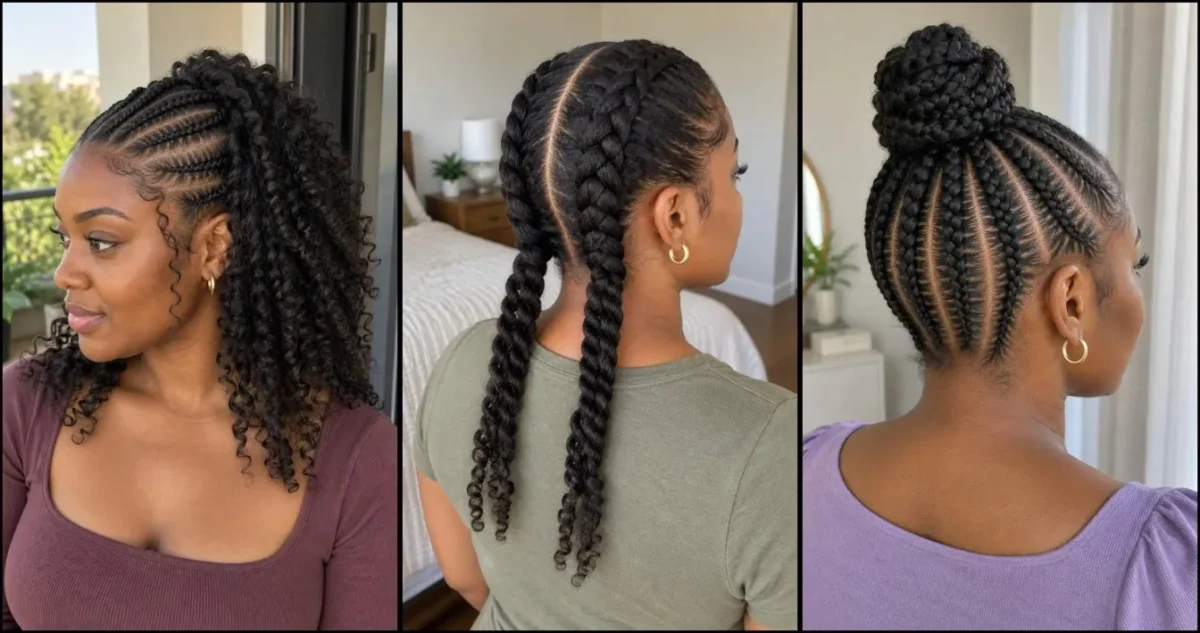
Cornrows for natural hair can be clean and simple or shaped into curves, zigzags, puffs, buns, and soft curl combinations. The best designs make the parting pattern easy to see while letting your own texture stay central to the finished look.
Straight-back cornrows on natural hair
Evenly spaced rows begin at the hairline and run straight toward the nape, each part clean and direct. Jet black coils make the braid pattern easy to read from the front and back. The row count for straight-back cornrows on natural hair can be adjusted for thicker or finer braids, and a light oil along each part keeps the scalp comfortable for two to three weeks.
Curved side-swept cornrows on natural hair
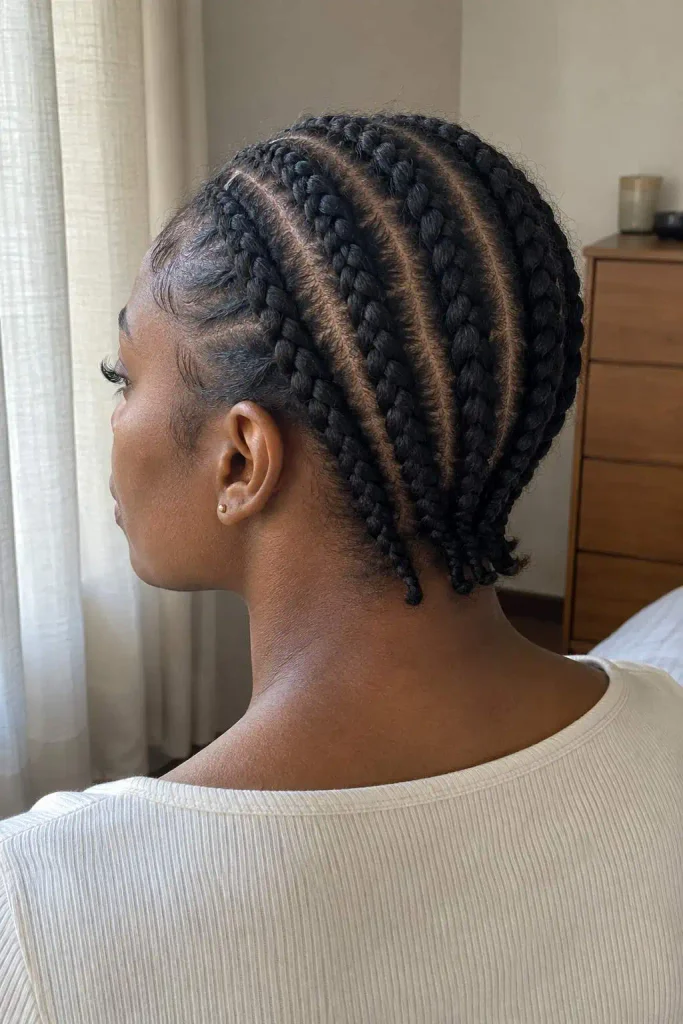
Rows bend gently across the scalp instead of traveling straight back, sweeping toward one side where the ends gather behind the ear. No accessories are needed for that movement. Everyday wear suits curved side-swept cornrows on natural hair, and in a deep brown shade the arcs stand out clearly, especially when the ends are tucked into a small side bun.
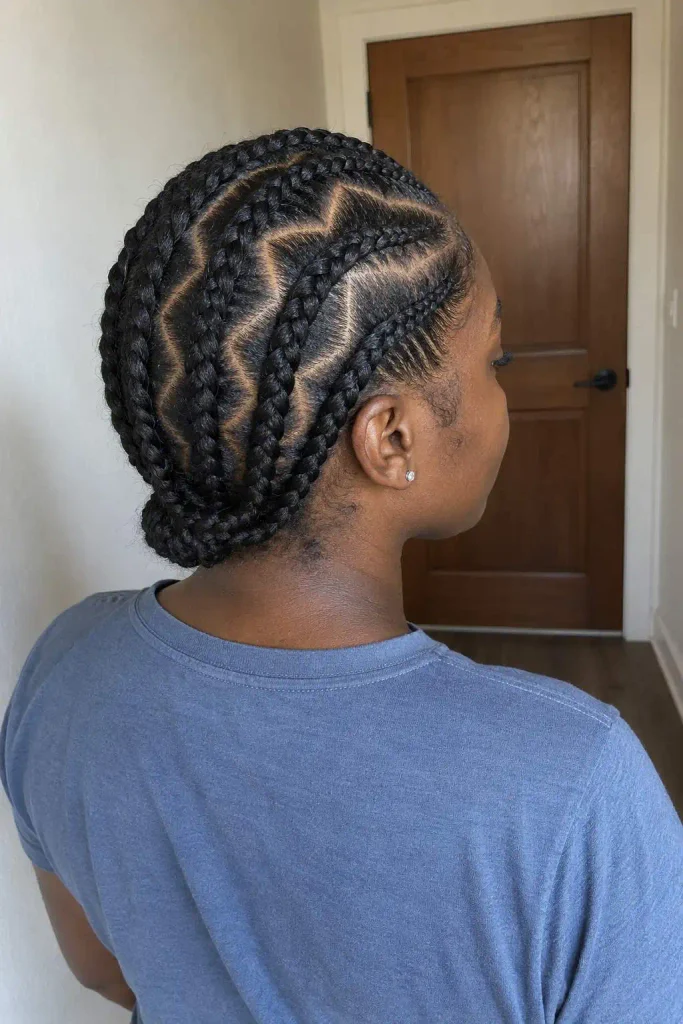
Zigzag-part cornrows on natural hair
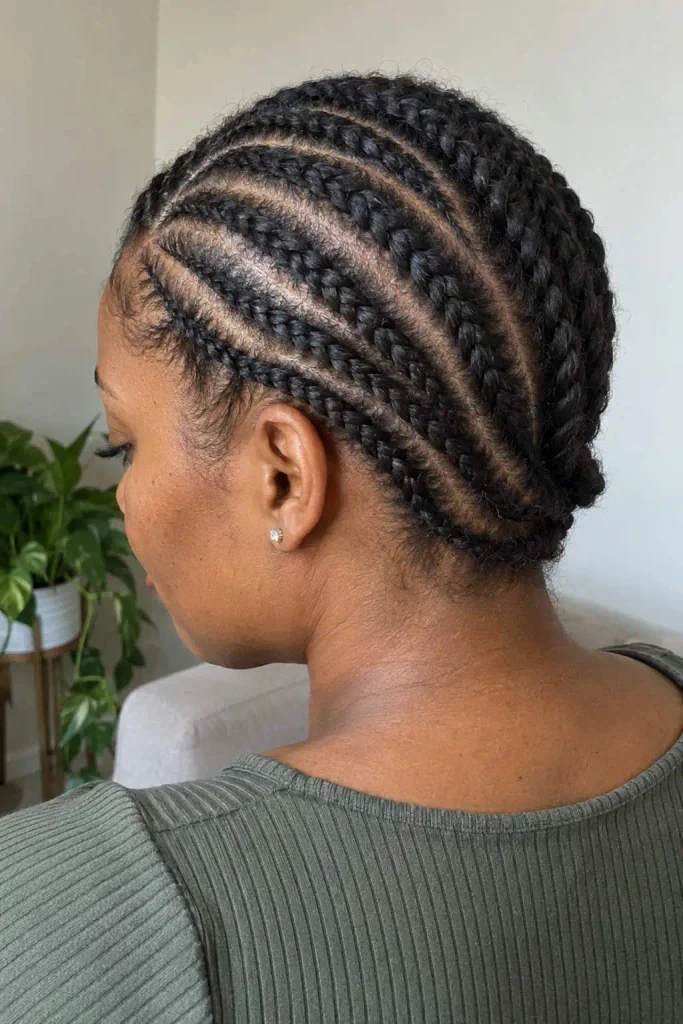
Sharp angled parts run between the braids, so the scalp pattern becomes part of the finished look. Medium-sized rows keep each zigzag visible. Seen from a rear three-quarter or slightly overhead angle, zigzag-part cornrows on natural hair look especially crisp in jet black, and a rattail comb with a metal tip helps cut the clean angles between rows.
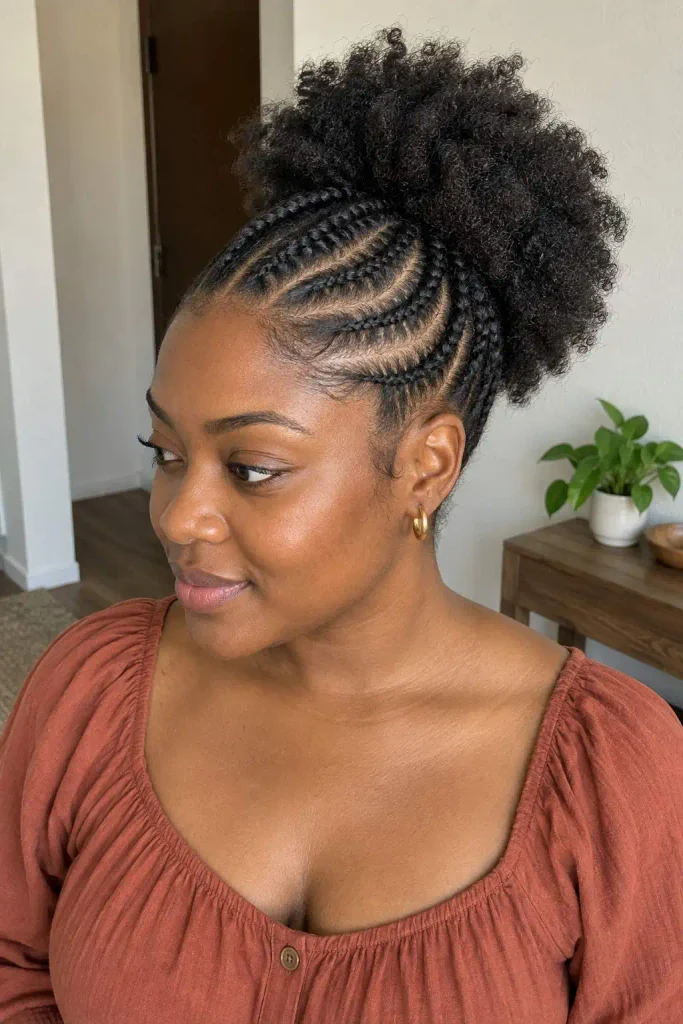
Cornrows into a natural puff
Front and side braids travel toward one gathered point, where the loose ends open into a full, rounded puff of dark brown coils. Flat rows contrast with the airy texture above. Medium or long hair suits cornrows into a natural puff, and a satin drawstring or stretchy band around the base avoids snagging the coils at the crown.
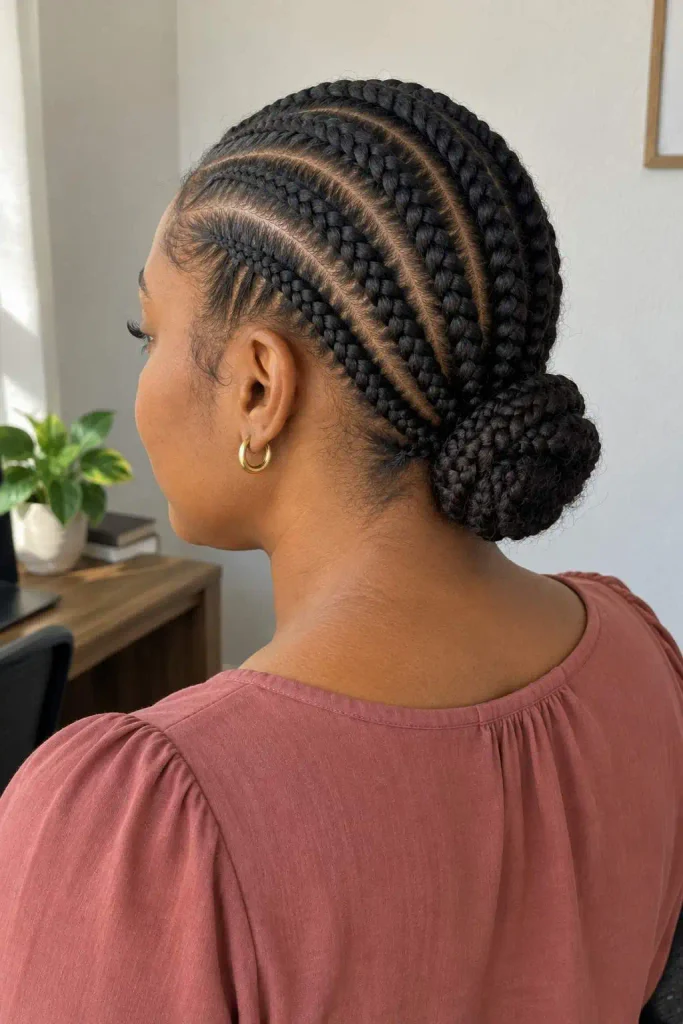
Cornrows into a low bun
Rows are directed toward the nape, where the braided ends wrap into a compact rounded bun. The scalp pattern stays fully visible. Workdays and dinners suit cornrows into a low bun, and in an off-black 1B shade a few U-pins plus a light edge gel along the hairline keep the finish controlled for a week or more.
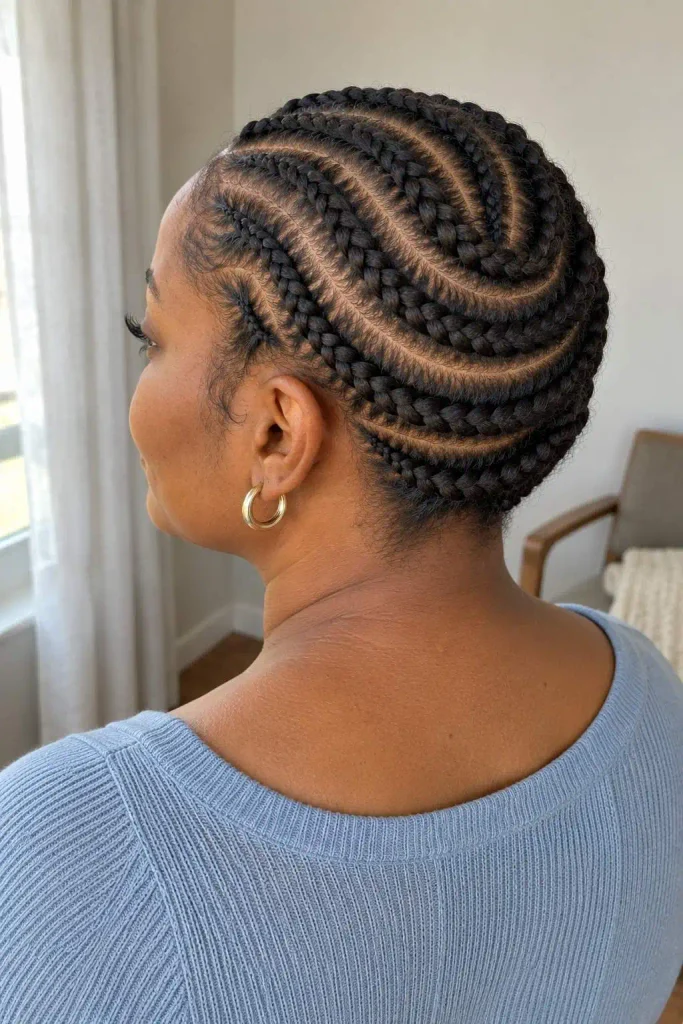
Crown cornrows on natural hair
Flat rows follow curved paths around the head, tracing the shape of the scalp instead of heading straight to the nape. The braid direction shows from several angles. Without any bun, crown cornrows on natural hair give an updo-like shape, and in jet black they need about two to three hours of braiding, lasting up to three weeks with a satin scarf at night.
Diagonal cornrow pattern on natural hair
Each braid crosses the scalp at an angle, creating slanted lines that look clearly different from straight-back rows. Even spacing keeps the slant consistent. Worn down at the back or gathered into a small knot, a diagonal cornrow pattern on natural hair looks graphic in deep brown, and checking the angle in a hand mirror while parting helps every row match.
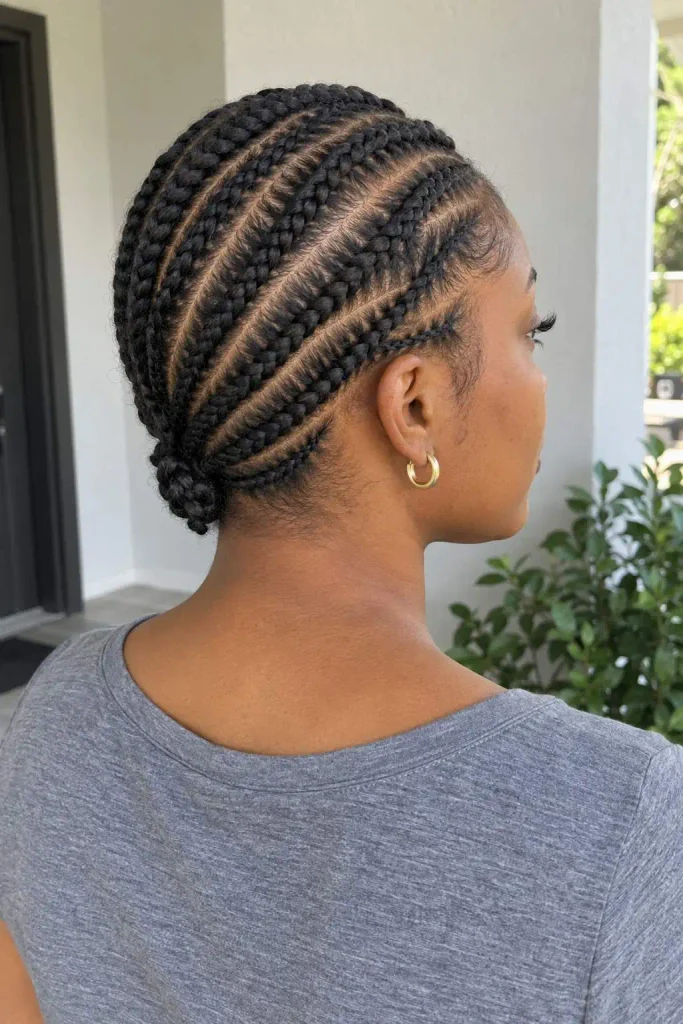
Alternating thick and thin cornrows
Wider braids sit beside smaller rows, so the difference in scale becomes the main detail. Larger braids stay smooth while fine rows keep the part lines crisp. Rhythm comes from alternating thick and thin cornrows rather than color or accessories, and on jet black coily hair, asking for two thin rows between each thick one gives the clearest contrast.
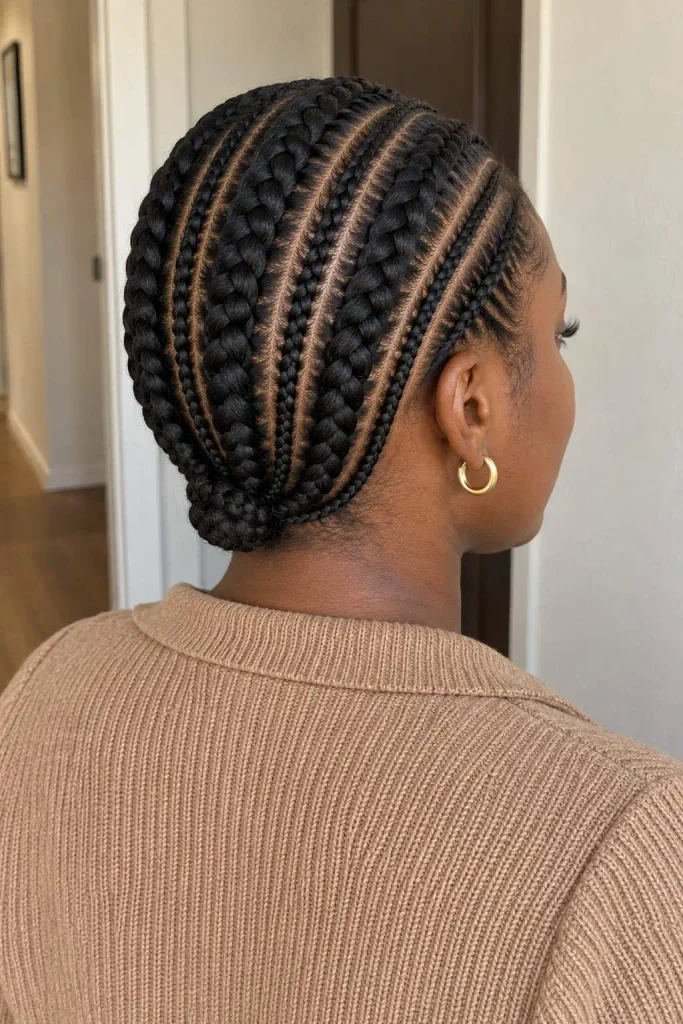
Half-cornrows with loose curls
Front and upper sections are braided close to the scalp, while the remaining hair hangs free in defined curls at the back. Dark chocolate brown curls show their volume below the rows. Framing the face without hiding all the texture is what half-cornrows with loose curls do best, and a twist-out set the night before gives the loose section its definition.
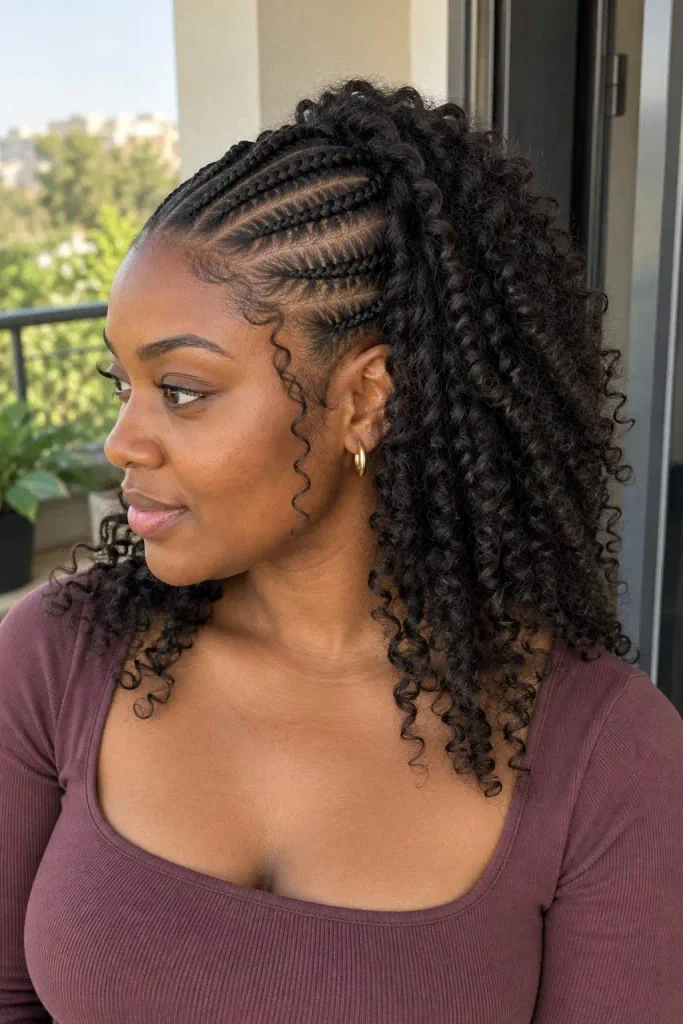
Two cornrows into twisted ends
A clean center part divides the hair into one broad cornrow on each side, which turns into two-strand twists once the braids leave the scalp. Here the shade is a deep espresso. Medium or long hair suits two cornrows into twisted ends, and sealing the twisted ends with a curl cream keeps them from unravelling during the week.
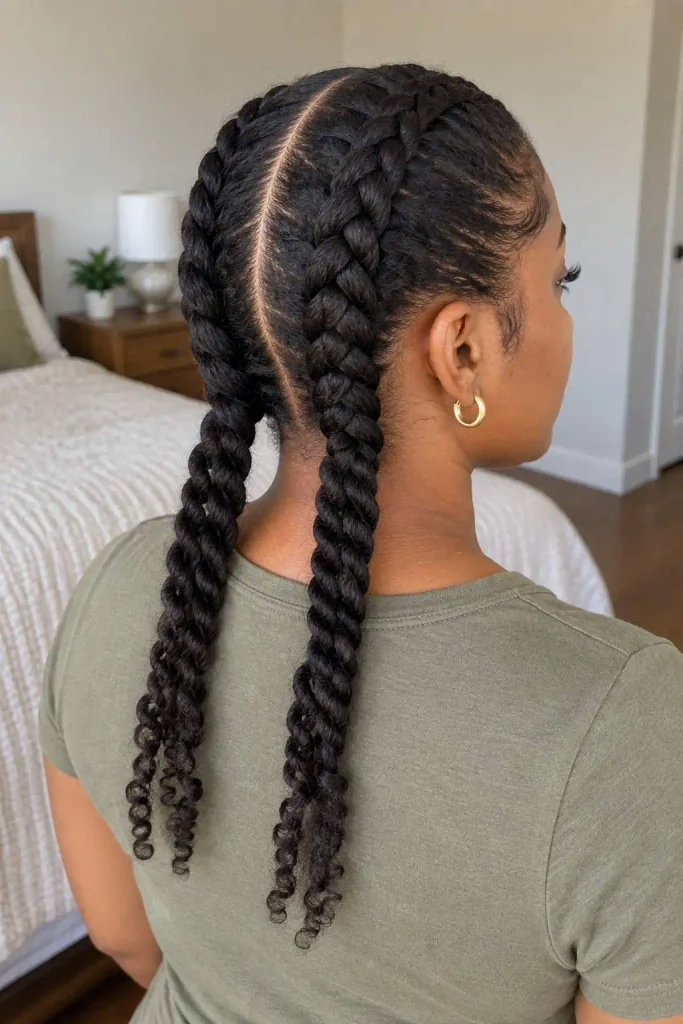
Simple cornrows without extensions
Clean rows use only your own hair, sized to match the density and length you already have. Jet black coils keep the pattern simple and easy to read. Without added braiding hair or bulky ends, simple cornrows without extensions are lighter on the scalp, and stretching the hair with a blow-dryer on low first makes the parts much neater.
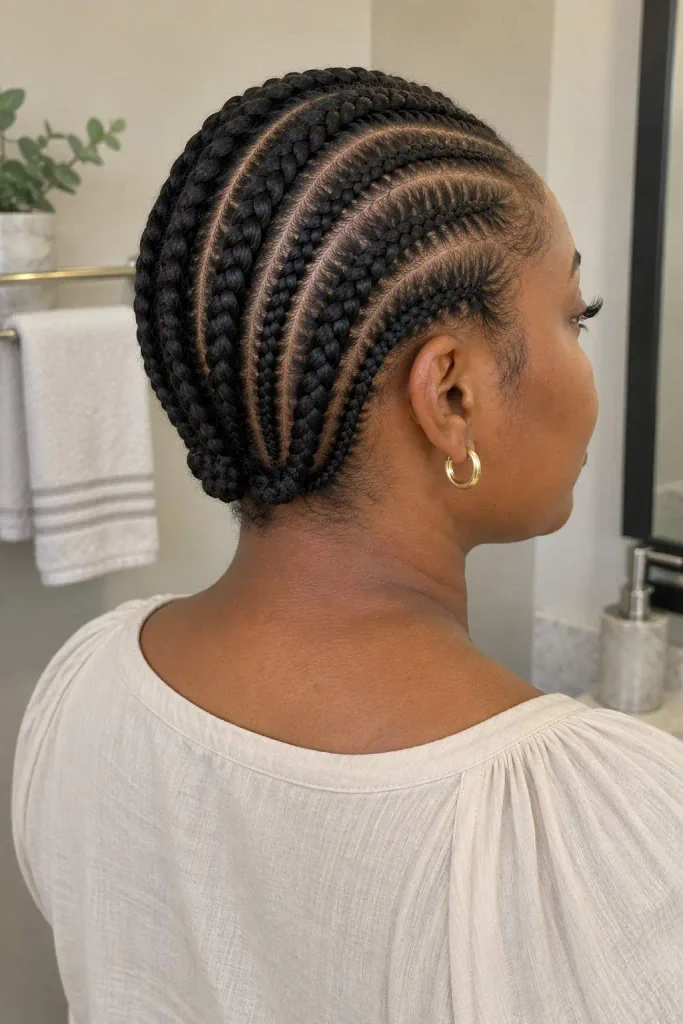
Short natural hair cornrows
Smaller sections keep the braid path close to the scalp, so shorter coils gather neatly without forcing extra length. Rows finish neatly close to the nape without added braid length. Tidy parts make short natural hair cornrows look clearest, and on dark brown 4B hair a firm-hold braiding gel helps grip shorter pieces at the hairline without pulling.
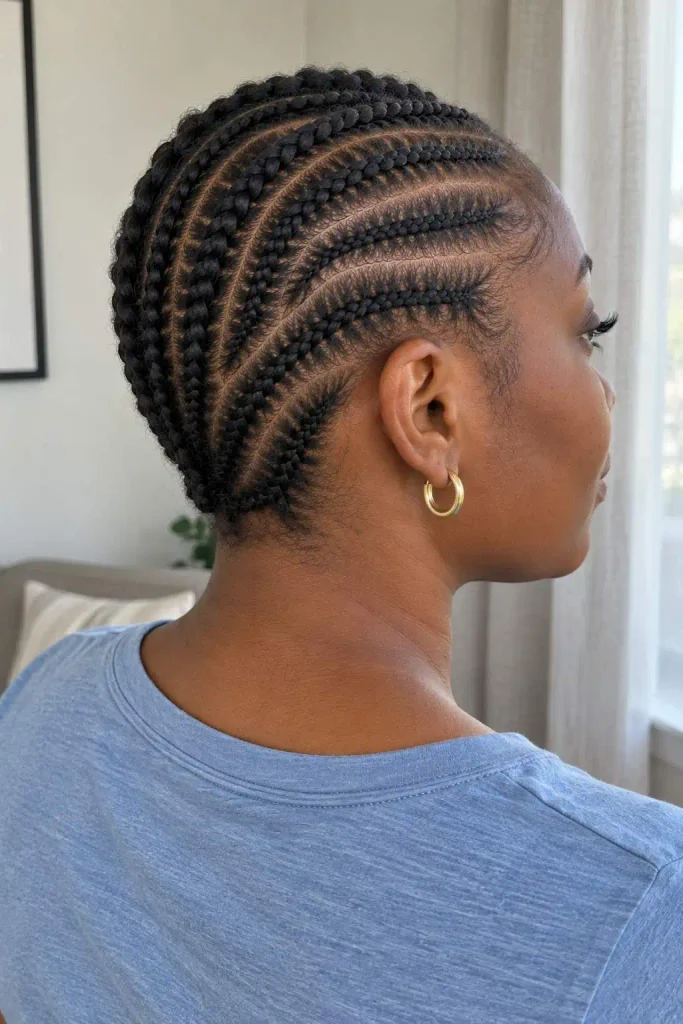
Side-part cornrows on natural hair
An off-center part creates more braided volume on one side and a smaller section on the other. Curved rows on the wider side add movement. For a different silhouette, try side-part cornrows on natural hair, and in jet black coils the ends can be tucked into a small bun or left loose, depending on whether you want a cleaner or more relaxed look.
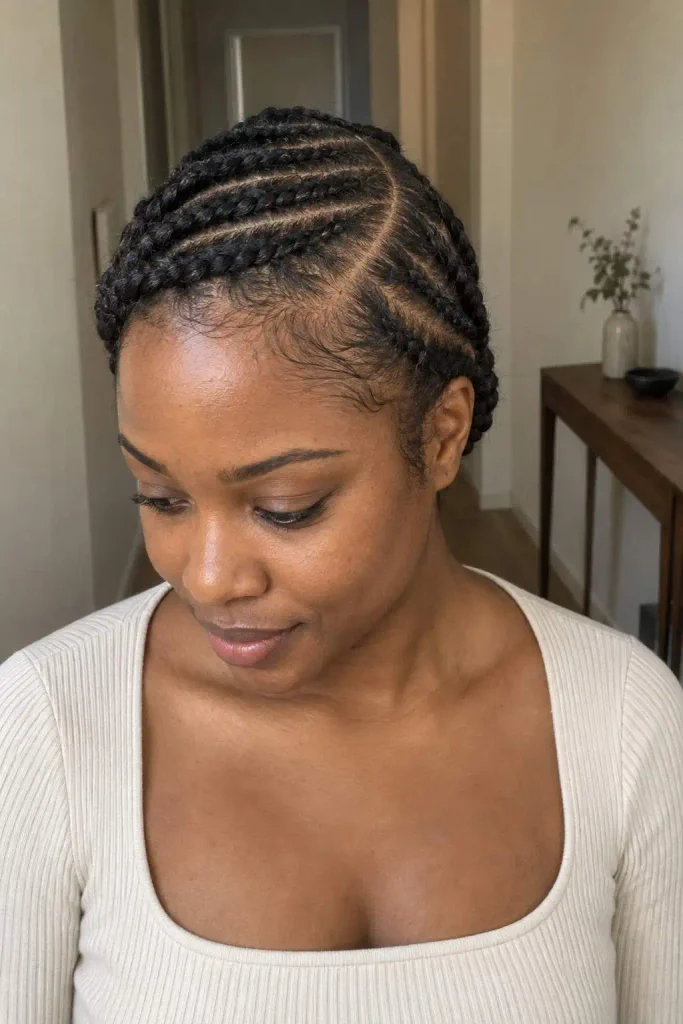
Cornrow ponytail on natural hair
Braids travel upward and backward toward one gathered base, and the length continues into a ponytail of dark brown coils. Both the scalp design and loose ends stay visible. For more movement than a bun, a cornrow ponytail on natural hair works well, and a satin scrunchie over the base keeps the ponytail from creasing the coils underneath.
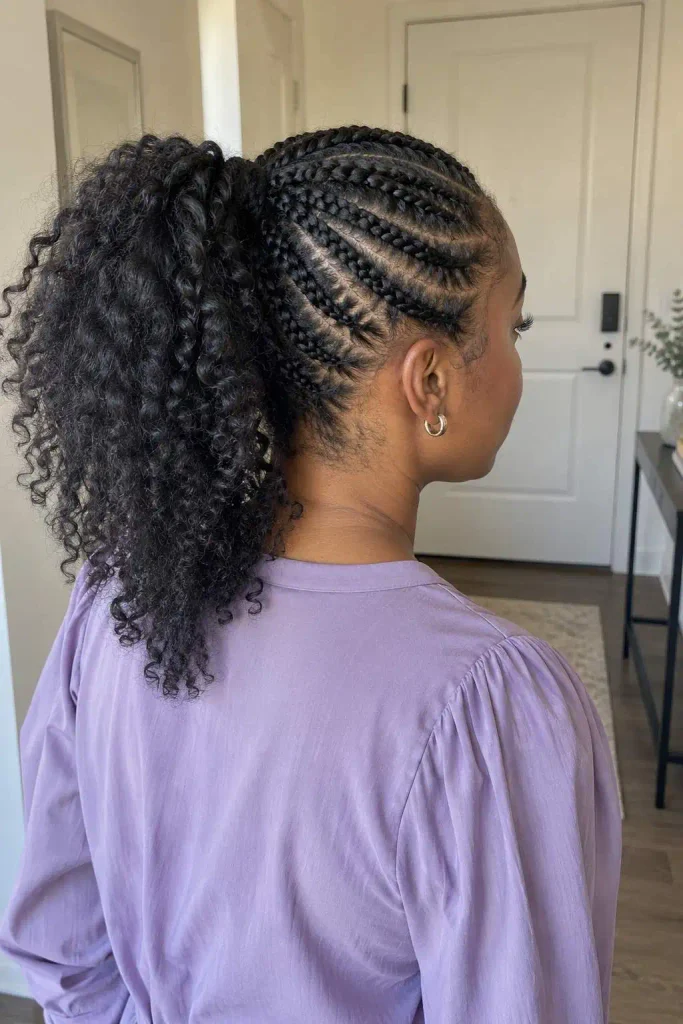
Front cornrows with twist-out curls
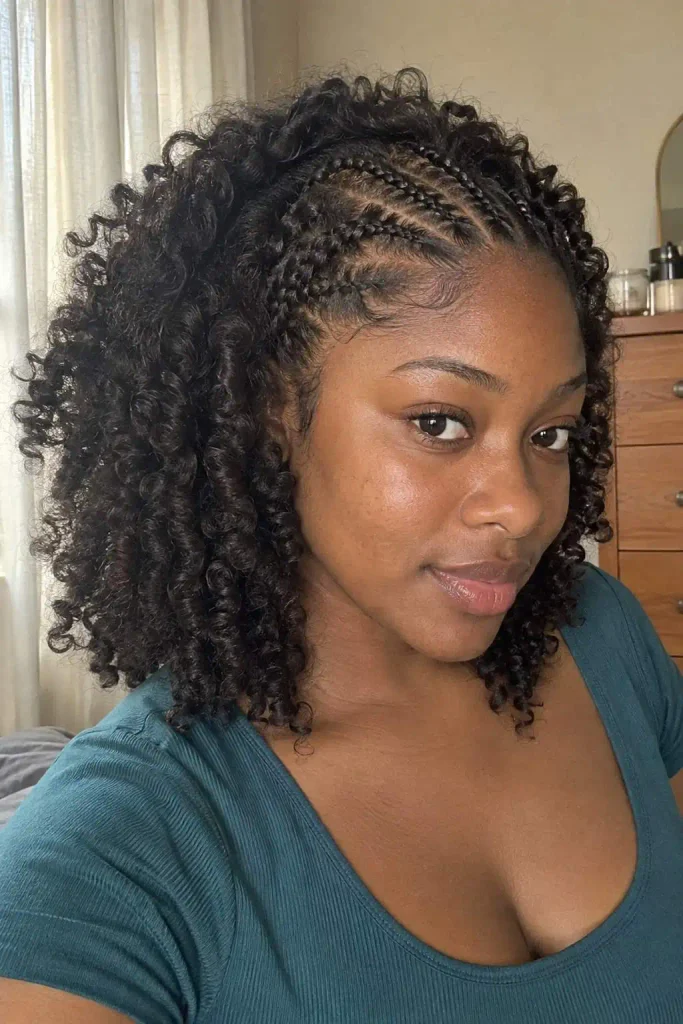
Only the hair near the forehead and crown is braided, leaving the back loose in defined curls. A clean braided frame sits around the face. Front cornrows with twist-out curls keep volume through the rest of the dark brown hair, and blending the braid ends into the curl pattern with a little twisting cream stops them from hanging separately.
Jumbo cornrows on natural hair
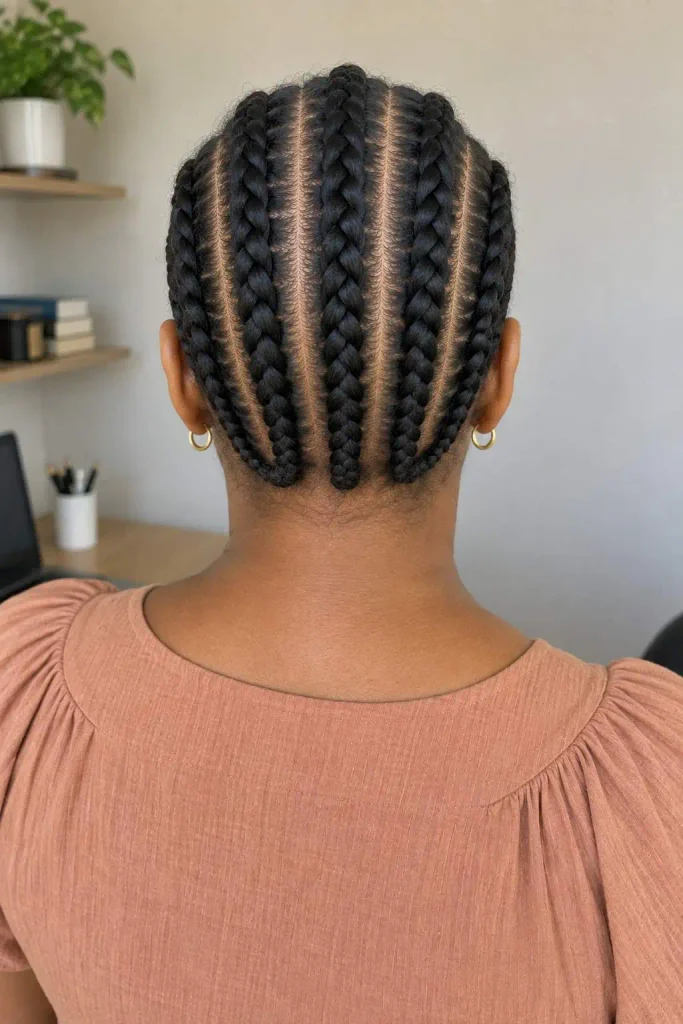
Fewer, wider sections give each braid a broad shape, with large, clean parts showing between them. Jet black color makes the direction obvious at a glance. You get a bold result from jumbo cornrows on natural hair without dozens of rows, and since only four to six braids are needed, the install often takes under an hour.
Five-line cornrows on natural hair
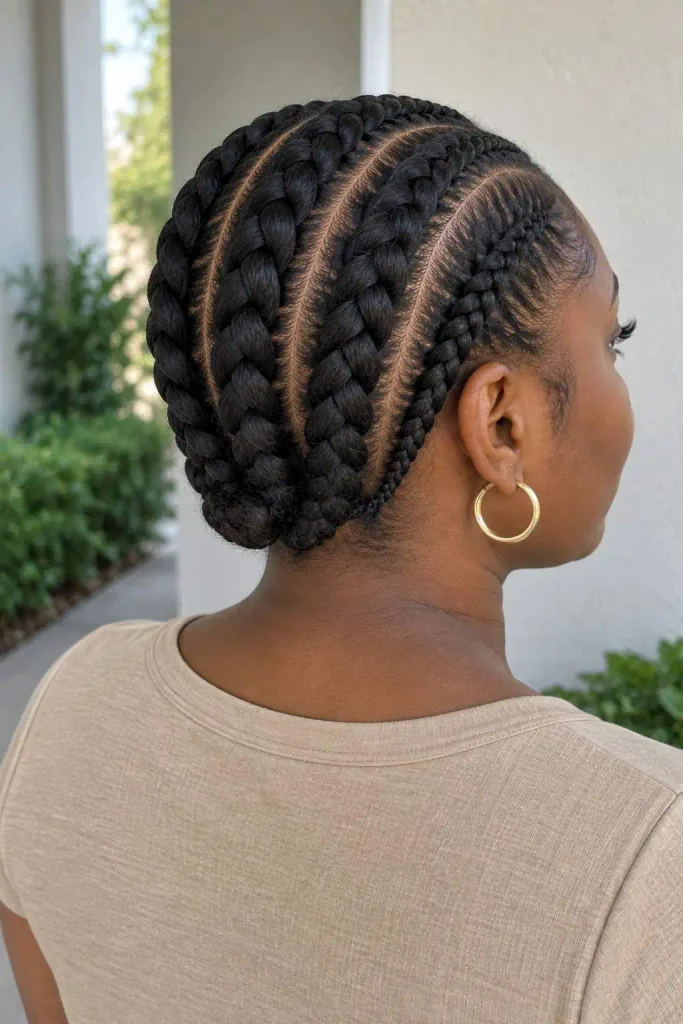
Five clear sections divide the scalp, with rows traveling slightly curved toward the nape. Each braid has enough width to stand out clearly from the next. Symmetry makes five-line cornrows on natural hair feel deliberate, and in an off-black 1B shade they work well for school or the gym, lasting about two weeks with a satin bonnet at night.
Four cornrows into two buns
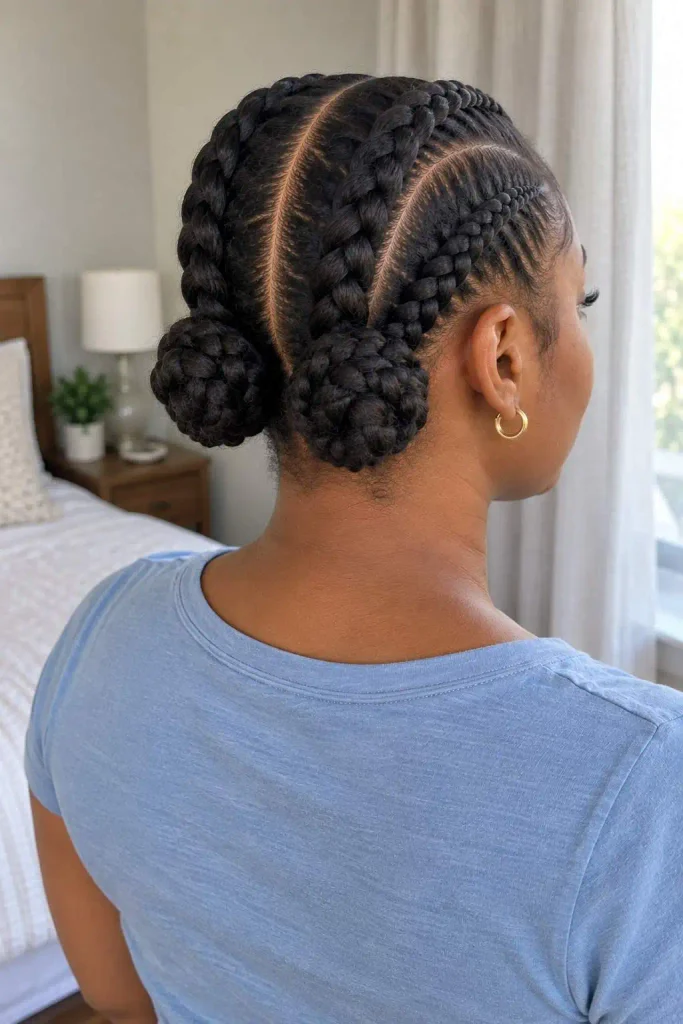
Paired sections feed into two compact buns placed at the back of the head. All four braid paths stay easy to see. Four cornrows into two buns give a playful look without braiding the whole scalp, and on dark brown coily hair a small elastic plus two bobby pins on each bun keep them firmly in place for days.
Two cornrows into a ponytail
One large braid sits on each side of a center part, and both sections meet at a single gathered base. Behind it, the loose hair stays curly and full. Keeping the front very simple, two cornrows into a ponytail are quick to install, and in jet black hair the ponytail can be worn stretched or curly, depending on how much texture you want to show.
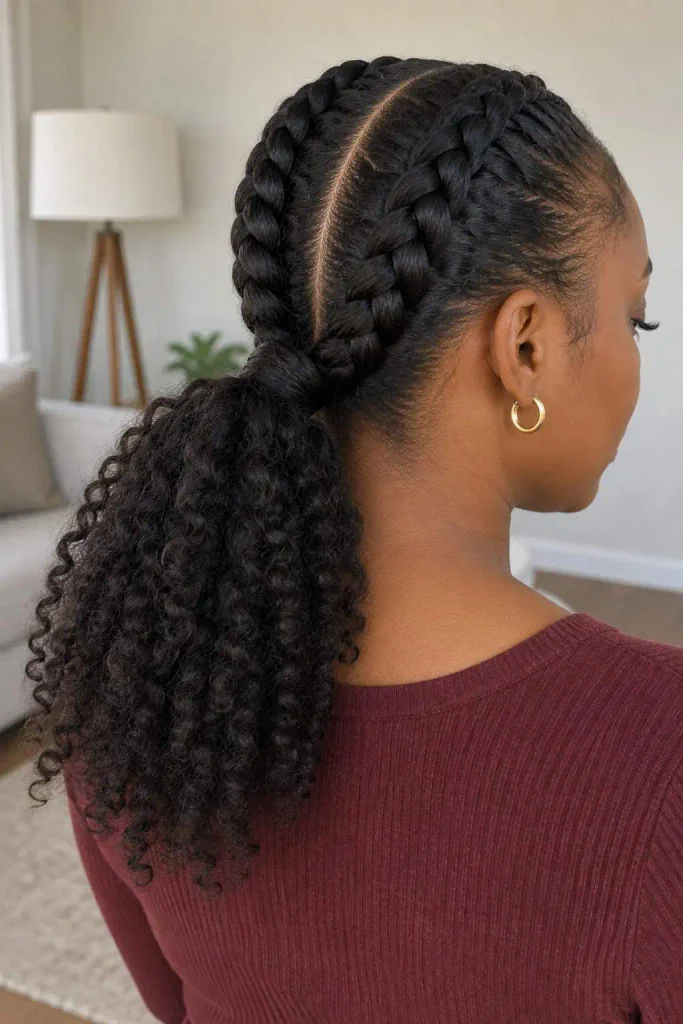
Cornrows with beads on natural hair
Neat scalp braids lead into hanging ends finished with a few clear and wooden beads. Most of the parting pattern stays uncovered. Kids and adults alike can wear cornrows with beads on natural hair, and in dark brown hair spacing the beads only on the ends keeps the style light, while a small rubber band below each bead holds it.
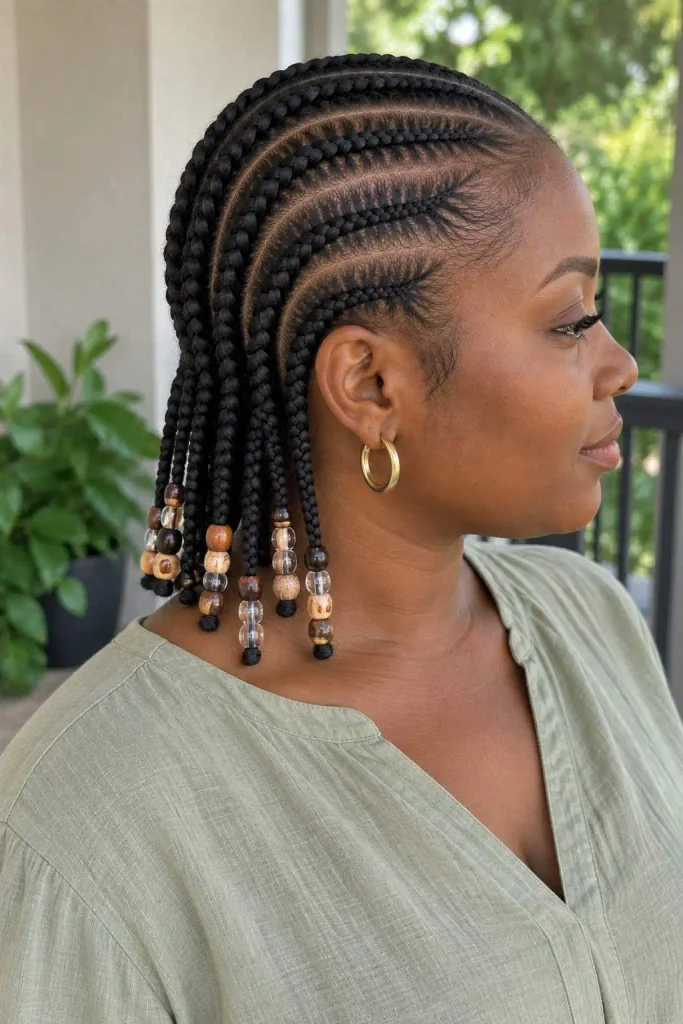
Stitch cornrows on natural hair
Small horizontal separation marks run along each larger braid, creating the lined stitch detail while the rows stay close to the scalp. Consistent spacing keeps the pattern sharp. Stitch cornrows on natural hair look crisp in jet black, and asking for six to eight rows straight back gives a clean, structured result that lasts two to four weeks.
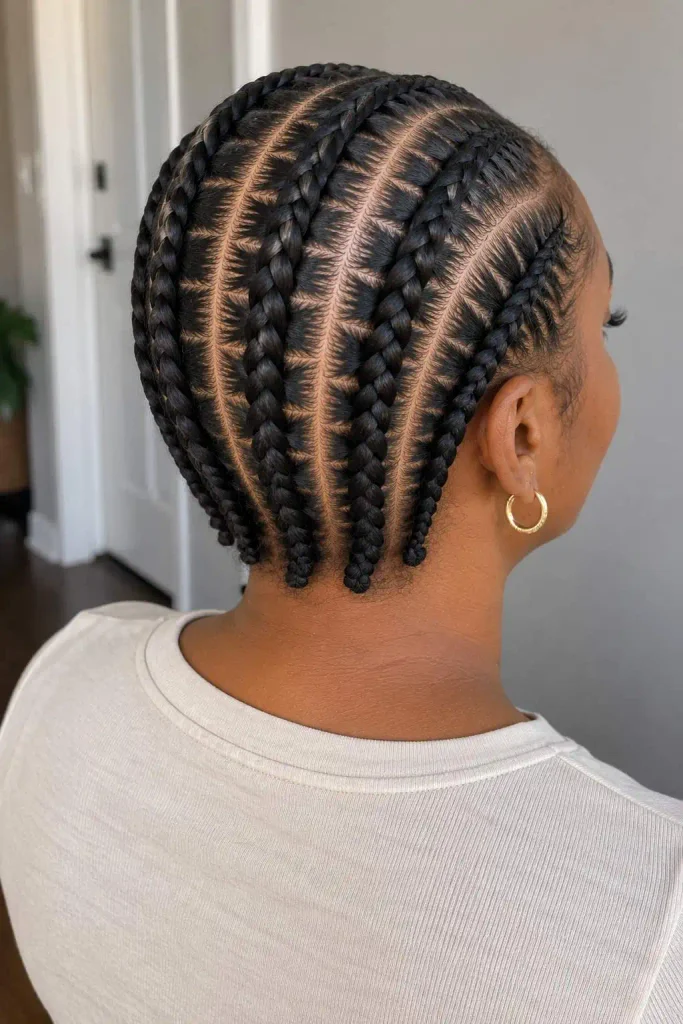
Short 4C cornrows without extensions
Compact coils are braided in controlled sections with comfortable tension, finishing near the back of the head. Visible texture remains at the hairline. Without added length, short 4C cornrows without extensions still look organized, and in jet black hair a light leave-in and braiding gel on each section give grip, while a satin scarf at night reduces frizz.
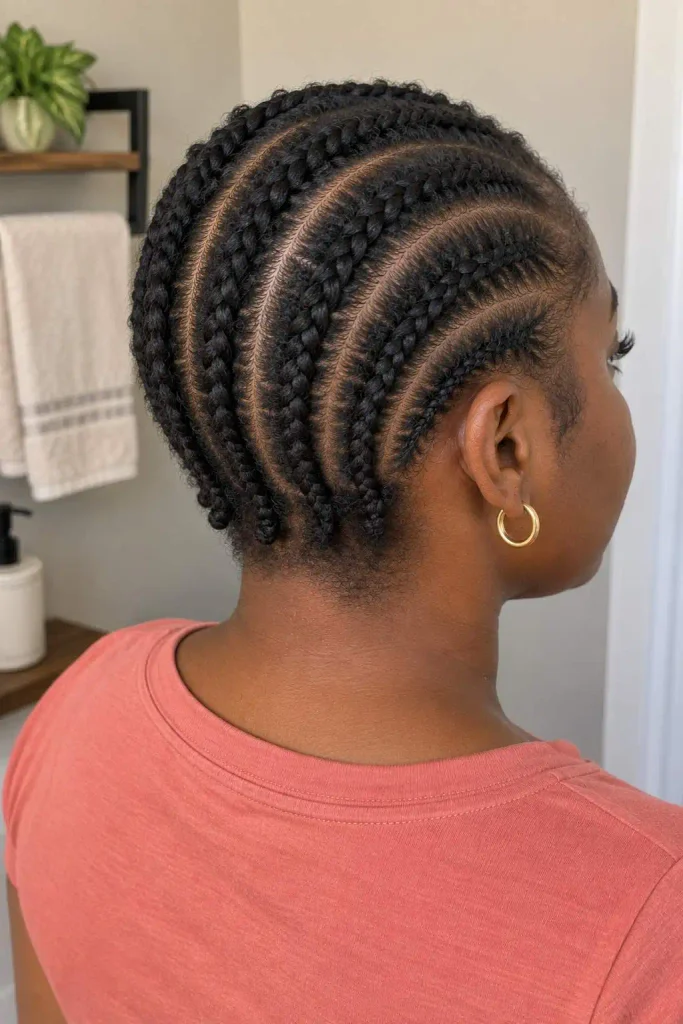
Cornrows with curly bangs
A small front section stays loose in a curly fringe, while the rest of the hair is braided back in clean rows. Those bangs keep the front from looking severe. Dark brown coils suit cornrows with curly bangs, and refreshing the fringe each morning with water and a curl cream keeps it defined while the braids control the crown and sides.
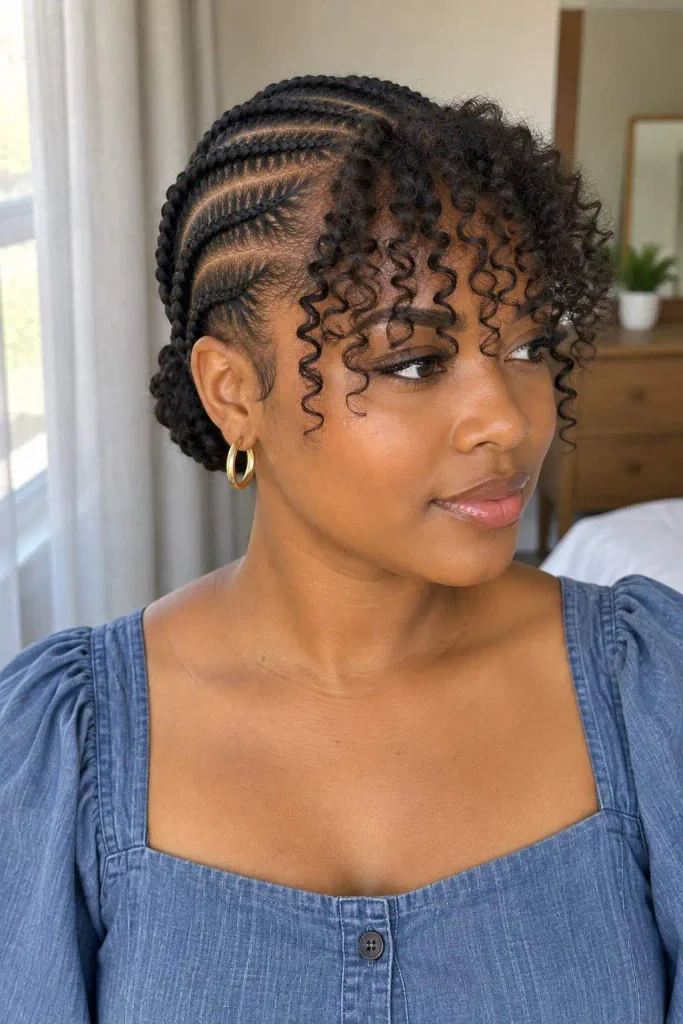
Straight-up cornrows into a bun
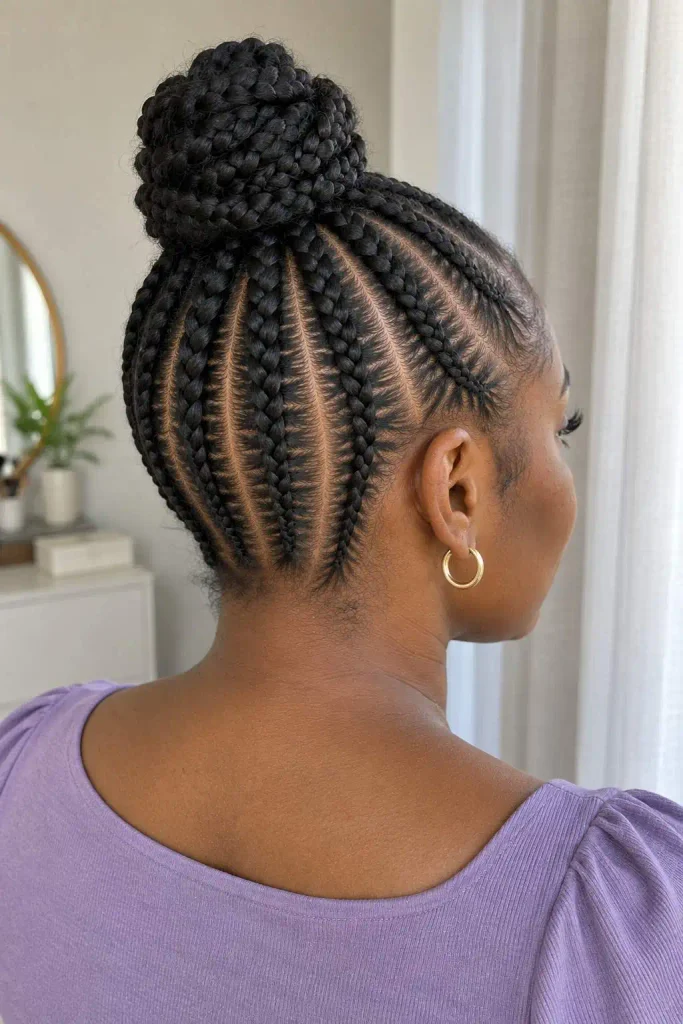
Starting at the perimeter, rows travel upward toward the crown, where the ends gather into a compact bun. The neck stays clear. Compared with straight-back rows, straight-up cornrows into a bun look visibly different, and in deep brown coily hair the upward direction shows from every side, with a satin bonnet at night keeping the bun from flattening.