A braid is the most practical hairstyle winter allows. It keeps long hair out of scarves, survives a beanie without turning into a tangled mess, and still looks finished at dinner — which is why searches for winter braids have surged this November. The 11 styles below are chosen for how they actually behave in cold weather, not just how they photograph: which ones sit flat enough for a hat, which ones hold up under a scarf, and which ones are worth the extra ten minutes on a party night. Every style names where it works best, and most name the hair length and type it suits, so you can pick one that fits your day rather than fighting it.
How to braid your own winter braid
Start with the French braid. Gather the hair in three sections at the crown and cross them over from the top down, adding hair from each side as the braid travels toward the nape. Keep it low and centred if a beanie will sit over it.
The fishtail takes a little longer to learn, and the technique is simple. Take a small section from the outside of one side and cross it over to the other, then repeat on the other side. Keep going until the braid reaches the length you want.
A pull-through braid needs no real braiding at all. Divide a ponytail into sections and pull each section through the one above it, working down the length. Pull each section out a little as you go for a fuller, softer finish.
The rope braid is the simplest of all, and it is the one to teach a beginner first. Twist two sections in the same direction, then wind them around each other in the opposite direction. Fold the very tip up under before tying, or the braid can unravel. If you can twist, you can rope-braid.
What you need for winter braids
The braids in this list use a small set of everyday items. All of them are already named in the styles and answers below.
- Velvet scrunchie
- Satin bow
- Small elastics, clear or plain
- Leave-in conditioner
- Light hair oil
- Serum
- Silk or satin scarf
- Satin pillowcase
- Silk or satin lining for a hat
- Gold pin
- Small brush
1. Classic French Braid Under a Beanie

View Instagram post by @trulykimberley
A single French braid that starts at the crown and runs down to the nape, braided tightly enough to sit flat under a beanie. The hair is gathered in three sections and crossed over from the top down, adding hair from each side as the braid travels, and finished with a large dark teal velvet scrunchie. Best on medium to long straight or wavy hair. Keep the braid low and centred so the beanie sits flat over it, and bring the tail over one shoulder once the hat comes off. Best for: medium to long straight or wavy hair, flat under a beanie on cold days.
2. Double Dutch Braids for Snowy Days

View Instagram post by @mandyhairups.biz
Two tight Dutch braids, one on each side of a centre part, braided from the front hairline to the nape and secured low. Because the braids cross under rather than over, they sit proud of the head like ropes, locking the hair down completely — hats, hoods, scarves and wind do not move them. Best on long to very long thick or wavy hair. The most time-consuming style here at around twenty minutes, and the one that lasts longest, sometimes into a second day with a silk scarf at night. Best for: long hair, everyday wear under a hat and scarf in cold wind and light snow.
3. Fishtail Braid with a Cream Satin Bow
View Instagram post by @evapautov
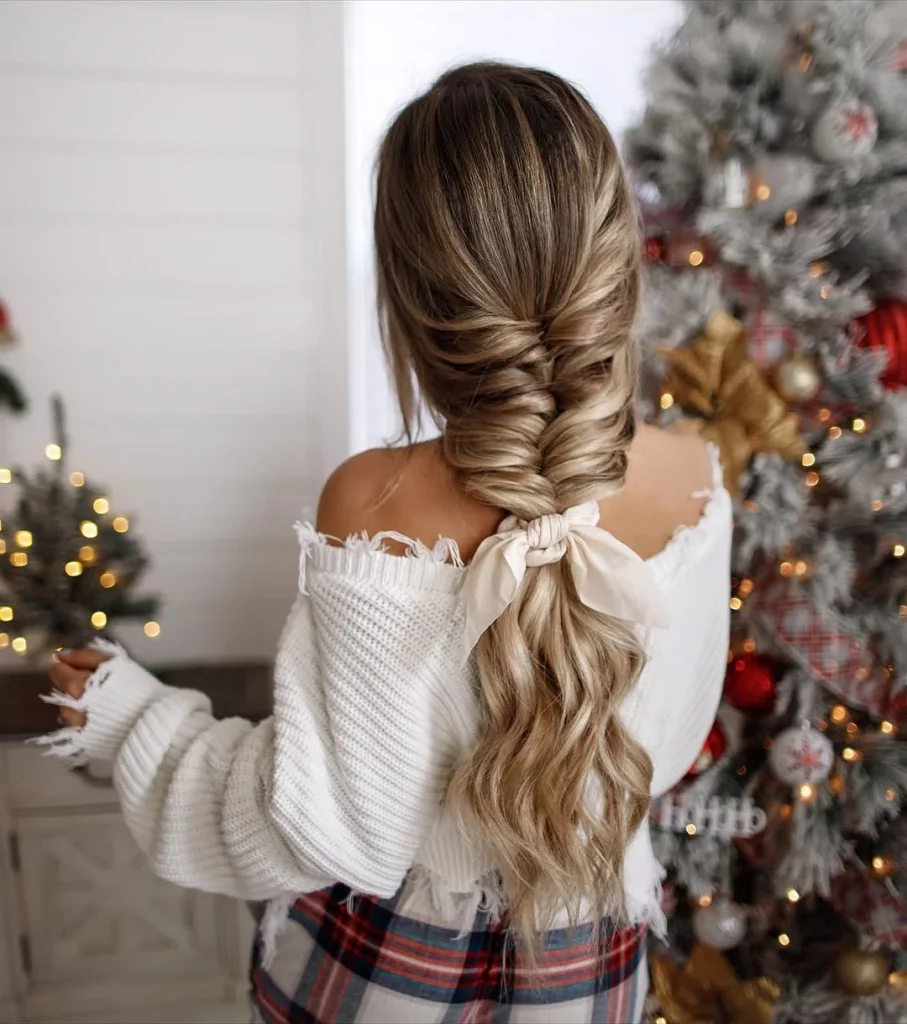
A single fishtail braid worked at the nape and flowing into loose waves down the back, finished with a large cream satin bow where the braid meets the waves. The braid is kept loose and gently pulled apart for softness, and the bow is what makes it Christmassy, so tie it at the nape where it shows from behind. Best on medium to long wavy hair. A party-ready style that photographs well against a Christmas tree. Best for: party days, from a family lunch to an evening party.
4. Milkmaid Crown Braid with Soft Loose Strands

View Instagram post by @updosbykarina
Two low braids are crossed over the head and pinned flat into a crown, with all the hair tucked up and a soft strand left loose to soften the look. A romantic bridal style that holds all day — pin the braids flat so the crown sits smooth, and tuck in a sprig of holly or a gold pin for a winter wedding. Best for: a winter wedding, a romantic style that holds all day.
5. Side-Braided Low Bun with Soft Face-Framing Pieces

View Instagram post by @charlotteheather_bridalhair
A loose side braid is swept back and gathered into a low bun at the nape, with soft tendrils left loose to frame the face. The braid keeps the bun from looking plain, and because it sits low and flat it slips easily under a beanie. Best on medium to long straight or wavy hair. For a festive finish, tie a velvet bow just above the bun. Best for: an evening look, neat under a coat collar through a long dinner.
6. Side-Swept Loose Braid over a Soft Knit

View Instagram post by @urwatistic
All the hair swept over one shoulder and braided loosely down the front in a single three-strand plait, the soft, slightly undone lobes sitting over a low, relaxed neckline. The loose finish suits a chunky knit, and a scarf can be tucked around the braid without flattening it. Easy to redo on the go: pull the braid forward and loosen a few loops. Best for: most hair textures, a relaxed everyday look over a chunky knit.
7. Double Bubble Braids for Winter Weekends
View Instagram post by @roralovestrand
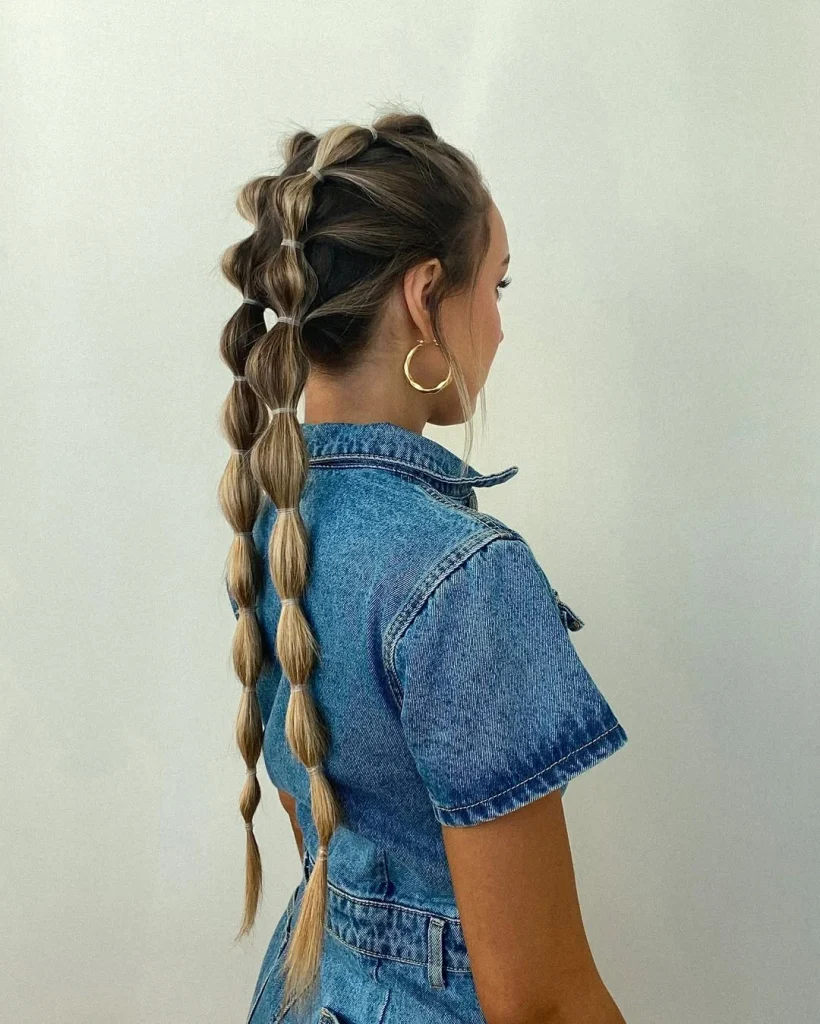
Two low bubble ponytails, one on each side, each divided into sections with small clear elastics and pulled out into rounded bubbles. The bubbles are spaced evenly down the length, and the clear elastics are left visible. Best on long straight or wavy hair. The easiest braid on this list — no plaiting at all — and the most playful. Works best on hair that holds a bubble shape, so add texture spray first if the hair is very fine. Best for: medium to long hair, a playful weekend style, around ten minutes.
8. Rope Twist Braid for Busy Mornings

View Instagram post by @sunniebrook
A rope braid — two sections twisted in the same direction, then wound around each other in the opposite direction — worn down the back or over one shoulder. It is the fastest braid on this list at around five minutes, and the smooth rope finish hides winter flyaways rather than showing them. Best on medium to long hair of any texture. Fold the very tip under before tying, or the braid can unravel. The one to teach a beginner first: if you can twist, you can rope-braid. Best for: medium to long hair of any texture, a busy morning, around five minutes.
9. Braided Ponytail for Cold Commutes

View Instagram post by @gihan.elshamashergy
A high or mid ponytail with a braid running through the tail, the elastic hidden by a thin strand of hair wrapped around the base. It keeps hair off the neck and out of the scarf, survives a hat better than a loose ponytail ever could, and looks polished enough for work and relaxed enough for the weekend. Best on long hair, straight or wavy, fine to thick. Start with a secure ponytail — a tight base is essential, because a loose base sags by noon. Seven minutes, and it never looks wrong. Best for: a cold morning commute, polished and out of a scarf and off a coat collar.
10. Half-Up Braided Crown with Loose Waves

View Instagram post by @laurenhendleyhair
A slim plait and a fishtail braid taken from the temples, wrapped around the back of the head and pinned where they meet, while the rest of the hair is left down in loose waves. The braids are thin and neat, and the waves are brushed out softly so the style looks relaxed rather than done. Best on medium to long wavy hair. The best choice when you want the hair down but out of your face, and the waves make it feel like a party style without much effort — though the waves need a heat tool or overnight braids to set. Best for: long, thick hair, a soft party style, around 15 minutes.
11. Pull-Through Braid for Layered Hair
View Instagram post by @glayers.hairsalon
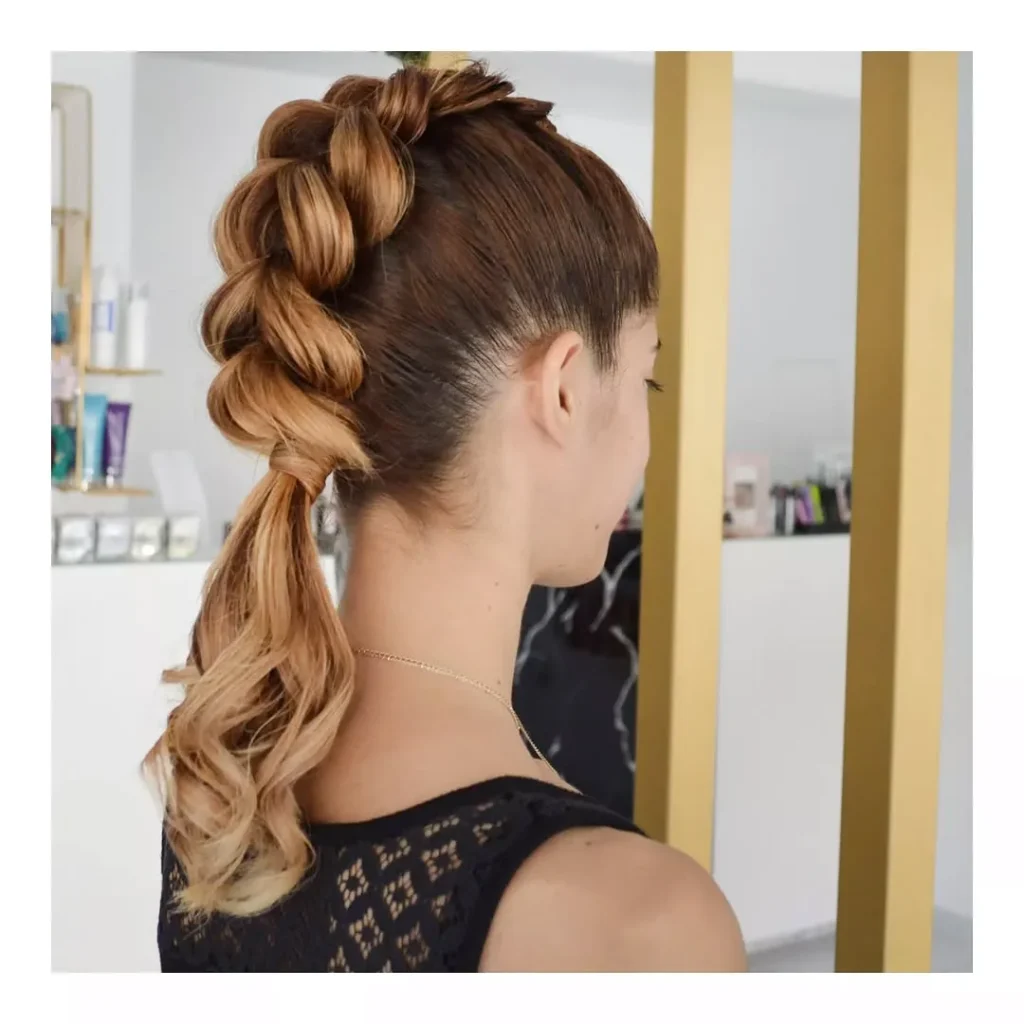
A braid made by dividing a ponytail into sections and pulling each section through the one above it, creating a wide, soft plait that looks like a French braid but needs no actual braiding. The sections are pulled out for volume, and the plait finishes at the nape, falling into a loose, wavy ponytail. Best on short to medium layered hair that is too short for a real French braid. The only style here that works on shorter hair, and the one that looks the most dramatic for the least effort — though it needs several small elastics and takes a few tries to get the sections even. Best for: layered hair, a full, chain-like braid that keeps short layers in place.
How to keep winter braids neat for a second day
Most of the braids here last one to three days. A looser braid will soften after the first day, which still looks good for a casual style, while a tight French or Dutch braid holds its shape for longer. Plan for the second day when you braid, and pick a tighter style if you want it to last.
Many of these styles last a second day if they are loosened gently rather than taken out and redone. When you take a braid out, undo it gently instead of pulling it apart. A loose braid that has softened overnight is still a good casual style, so there is no need to start over.
Sleep with a silk scarf or a satin pillowcase to keep the braid smooth overnight. Before you go out, smooth a small amount of leave-in conditioner or light hair oil over the braid, and carry a small brush or a little serum for touch-ups during the day. A silk or satin lining inside a hat helps too, and it stops the braid from catching on the wool.
For more ideas that protect hair in cold weather, see our winter protective hairstyles.
5 mistakes that ruin winter braids
Pulling a braid too tight damages hair in winter. The tension sits at the hairline, so keep the braid firm but comfortable and vary where the part sits.
Leaving the same style in for too long causes damage too. Most of the braids here last one to three days, so take the style out when it reaches the end of that window instead of leaving it in longer.
Skipping the fold at the end of a rope braid is a small mistake with a clear result. The braid can unravel, so fold the very tip up under before tying.
Pulling a braid apart to take it out damages the hair. Take the style out gently instead.
Going out with a dry, untreated braid invites frizz. Cold dry air and wool hats cause most winter frizz, so smooth a small amount of leave-in conditioner or light hair oil over the braid before you go out.
Are winter braids right for you?
Winter braids suit most hair that reaches past the shoulders. The styles in this list work on straight, wavy and curly hair, and several of them hold up well on thick hair that is hard to manage in cold weather. If your hair is shorter than chin length, a few of these will be hard to do, so start with the crown braids and loose side braids and leave the longer styles until your hair grows out.
Braids are a good cold weather choice because they keep the ends tucked away from dry air and hat friction. Wash your hair less often while you wear them, sleep on a satin pillowcase or with a silk scarf, and take the braids out after two or three days so the hair can rest. If your scalp feels tight or sore, the braid is too tight. Loosen it or take it out rather than wearing it through the discomfort.
Frequently asked questions
How long do winter braids last?
Most of the braids here last one to three days. A looser braid will soften after the first day, which suits the relaxed winter looks in this list. If you want a braid to last longer, sleep with it in a loose silk scarf and refresh the front pieces in the morning rather than redoing the whole braid.
Can I do these braids myself?
Yes, most of them. The side braids, crown braids and bubble braids are easy to do on your own hair with a mirror. The more detailed styles, like a braided crown or a fishtail that runs down the back, are easier with a second pair of hands, so ask a friend or book a stylist for those.
Will braids damage my hair in winter?
Braids protect hair in winter as long as they are not pulled too tight. The damage comes from tension at the hairline and from leaving braids in for a week or more without washing. Keep the braids loose at the roots, take them out after a few days, and use a light oil on the ends before you braid.
How do I stop braids from frizzing in cold weather?
Cold dry air and wool hats cause most winter frizz. Smooth a small amount of leave-in conditioner or hair oil over the braid after you finish it, and wear a silk-lined hat if you can. If flyaways appear during the day, press them down with a drop of oil on your palms rather than brushing the braid out.
Pick the braid that fits the day you have. A tight braid works for a cold morning, and a softer one suits a party. A low bun or crown braid is the easy choice when a hat will be on and off all day, and any of them keeps your hair out of scarves and neat under a hat.