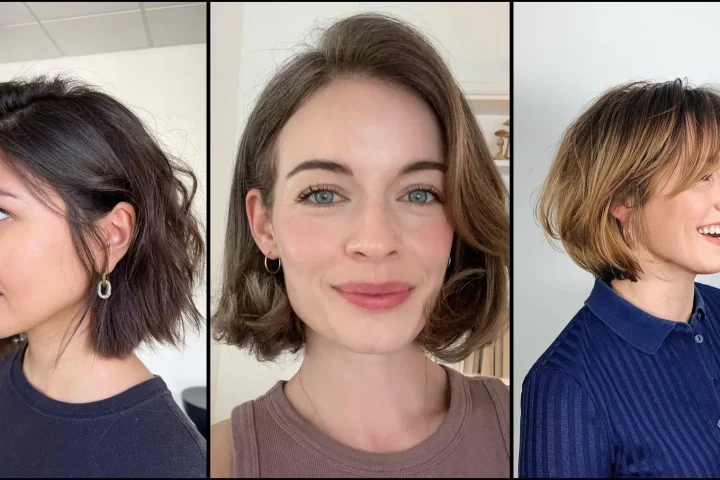
The short wolf cut is a shag with a sharper attitude: short, broken layers through the crown, face-framing pieces around the cheeks and a little extra length left at the nape. That crown-to-nape contrast is what makes it a wolf cut rather than a bob or a shag, and it is also what makes the cut tricky — take too much from the crown and the shape collapses, leave too much at the back and it reads as a mullet. It works on straight, wavy, curly, fine and thick hair, but each texture needs its own version, and the right one depends on your face, your texture and your mornings.
The thirty-two ideas below are for adult women, and each one comes with notes on what to ask for — the layer placement, the fringe length, the nape shape — so you can explain the exact cut to a stylist rather than asking only for the name. Notice which version keeps its shape with your texture: a soft curtain-bang wolf for fine hair, a rounded crown for curls, a taller crown for a round face, or a pixie-length wolf with a longer nape. The right one is the one that still looks like itself after your hair has dried naturally.
What to ask for at the salon
Bring front, side and back references of a short wolf cut on someone with a texture close to yours. Ask about the shortest crown layer, where the face-framing pieces will finish, and how long the nape will remain. For curly or coily hair, have the stylist account for shrinkage. For fine hair, protect density at the ends. A real wolf cut should still show an identifiable layered outline when you have not styled it with a curling iron.
How to choose a short wolf cut that keeps its shape
Start with the crown-to-nape balance, because that is what makes a wolf cut. The crown should be short and broken up, the sides should fall around the cheeks, and the nape should keep a little extra length. If the crown layers are too long, the cut reads as a shag; if the nape is cut too short, the contrast disappears and it reads as a pixie or a bob. Ask where the shortest crown layer will sit and how long the nape will remain, and look at the back as well as the front.
Then match the fringe and the layers to your face and texture. A curtain bang or a side sweep suits a round face because it opens up the cheeks, while a fuller fringe gives a long face more width and a shorter fringe suits an oval face that can take either. On fine hair, keep the crown layers restrained and the ends fuller, so the cut does not thin out; on thick hair, the stylist can remove weight from the inside without shortening the outline. For curls, shape the layers around shrinkage and check the finished shape dry.
Finally, think about the grow-out and the mornings. A wolf cut grows out into a shag if the crown layers are left alone, and into a mullet if the nape keeps growing while the crown is trimmed — so plan a trim every six to eight weeks, or sooner if the shape starts to lose its balance. The cut should still show a layered outline when you have not styled it with a curling iron, so ask for a version that works with air-drying if that is how you usually wear your hair. Bring front, side and back references on someone with a texture close to yours.
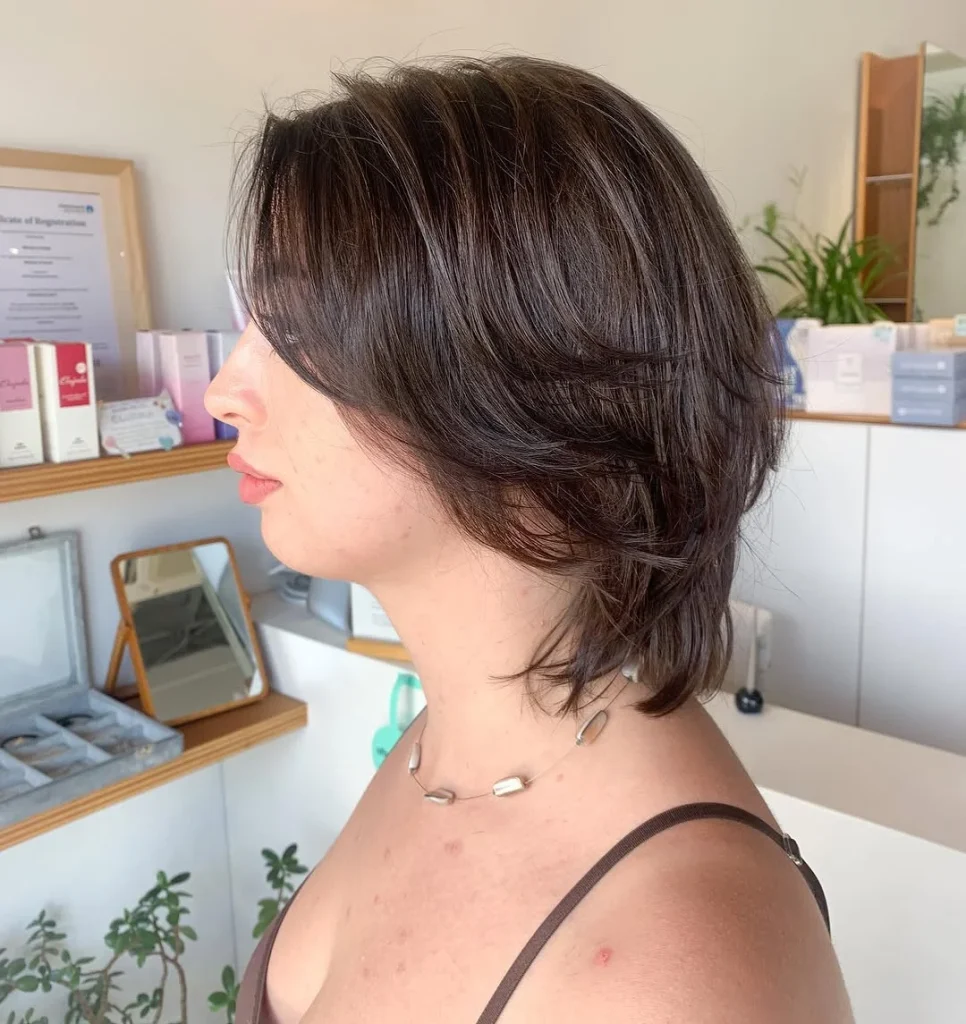
1. Soft short wolf cut with curtain bangs
View Instagram post by @misola.nz
Curtain bangs make the short wolf cut easier to grow out because they can be swept to either side as the layers settle. Ask for a shaggy crown, cheekbone-length face pieces and a slightly longer nape. The shortest layers should move independently instead of forming a blunt bob line. A small round brush at the front and a little texture cream through the crown are usually enough for everyday styling.
2. Ear-length wolf cut with wispy fringe

View Instagram post by @hairsalon.amour
This cropped version sits around the ears but keeps the signature broken layers at the crown and back. The wispy fringe should separate naturally, revealing small glimpses of the forehead rather than creating a heavy block. Ask your stylist to leave a few narrow pieces over the ears and a soft nape. It is ideal if you want more movement than a tidy pixie without committing to a long shag.
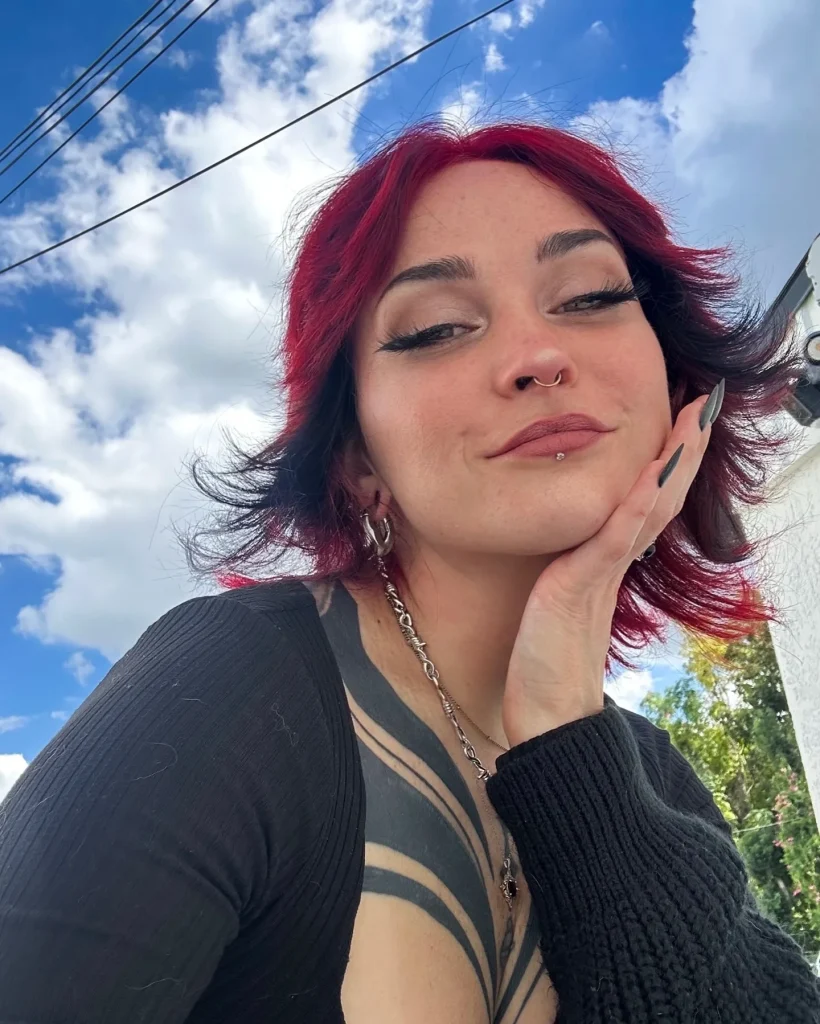
3. Chin-length wolf cut with feathered ends
View Instagram post by @maddiemarissa
A chin-skimming wolf cut needs longer pieces underneath the crown layers so it does not collapse into a plain bob. Keep the perimeter uneven and feathered, with little points framing the jaw. Styling with a flat iron can bend the ends outward, but use a low, appropriate heat setting and protection product. The contrast between a lifted crown and airy ends creates the recognizable wolf shape.
4. Straight-hair wolf cut with choppy crown

View Instagram post by @jeanclaudeelmoughayar
On naturally straight hair, the wolf shape comes from deliberate layer placement rather than curl or wave. Ask for short, well-blended crown pieces that fall into longer sections near the neck. Too much thinning can leave the bottom sparse, so the stylist should protect density at the perimeter. A pinch of matte texture paste at the crown helps individual layers separate without making all the hair look stiff.
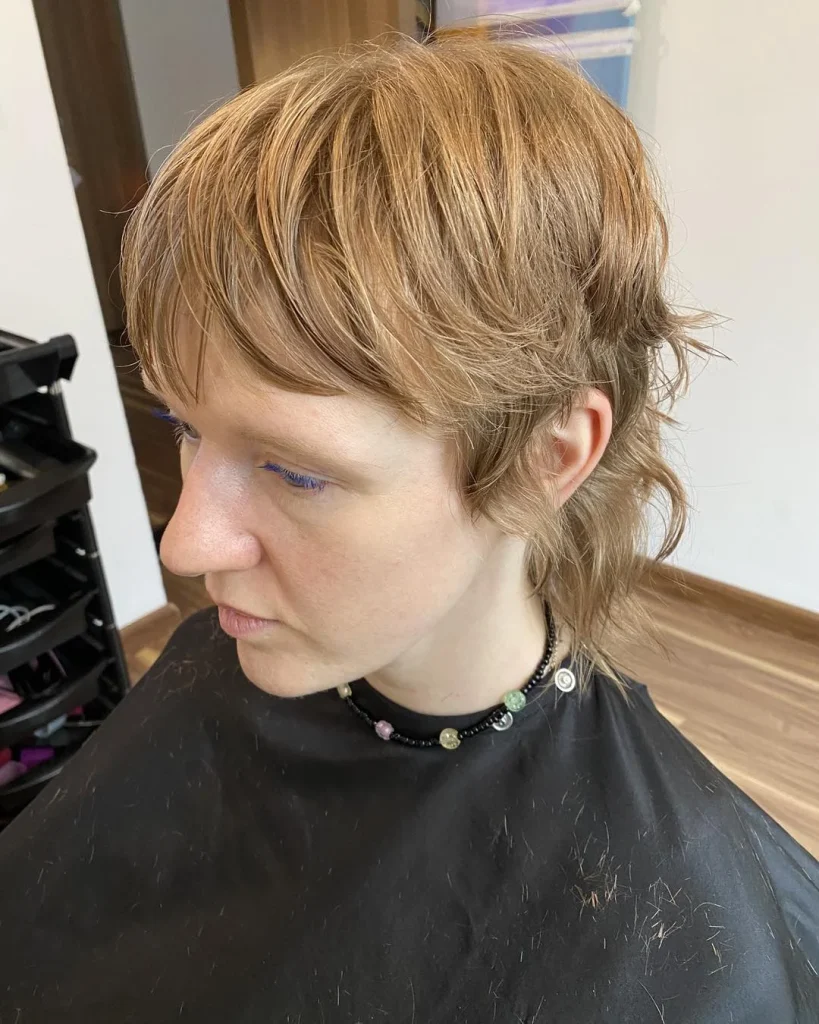
5. Airy wolf cut for fine hair
View Instagram post by @hairb_ymon
Fine hair needs a lighter version of the silhouette. Ask for controlled, shallow crown layers and a nape that retains enough weight to look full. A heavy razor cut through the ends may make fine strands appear stringy. Rough-dry the roots gently with your fingers and use a modest amount of texture spray, avoiding oil-heavy creams. The goal is visible movement with a believable outline, not maximum frizz.
6. Short wolf cut for thick hair

View Instagram post by @nubestsalon
Thick hair can turn into a wide triangle if every layer sits at the same height. A stylist can remove bulk within the interior while leaving a soft, slightly longer nape and face-framing pieces. Ask to see how the crown falls when dry, especially if your hair has hidden waves. A lightweight smoothing cream on the ends helps control puffiness without flattening the deliberately choppy top.
7. Wavy short wolf cut with a loose fringe

View Instagram post by @lizzhouser
Natural waves give the short wolf cut its messy shape with relatively little heat styling. Keep the fringe long enough to bend toward the cheekbones, then cut shorter pieces around the crown to encourage lift. Scrunch in a light mousse while damp and let the hair air-dry or diffuse gently. Avoid brushing through the waves after they dry, which can turn defined bends into a broad, fuzzy outline.
8. Curly wolf cut with rounded crown volume

View Instagram post by @hairbyvantha
For springy curls, the crown can be rounded rather than spiked. Ask for layers shaped around the curl pattern with a few longer curls left at the nape. Dry cutting or curl-by-curl refinement can help a stylist judge the final length after shrinkage. Apply a curl cream and light gel to damp sections, diffuse on low airflow, then release the cast gently. The haircut should still show a nape, not become a uniform round crop.
9. Short wolf cut for loose 3A curls
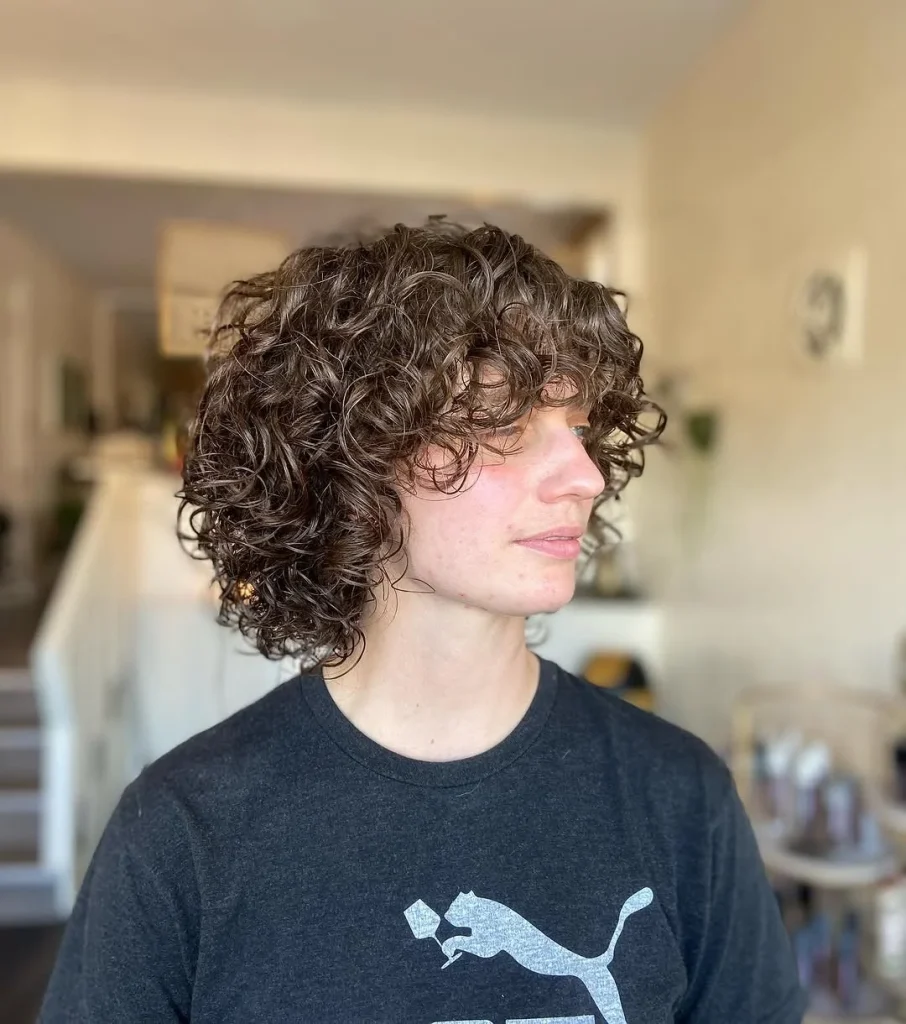
View Instagram post by @sacralcrown
Loose 3A curls need a little room to form full spirals, particularly near the ears. Keep the upper layers shorter but avoid cutting the sides so close that the curls shrink above the desired outline. A longer back panel preserves the wolf shape. Work in a curl-defining product while damp and separate only the curls that need it. The result should feel layered and intentional, not like disconnected ringlets.
10. Soft wolf cut for afro-textured curls

View Instagram post by @lalaartist
Tight 3C ringlets can wear a softer wolf shape through a fuller layered crown and a full curly fringe at brow level. Ask for targeted layers that build shape and movement without stretching the curls, and keep the ends at the neck so the cut stays short once the curls dry. Warm caramel highlights woven through the dark brown curls catch the movement around the face and make the layers easier to read. A leave-in conditioner and a light hold product can define the ringlets without flattening the crown.
11. Soft wolf cut for women over 50

View Instagram post by @wendylmcwilliamsart
A short wolf cut can be gentler around the face without losing its layered personality. Choose a cheekbone-skimming fringe, airy crown pieces and a nape that lands neatly against the neck. A stylist can keep the perimeter refined while leaving the top textured enough to move. This looks good with natural gray or colored hair and is an option if you want volume without the maintenance of a heavily styled blowout.
12. Silver-gray short wolf cut

View Instagram post by @hdiva_hair_boutique
Silver hair makes the short crown layers easy to see, especially when the roots and ends reflect light differently. Keep the haircut soft around the temples with a slightly longer back. If your texture is coarse or dry, use a conditioning styling cream before applying a small amount of root-lifting spray. Purple shampoo may help some yellow tones when used appropriately, but it does not replace regular moisturizing care.
13. Cheekbone layers for a round face

View Instagram post by @davidwbullen
To emphasize vertical movement on a round face, ask for a slightly taller crown and pieces that skim below the cheekbones. Avoid cutting every side layer at its widest point near the cheeks. A split fringe can keep the forehead open while the longer nape creates a downward line. Face shape is only one factor; your natural density and preferred styling effort matter just as much.
14. Jaw-framing wolf cut for a long face
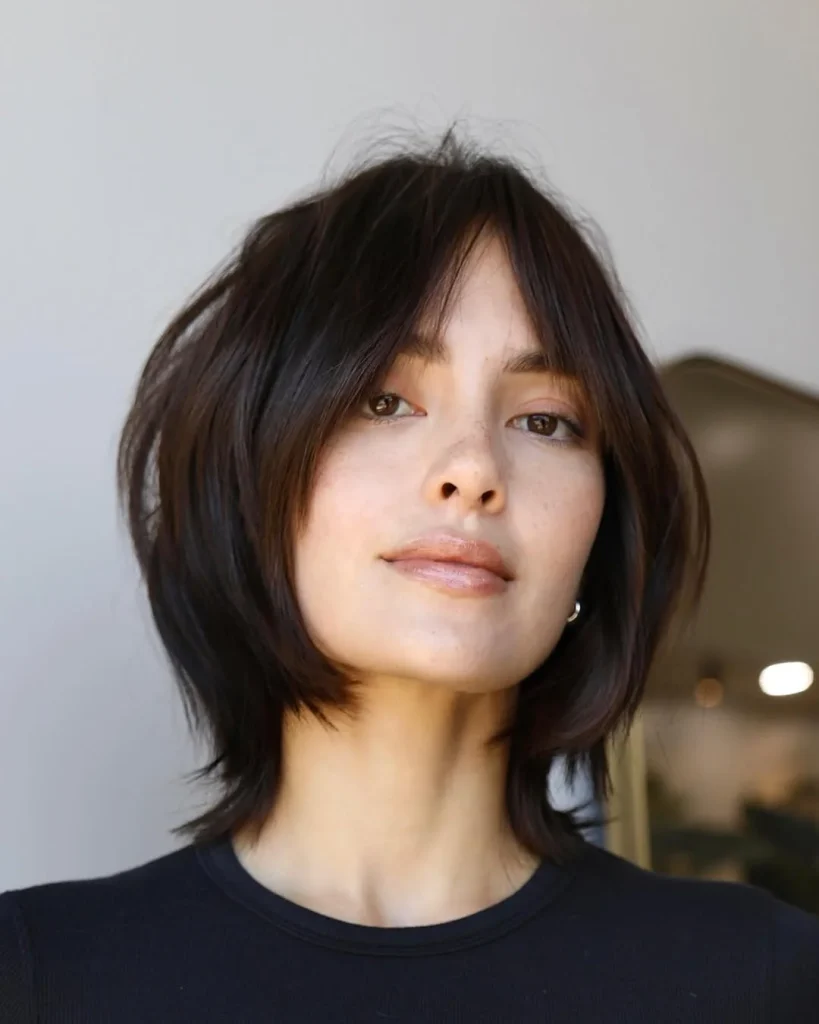
View Instagram post by @hirohair
A long face can suit a wolf cut with some width around the cheekbones and a fuller fringe. Ask for rounded side movement instead of very high crown volume. Keep the lower nape soft rather than stretching it into a tail. A wide-tooth comb through damp waves and light scrunching can help the side layers open up. The haircut still needs irregular lengths to remain a wolf rather than a simple layered bob.
15. Balanced wolf cut for an oval face
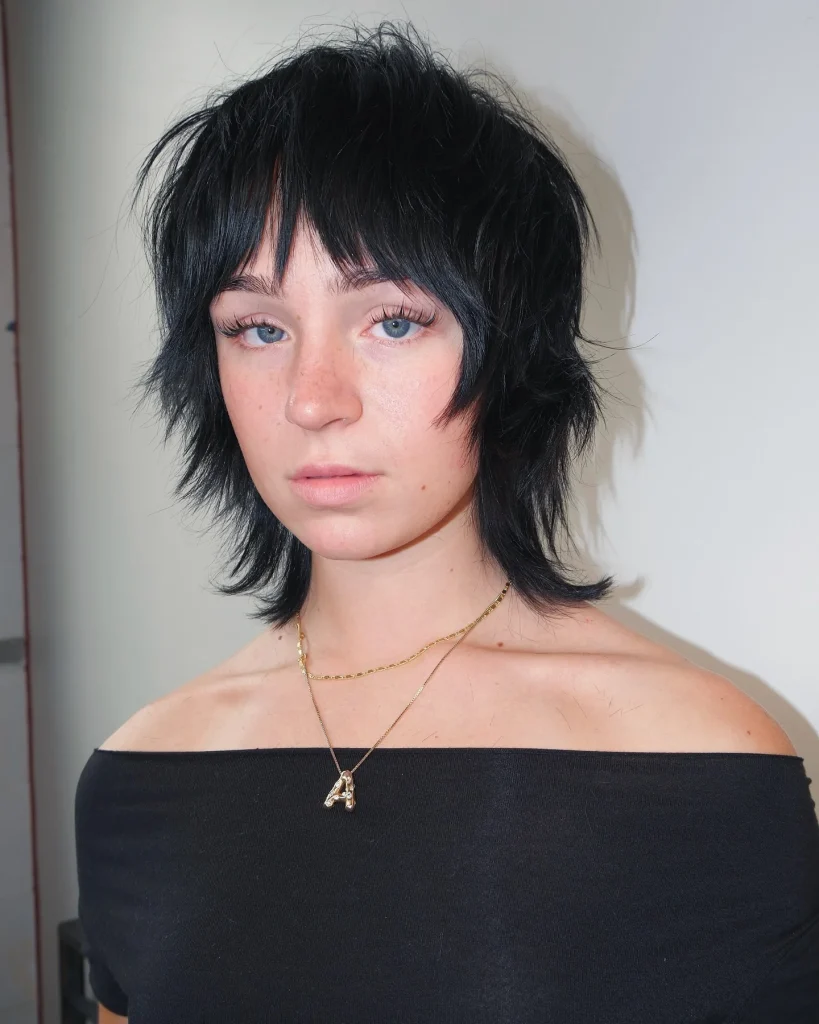
View Instagram post by @andy_doesyourhair
An oval face gives you flexibility with fringe length, so let hair texture decide the details. A mid-brow fringe, tousled crown and collar-skimming nape make the cut recognizably wolf-like. Keep the top shorter than the back but avoid a hard disconnect at the ears. A blow-dryer diffuser or air-drying can both work depending on texture; ask your stylist which finish best reflects your everyday routine.
16. Short wolf cut with micro bangs

View Instagram post by @theasiansalon.cr
Micro bangs make this variation more graphic and need the rest of the cut to stay soft. Ask for short, uneven fringe pieces above the brows, then longer wisps beside the temples and a gently broken neckline. Very tight bangs can expose cowlicks, so check your natural growth pattern before cutting. Styling the fringe first, while still damp, makes it easier to control where it falls.
17. Pixie-length wolf cut
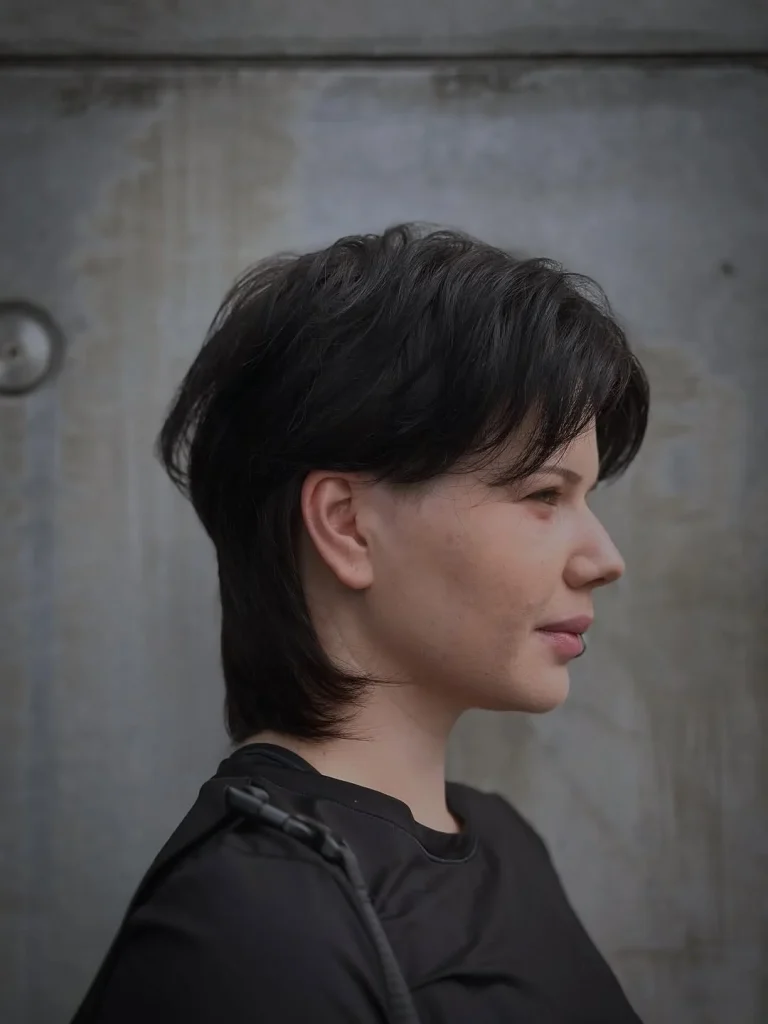
View Instagram post by @shiko_ink
A pixie-length wolf cut keeps some length at the nape and behind the ears while taking the crown noticeably shorter. The shape sits between a classic crop and a shaggier cut. Ask your stylist not to taper the back completely or it will lose the wolf silhouette. Work a pea-size amount of matte paste through nearly dry hair, pinching just a few pieces instead of trying to spike the whole crown.
18. Wolf-inspired mixie with soft nape

View Instagram post by @sophcresdoeshair
A mixie mixes cropped pixie proportions with a longer, softer back; the wolf influence comes from its textured top and face-framing layers. Keep the ear area open but allow wisps to sit behind it. This is best for someone comfortable with a pronounced shape. It needs regular neckline maintenance, even if you style it simply with fingers and a little cream.
19. Mini-mullet wolf cut with longer back
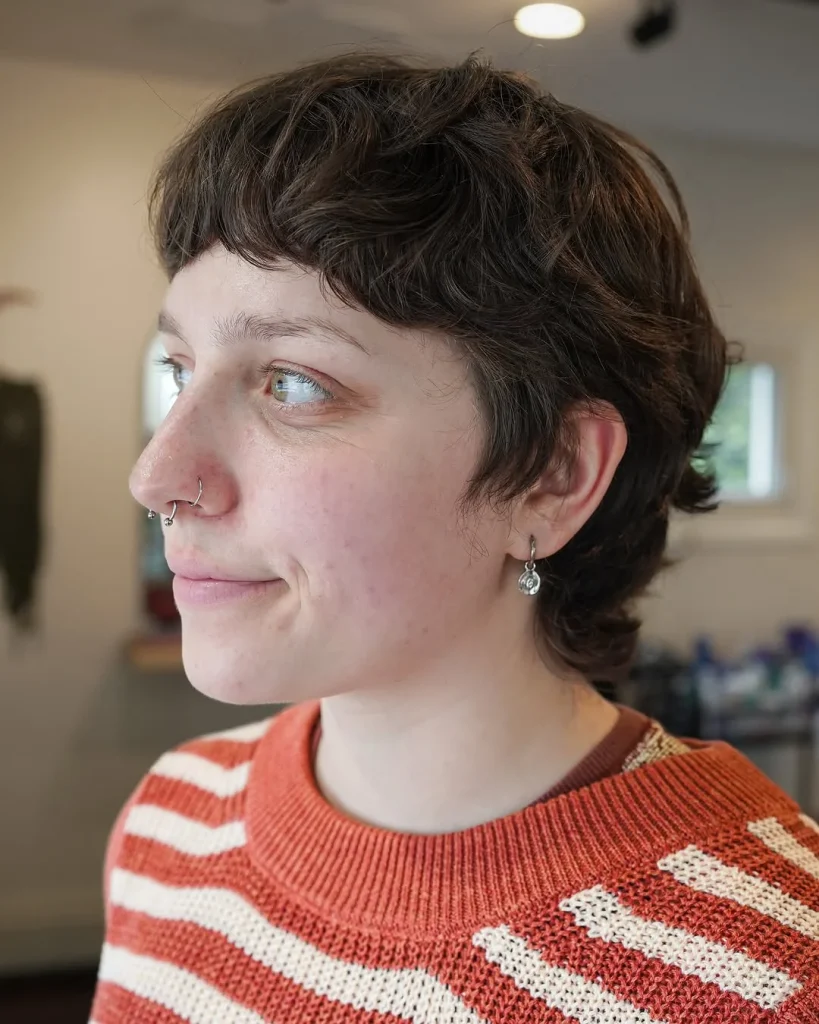
View Instagram post by @cutbysaintvier
If you like a little edge, let the nape extend an inch or two below the shorter sides while keeping the crown full. The transition should remain layered rather than abruptly shaved. Ask for a soft outline around the ears so the back does not resemble a separate tail. A quick blast of air at the roots and scrunching cream through the ends emphasize the contrast without requiring intricate styling.
20. Shaggy wolf cut with a defined nape

View Instagram post by @onnihair
This version concentrates its weight at the upper back of the head and lets the lower nape form separated, textured points. A longer fringe balances the back so the haircut does not look all rear-heavy. When styling, lift the crown with fingers and push the nape ends outward lightly. It works best if you want the wolf’s broken silhouette but do not want a dramatic mullet.
21. Side-swept short wolf cut

View Instagram post by @hairbytory
Keep one side of the fringe longer so it sweeps toward the eyebrow, while short crown layers fall in the opposite direction. The asymmetry adds movement without requiring an undercut. Ask for the longer side to blend into cheekbone pieces and the nape to remain softly layered. A little root spray and a brief blow-dry in the fringe’s intended direction can hold the sweep without heavy hairspray.
22. Textured bangs with a soft short wolf

View Instagram post by @anasahairstudio
Textured bangs work when the fringe has small gaps and uneven points instead of a uniform horizontal edge. Pair them with loose, lifted crown layers and a few longer pieces behind the ears. This is useful for women who want forehead coverage but dislike heavy bangs. Styling only the fringe with a small brush while letting the back air-dry gives a more relaxed result.
23. Full-brow bangs and choppy layers

View Instagram post by @nunzio_nyc1
A brow-length fringe gives a stronger frame to the eyes, especially with shaggy crown layers and a narrow nape. Keep the fringe soft at the edges so it connects to the face-framing hair. If your hair is thick, ask for subtle internal texture to keep it from forming a shelf. Dry the bangs forward first, then direct the crown backward to create separation between the two areas.
24. Center-parted short wolf cut
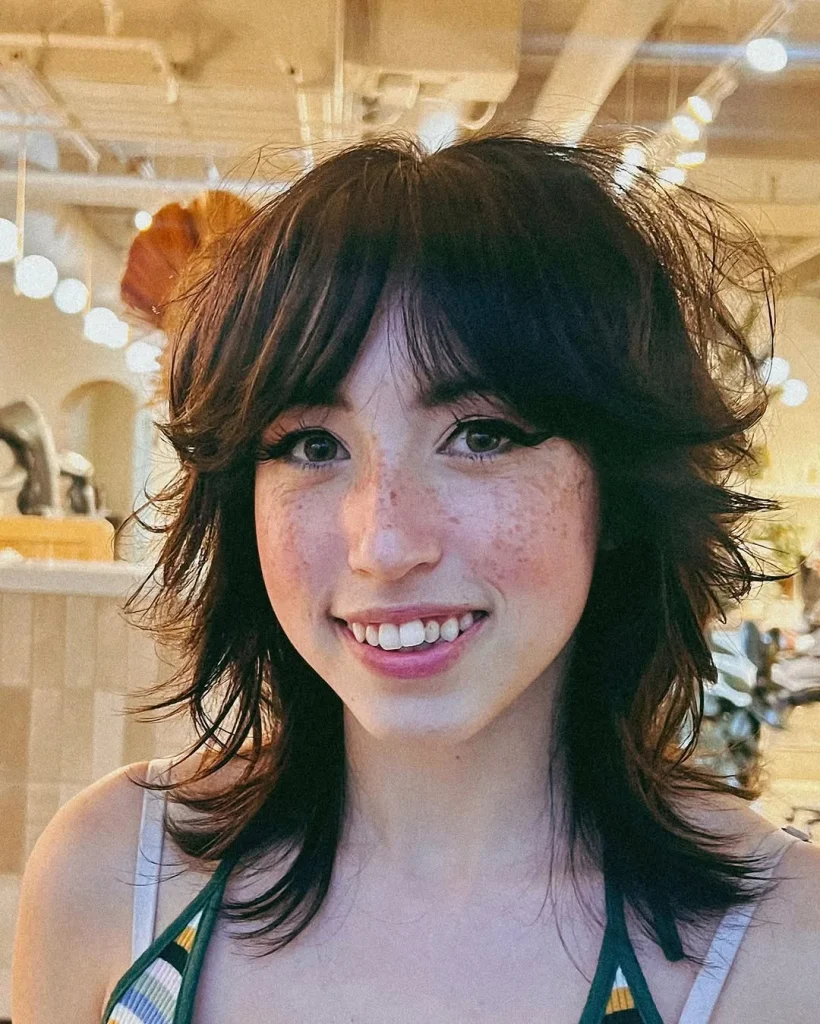
View Instagram post by @he_paints_hair
A center part makes the face-framing pieces the main feature. Cut them so they open around the cheeks and blend into a textured crown, leaving the back slightly longer. This is a good option if you want a wolf cut without a conventional fringe. Encourage the front pieces away from the face with your fingers while drying, then leave the ends loosely bent rather than curling them into perfect ringlets.
25. Off-center part short wolf cut
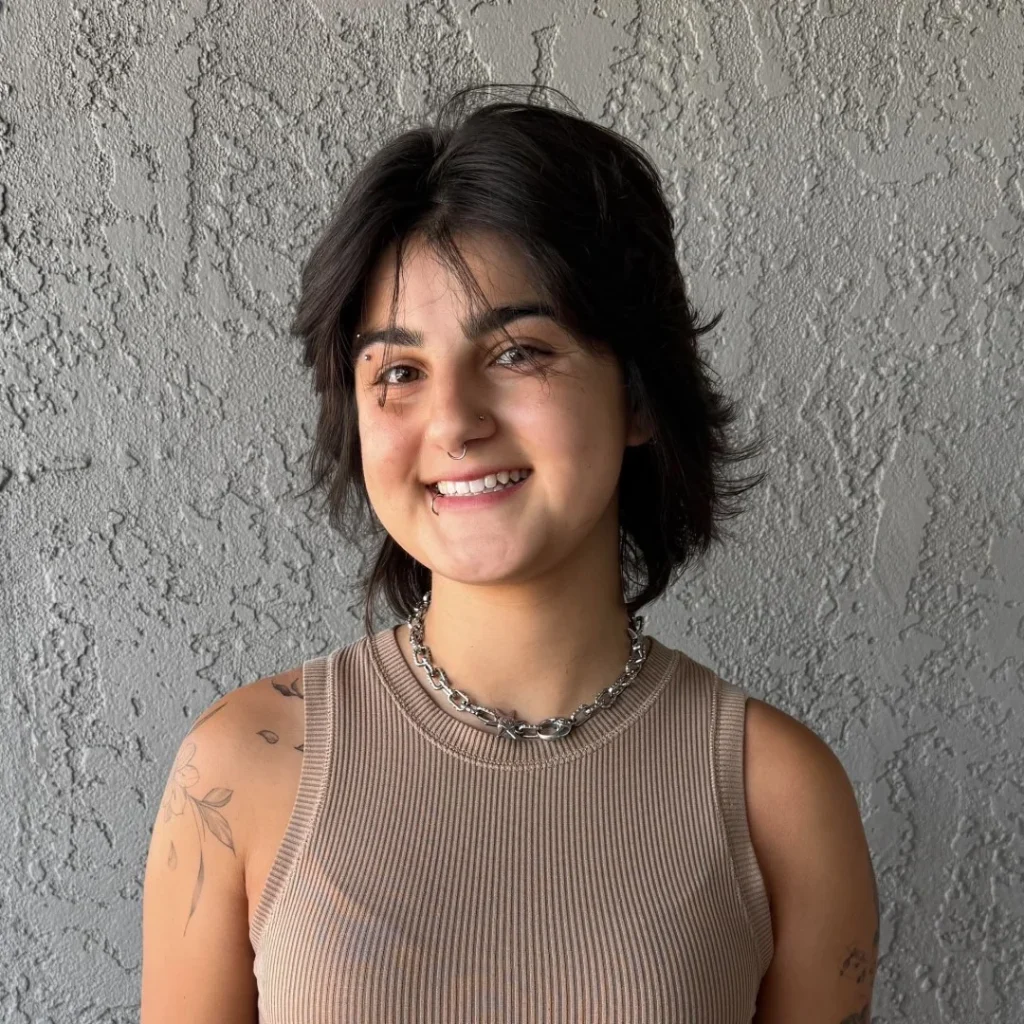
View Instagram post by @anasahairstudio
One side can sit near the cheekbone while the other drops closer to the jaw, creating subtle asymmetry. The crown remains choppy and the nape soft, so the haircut still reads as a wolf. This choice works best if you already wear an off-center part. Ask the stylist to check the balance when your hair is dry, since waves can shorten one side unexpectedly.
26. Crown-lift wolf cut for flat roots

View Instagram post by @geminimanebeautyco
If your roots fall flat, concentrate layering near the upper back of the head rather than taking length off every section. A lightweight root mousse and lifting the roots while drying can add movement. Keep a longer layer beneath the crown to prevent the shape from becoming spiky. The nape needs to sit visibly below the top layers so the whole cut looks like one hairstyle.
27. Smooth-top short wolf with flicked ends

View Instagram post by @styled_by_selena
A short wolf cut does not have to be aggressively messy. Keep the top fairly smooth while turning the longer cheek and nape pieces outward with a small brush. The short crown still provides layered structure, and the flicked ends reveal the broken perimeter. This is handy for straight or slightly wavy hair and works with a light heat protectant instead of thick wax.
28. Short wolf cut that works with glasses

View Instagram post by @honami_0220
Glasses can compete with long temple pieces, so ask for layers that curve around the frames instead of bunching behind them. Keep the fringe just above or beside the upper rim and let the crown provide volume. A small amount of flexible hold spray near the temples can limit flyaways without making the hair rigid. Bring your glasses to the haircut so your stylist can see where the frames sit.
29. Copper short wolf cut with loose layers
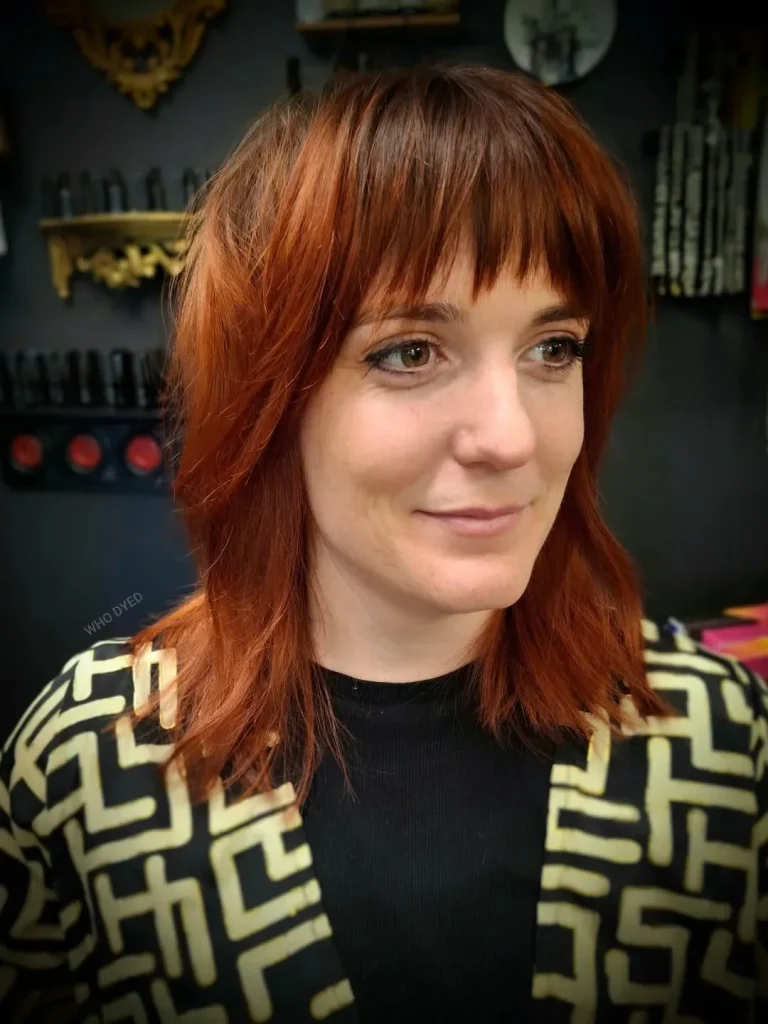
View Instagram post by @whodyed
Copper color makes piecey layers visible in photographs, but the cut still needs the right structure. Keep short crown sections, longer flicked nape pieces and soft fringe around the face. If your hair is color-treated, use products suited to that service and avoid unnecessary daily heat. A touch of lightweight shine serum on the ends can define the layers without weighing down the top.
30. Brunette wolf cut with soft dimensional highlights
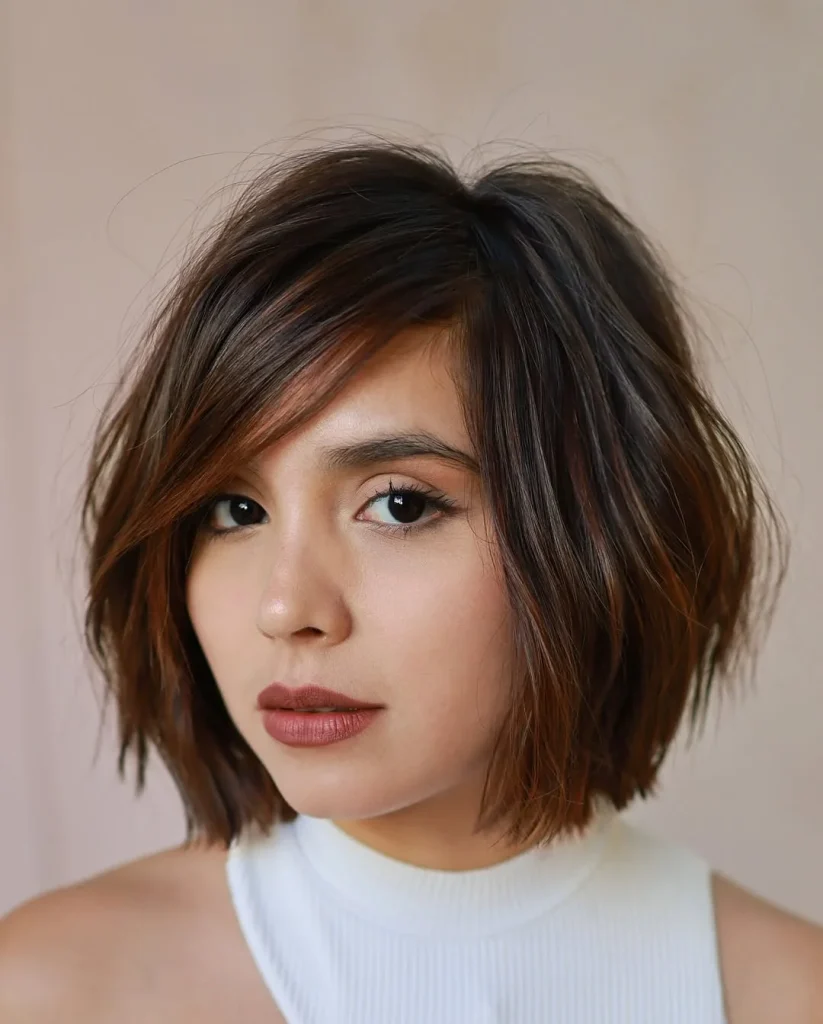
View Instagram post by @hirohair
Soft dimensional highlights can lift a brunette wolf cut without changing the base color. Ask for warm, lighter pieces woven through the face-framing layers and the choppy crown, so the dimension catches the movement around the face. Keep the cut short all the way around and the highlights soft, so they read as part of the cut. Ask the stylist to show how the highlights will sit when the layers separate naturally.
31. Polished 1990s short wolf cut
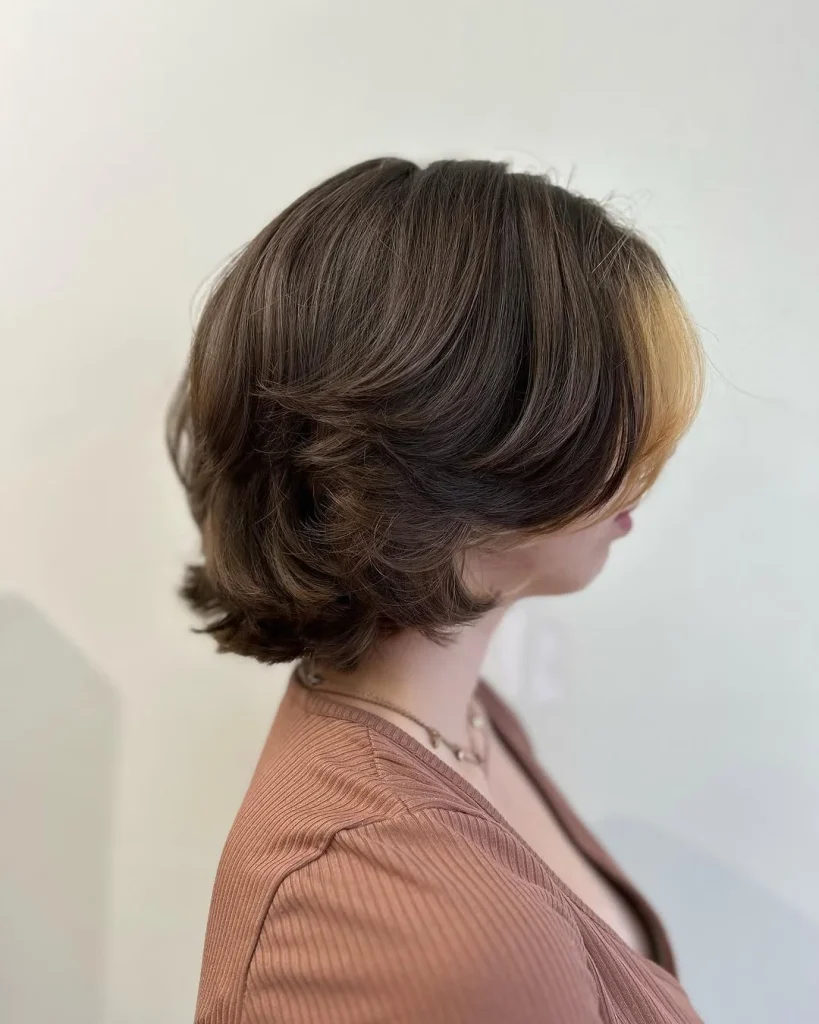
View Instagram post by @alexisfaithstylist
For a soft 1990s finish, turn the longer side and nape pieces outward while keeping the crown airy. Use a small round brush or appropriate heat tool on only the ends, then loosen them with fingers. The cut should still have irregular layers underneath the polished finish. This is a practical way to dress up a short wolf without forcing it into a full salon blowout.
32. Air-dried short wolf cut for busy mornings

View Instagram post by @thevelvetnova
The easiest version starts with a cut designed around the hair’s natural direction and wave. Ask the stylist to check how the crown falls without much styling and preserve a nape that will not flip unpredictably. Scrunch a little leave-in or mousse through damp hair, then leave it alone while drying. A quick fingertip adjustment at the crown is usually more helpful than brushing everything smooth.
Styling and maintenance
Styling time depends more on your texture than the haircut’s name. Fine straight hair may need root lift and a quick dry, while curls benefit from damp styling, careful diffusing and limited manipulation. Ask your stylist how often the fringe and nape need trimming to preserve the shape. If you use heat, match settings to the tool and your hair condition. Keep leave-in products light at the crown so the shorter layers can move.
Short wolf cut FAQ
How is a short wolf cut different from a shag? Both are layered and textured. A wolf cut usually has a more pronounced crown-to-nape contrast, while many short shags distribute layers more evenly around the head. Compare with our shaggy bob haircuts for a neater perimeter.
Can fine hair wear a wolf cut? Yes, if the stylist avoids removing too much weight. Ask for restrained crown layers and fuller ends rather than excessive thinning and razoring.
Does a short wolf cut need bangs? No. Curtain pieces, a side sweep or a center part can create face framing without a full fringe. What matters is the layered crown and slightly longer lower outline.
Can it work with curls? It can, but the finished shape depends on curl formation and shrinkage. Our curly shag haircut ideas offer more curl-focused references.
What if I want a more dramatic back? Look at our feminine mullet shag or mixie and pixie-mullet ideas. They sit farther toward the mullet end of the spectrum than most options here.
When choosing a short wolf cut, check how the crown layers and nape sit after your hair has dried naturally. Show your stylist a reference with a similar texture and explain which parts of the shape you want to keep between appointments.
Styling and upkeep
A short wolf cut is styled around the crown, not the ends. Start with a light mousse or a texturising spray at the roots, then lift the crown with your fingers or a round brush while the hair dries — the layers should separate, not lie flat. A little wax on the ends defines the pieces without weighing them down, and a flexible-hold hairspray keeps the shape without making it stiff. If your hair is fine and straight, a root-lifting spray and a quick diffuse give the crown the height it needs; if it is curly, a curl cream and a diffuser let the layers form their own shape.
The cut needs a trim every six to eight weeks to keep the crown-to-nape balance, or sooner if the shape starts to lose its lift. Between appointments, the grow-out is forgiving — a wolf cut grows into a shag if the crown is left alone — but the nape needs attention, because it grows faster than the crown and can turn the shape into a mullet. Wash with a light shampoo and a conditioner that does not weigh the hair down, and avoid heavy creams at the roots. The easiest test is the morning one: if the cut still shows a layered outline after air-drying, it is working.
The right short wolf cut is the one that keeps its shape with your texture and your mornings: the crown-to-nape balance, a fringe that suits your face, layers that survive air-drying. The thirty-two ideas above cover bangs and curls, fine and thick hair, round and long faces, so there is a version for every texture and every face. Before your appointment, save two or three photos you like and take them to your stylist, along with a note of what you want from the crown, the fringe and the nape — that is the conversation that turns a name into a cut that works.