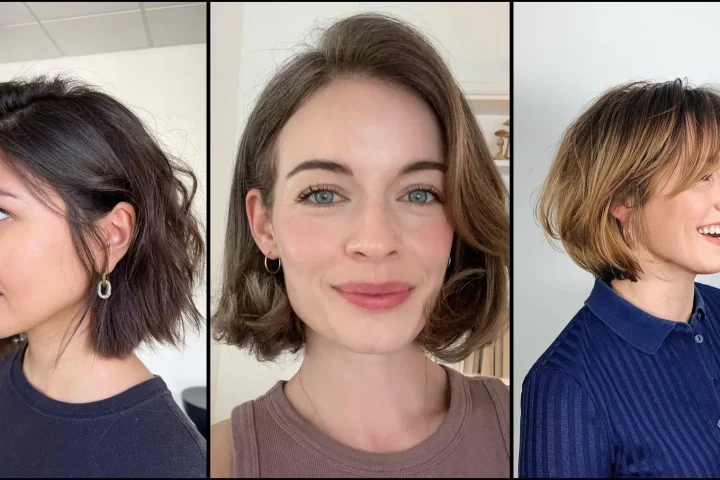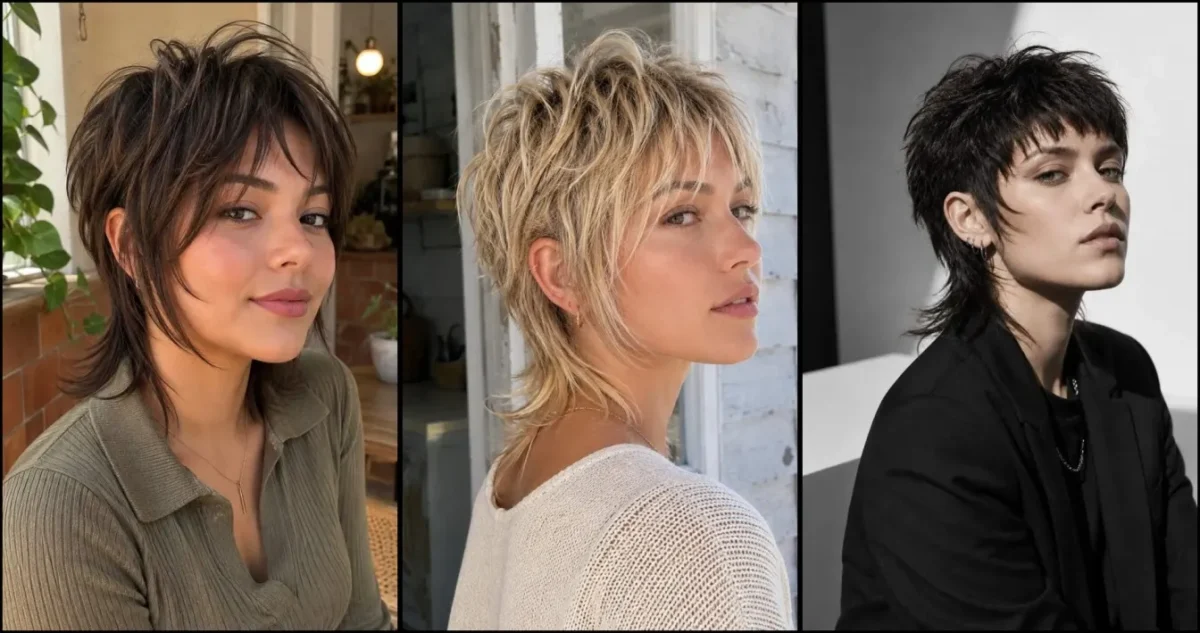
A mixie is a hybrid with a clear logic: the front behaves like a pixie, short around the crown and the ears, and the back behaves like a mullet, longer at the nape with a visible tail. That contrast is the whole cut. A bixie leans toward a bob at the back, but a mixie keeps the nape long, so the silhouette changes completely depending on whether you see it from the front or from the side. The twenty-five looks below cover the range from a gentle, grown-out mixie to a sharp contrast between front and back, for straight, wavy and curly hair, in fine and thick hair and for round faces.
The choice that matters most is how much contrast you want. A short nape gives a gentle transition that reads as a grown-out pixie and grows out easily into a bob; a clearly extended back makes the hybrid shape obvious, and it needs more commitment. The fringe sets the front: a short fringe keeps the pixie feeling, and a long diagonal sweep softens the edge. And your texture decides how the layers separate — wavy and curly hair show the piecey layers naturally, while straight hair shows every line, so the cut has to be precise. Look at the back of each photo as well as the front, since that is where the mixie is decided.
Set the contrast before cutting
- Keep the nape only slightly longer for a gentler transition from a pixie. A clearly extended back makes the hybrid shape more visible.
- A short fringe creates a different balance from a long diagonal sweep. Choose the front independently of the back length.
- Natural wave or curl changes how the layers separate. Compare dry references with similar movement rather than relying on a heavily styled photograph.
Think ahead to the grow-out
Ask which pieces will be easiest to blend into a bob later and which will need patient growth. If you want a soft outline, show how much ear coverage you prefer. Apply a small amount of styling product and separate a few sections rather than coating the whole cut. More texture is not always the answer if the perimeter already looks too thin.
How to choose a mixie that suits your face and hair
Start with the contrast, because it decides everything else. A softer mixie keeps the back close to the crown, so the shape reads as a grown-out pixie — the gentle choice if you are trying the cut for the first time or you need it to stay professional. A pronounced mixie keeps the tail long and the front short, so the shape is unmistakable from the side. Decide which you want before the cut, and bring photos of both the front and the back, since a mixie looks completely different from each angle and a photo from one side only will not tell your stylist enough.
Then look at your face and your texture. A mixie suits most face shapes because the crown lift and the nape length balance each other: height at the crown lengthens a round face, longer side pieces soften a square jaw, and an oval face can take the sharpest contrast. Texture decides the finish. Wavy and curly hair hide the grow-out and show the piecey layers on their own, while straight hair needs the layers cut so they fall cleanly when dry. Fine hair needs restraint — too much thinning at the crown leaves it flat — while thick hair needs the weight taken out through the crown and the sides, or the shape looks heavy.
Think about the grow-out before you book, because the mixie grows out in a specific way. The front will reach bob length first while the nape keeps growing, so the shape turns into a longer shag before it settles into a bob. Go in knowing which parts you will want to keep and which you are happy to let grow, and talk about the grow-out with your stylist before the cut. An undercut or shaved sides make the shape sharper, but they ask for more frequent trimming and a commitment to the look, since they grow out more slowly and unevenly. And if you are growing a pixie out, a mixie is the shape that gives you a deliberate style in between — a grown-out pixie does not have to look accidental.
1. Soft Shaggy Mixie Pixie Mullet
Shaggy crown layers melt into wispy temple pieces and a slightly longer nape, with feathered ends that keep the back swishy rather than stacked. Shown in a warm mushroom brown, this look keeps airy movement around the face. Ask for point-cut ends at the nape, and scrunch a light texture spray through dry hair to separate the layers.

2. Mixie Pixie Mullet Thin Hair
Fine hair gets lightweight crown layers, delicate side pieces, and a narrow nape, so the shape gains lift through separation instead of heavy stacking. this look version is shown in a pale ash blonde, which helps the airy ends look fuller. A volumizing mousse at the roots and a quick blow-dry with your fingers lifting the crown are all it needs.

3. Long Layered Mixie Pixie Mullet
Longer face-framing pieces skim the cheekbones, and crown layers flow down into an extended nape that adds swing at the back. It stops short of a full shag.

4. Straight Hair Mixie Pixie Mullet
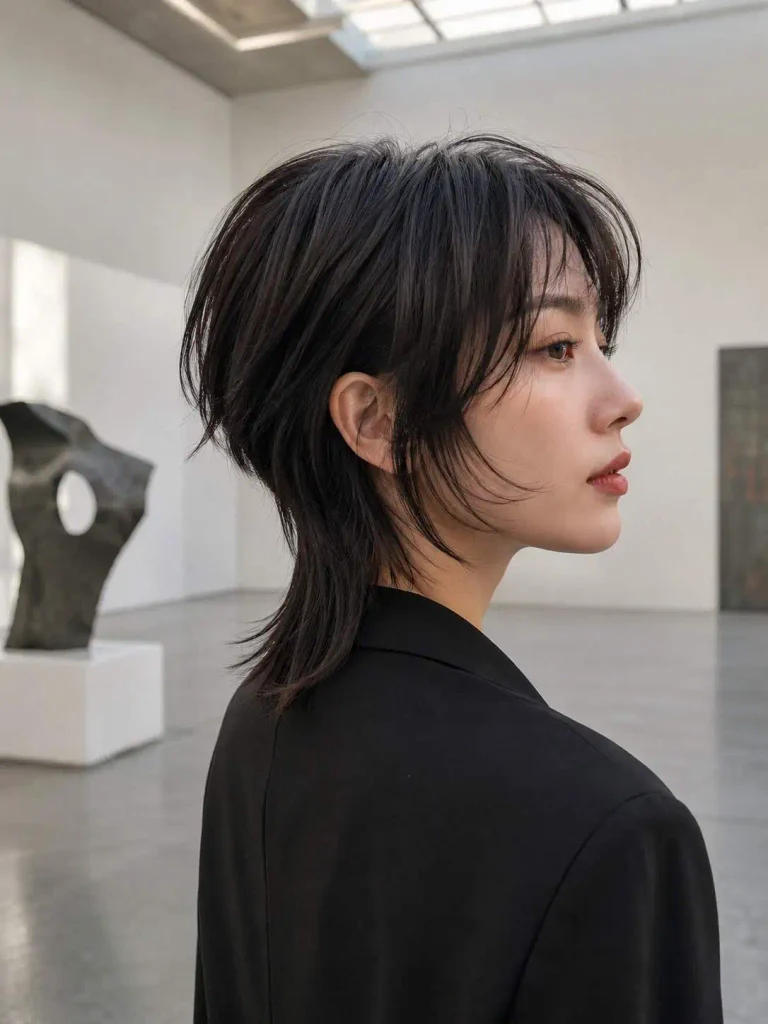
Straight strands show every line of this cut, from the cropped crown and piecey side sections to the wispy fringe and the sleek nape left longer at the back. Shown in glossy jet black, this look relies on sharp separation rather than volume. Fine to medium straight hair styles in minutes with a pea-sized amount of matte paste.
5. Round Face Mixie Pixie Mullet
Extra height at the crown pairs with longer wispy side pieces that angle down past the cheeks, while the nape stays narrow and piecey. That vertical line keeps width away from the fullest part of the face. Finished in a medium caramel brown, this style looks best with a root-lift spray at the crown and the side pieces kept below cheekbone length.

6. Curly Mixie Pixie Mullet Layers
Defined curls sit in short rounded layers through the crown and temples, then stretch into a slightly longer curly nape. Tiny coils are left loose around the hairline.

7. Wavy Mixie Pixie Mullet Cut
Loose waves are shaped into feathery crown layers, with curtain-like pieces at the temples and a longer back that bends instead of sitting in a rigid mullet line. Waves this loose look best slightly messy. Shown in a honey bronde, this look works on 2A to 2C hair; scrunch sea salt spray into damp lengths and air-dry or diffuse on low.
8. Short Curly Mixie Pixie Mullet
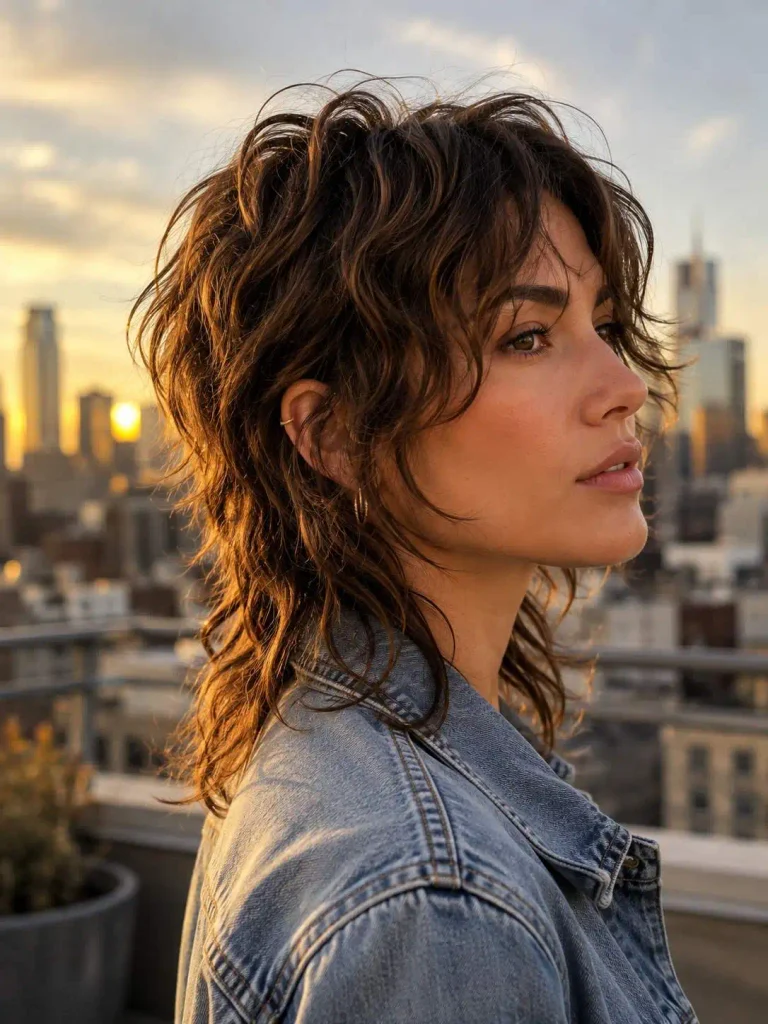
Curls are cropped close around the ears, with airy volume at the crown and a compact curly tail at the nape. Small coils frame the forehead and temples, and this look keeps a controlled outline in a dark cocoa brown.
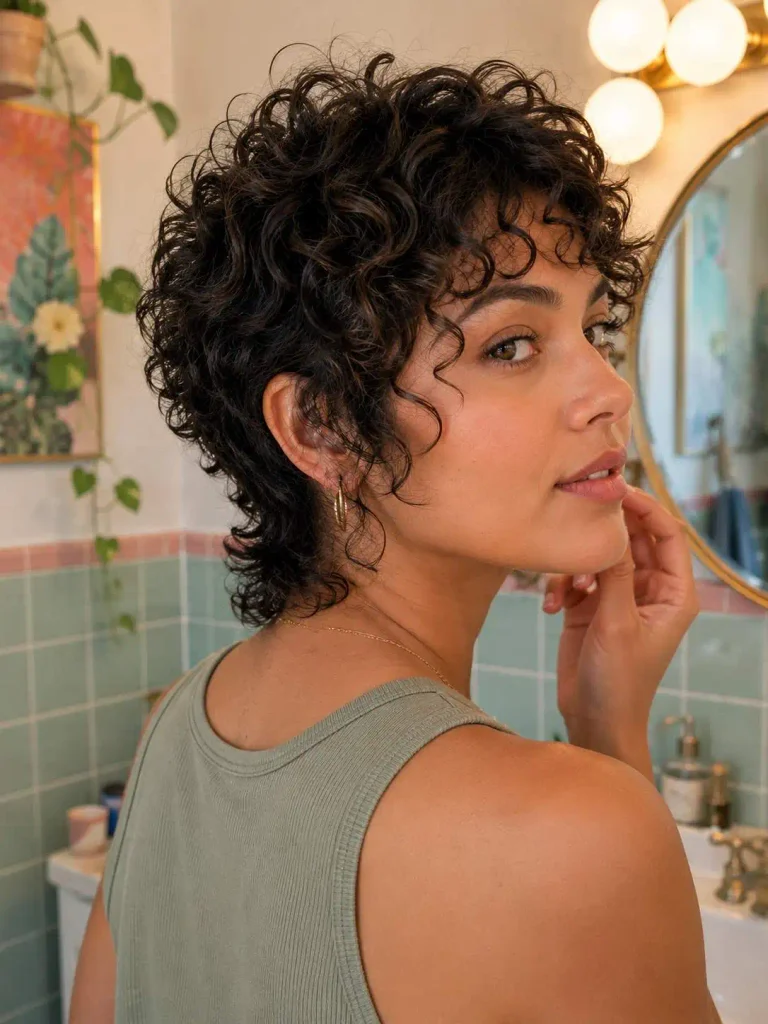
9. Short Textured Mixie Pixie Mullet
Choppy micro-layers break up the crown and sides, leaving piecey ends around the ears and a short feathered nape. Even without a long back section, the mullet shape still reads clearly.
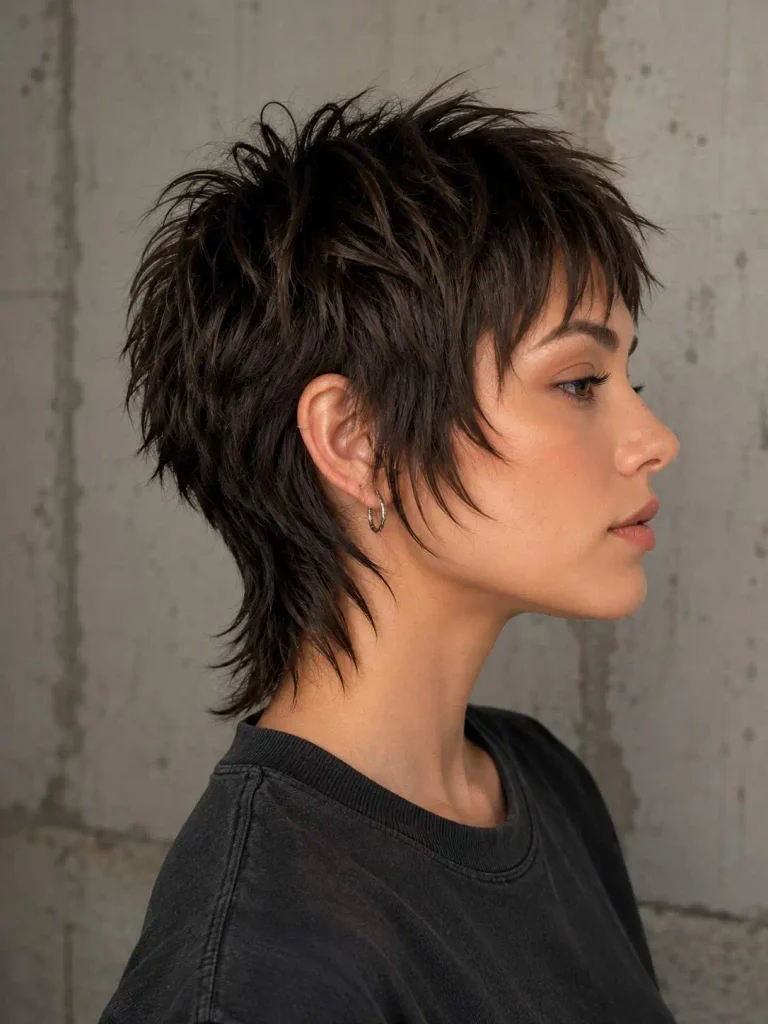
10. Blonde Mixie Pixie Mullet Shag
Razored layers form a shaggy crown with wispy fringe, feathered sideburns, and a slightly longer nape where pale ends catch the light. This look is shown in a buttery golden blonde that makes each layer easy to see.

11. Mixie Pixie Mullet Baby Bangs
Choppy baby bangs sit high above the brows and blend into piecey temple layers. Behind them, the crown stays airy while the nape extends into a clear pixie-meets-mullet outline, and this look comes across artsy in a deep auburn.

12. Curtain Bangs Mixie Pixie Mullet
Longer curtain pieces split at the center of the forehead and sweep into feathered layers at the cheekbones. Above a narrow, slightly extended nape, the crown stays cropped, so this look balances its edgier back with movement around the eyes in a light golden brown. Blow-dry the bangs over a round brush, rolling each side away from the face.

13. Mixie Pixie Mullet for Black Women
Coils are tapered close around the temples and shaped into airy crown volume, then left slightly longer through the back so the mullet line shows. The curl pattern stays intact.
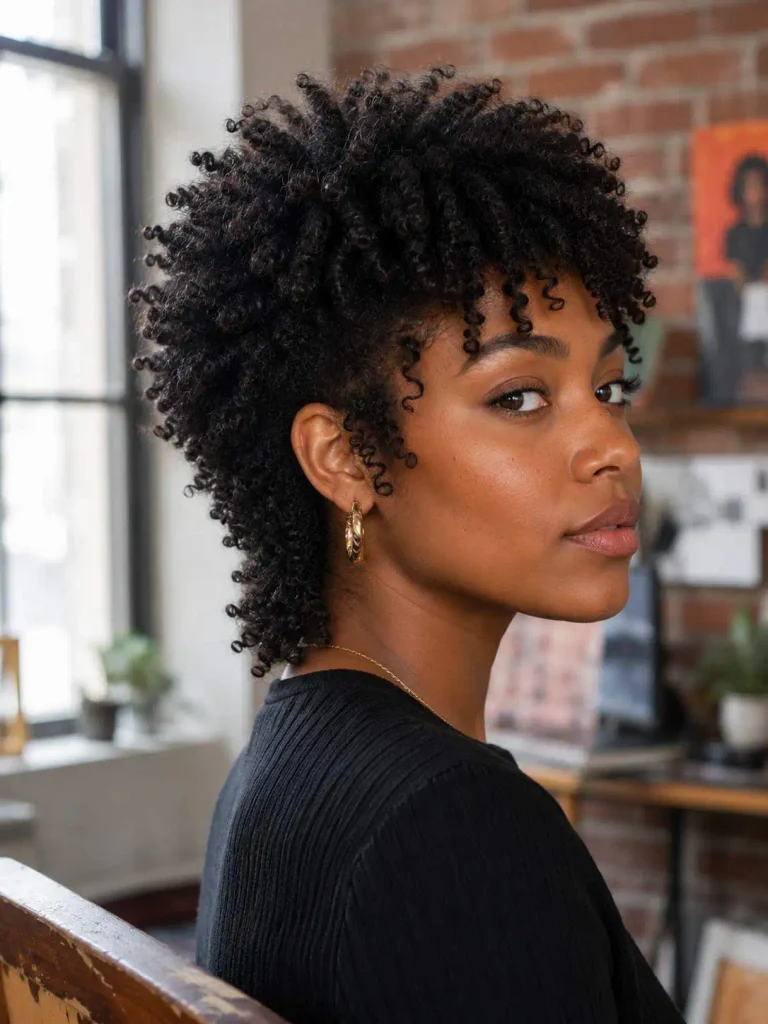
14. Asian Mixie Pixie Mullet Layers
Silky straight layers are cut short through the crown, with wispy pieces at the cheekbones, exposed ears, and a light feathered nape. Internal thinning keeps dense hair from feeling heavy.
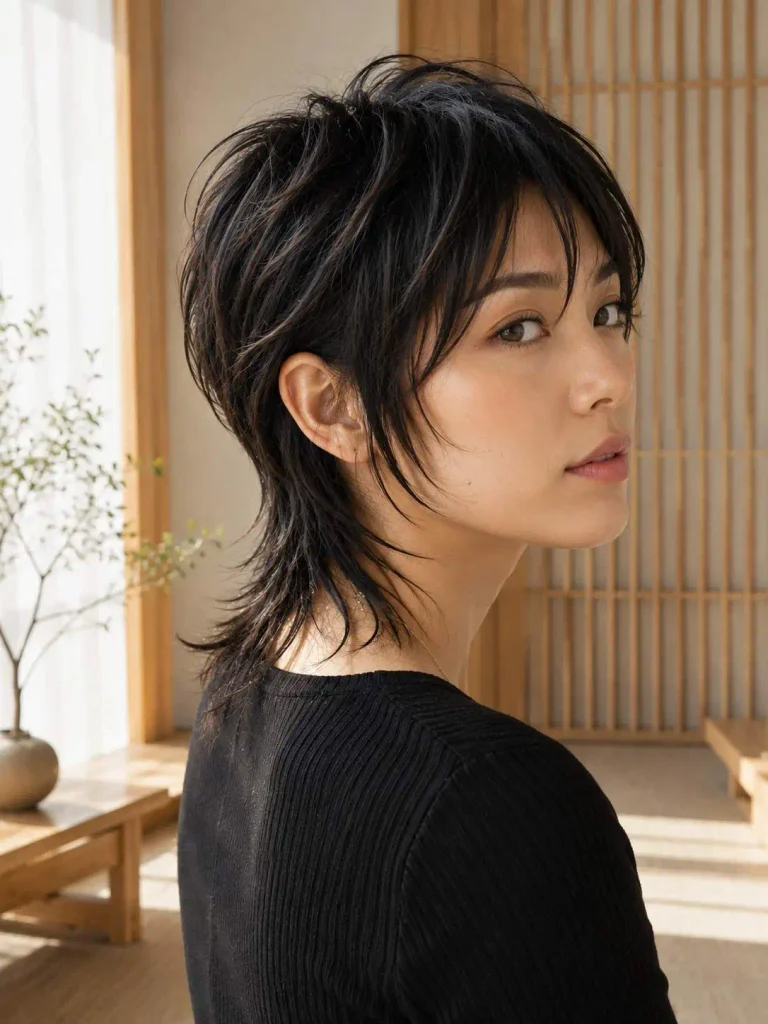
15. Choppy Mixie Pixie Mullet Cut
Chunky piecey sections stack through the crown, then break into uneven side layers and a jagged feathered nape. The outline is deliberately imperfect.

16. Modern Soft Mixie Pixie Mullet
Gently layered at the crown, this version keeps the sideburns wispy and the nape only slightly elongated, so every section blends into the next. There is no harsh disconnection between the top and back. Shown in a mocha brown, this look is an easy first step into the trend, and a light styling cream finger-combed through dry hair finishes it.
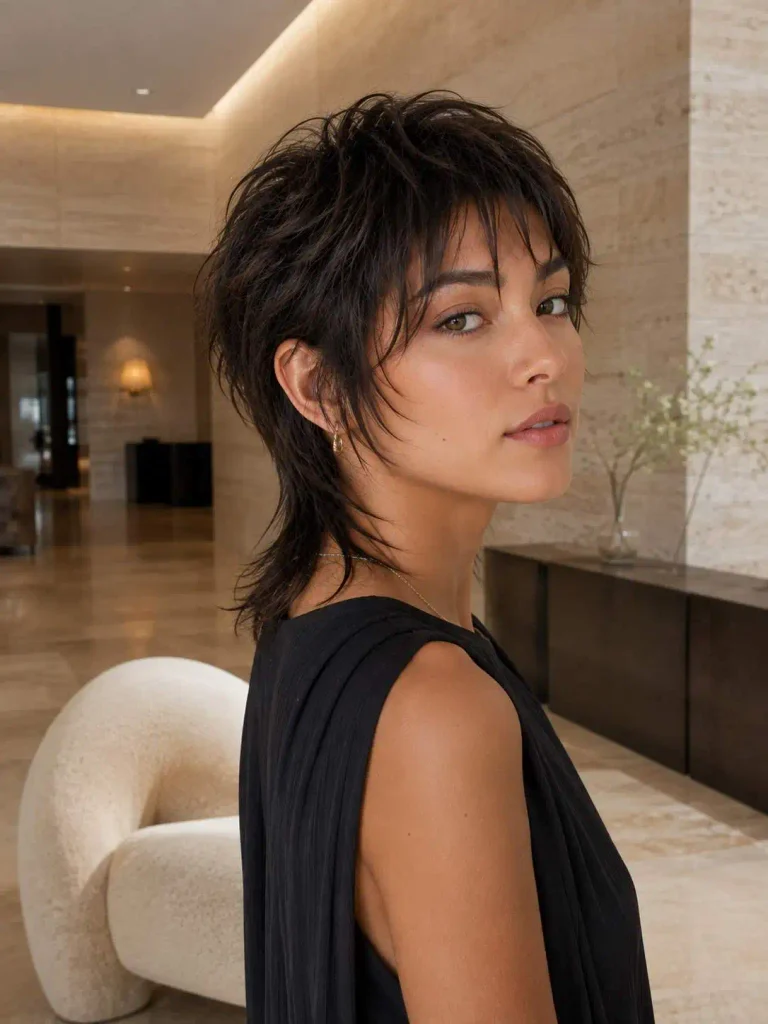
17. Pixie Wolf Cut Mullet Mixie
Wolf-cut layering lifts the crown and adds feathery side layers, while short face-framing pieces step down into a longer, swishy nape. Wispy ends keep the stacked shape from turning blocky.

18. Mixie Pixie Mullet Undercut Layers
A hidden undercut removes weight beneath the sides, while longer layers sweep over it and the nape stays extended enough to keep the mixie outline. Lift stays airy at the crown.
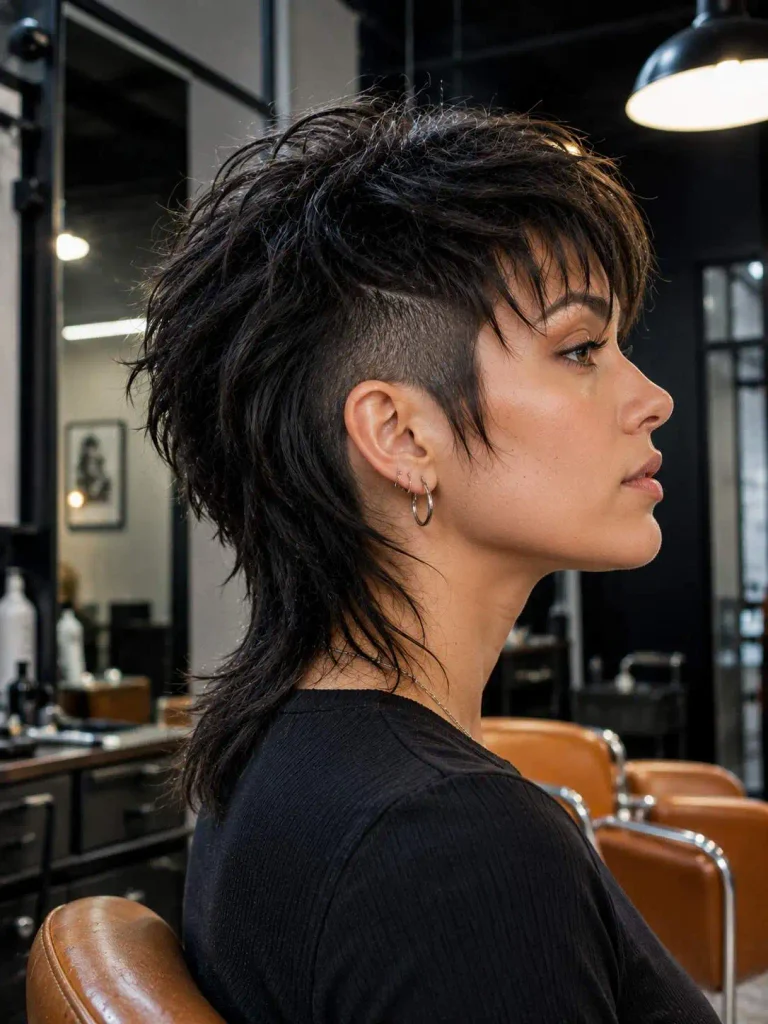
19. Shaved Sides Mixie Pixie Mullet
Closely shaved sides sit beneath a piecey top, with wispy crown layers pushed forward and a narrow, longer nape left free to move. Shown in a dark brunette, this look contrasts sharp structure with feathery length. Ask for a number two guard on the sides, and keep the top touchable with a light matte clay instead of gel.

20. Red Mixie Pixie Mullet Color
A rich copper-red runs through feathery crown layers, a wispy fringe, and a longer piecey nape, with tonal variation that makes the short-to-long shape easy to read. Against fair or olive skin, this style looks especially warm.
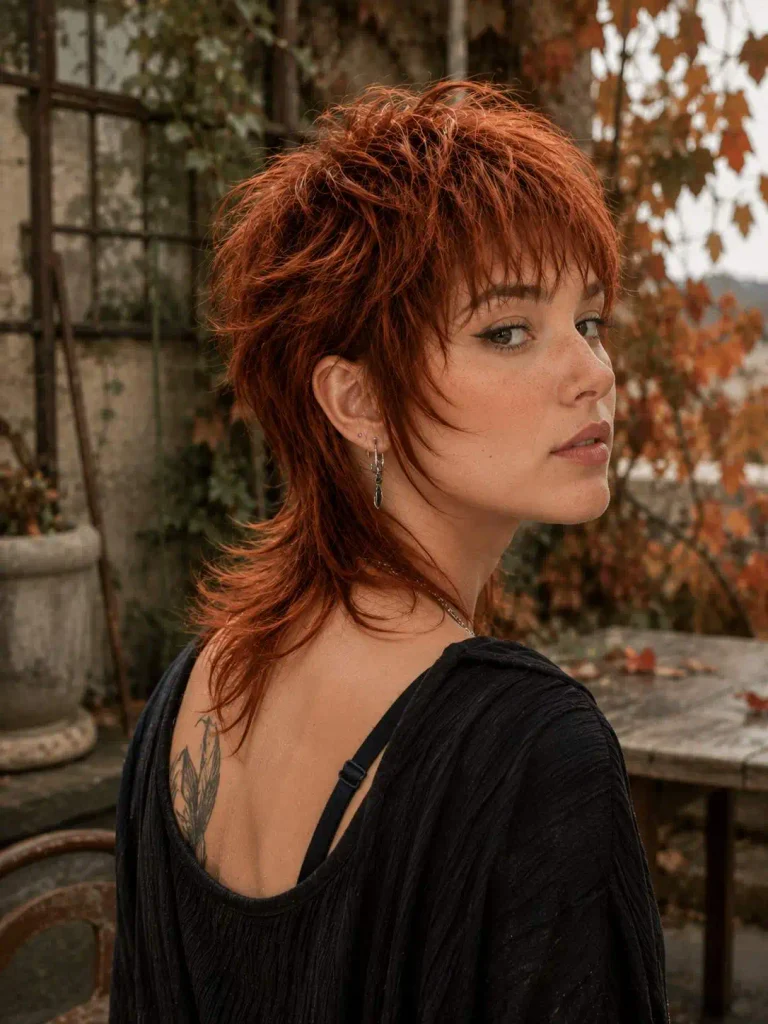
21. Platinum Blonde Mixie Pixie Mullet
Platinum layers are cropped into an airy crown with wispy fringe, piecey sides, and a feathered nape. A slightly deeper root gives the pale shade dimension, and this look keeps visibly separated ends rather than a flat, glassy finish.

22. Thick Hair Mixie Pixie Mullet
Dense hair is debulked with internal layers through the crown and sides, then shaped into feathered ends and a longer, narrow nape. That removal of weight keeps the outline from expanding outward.
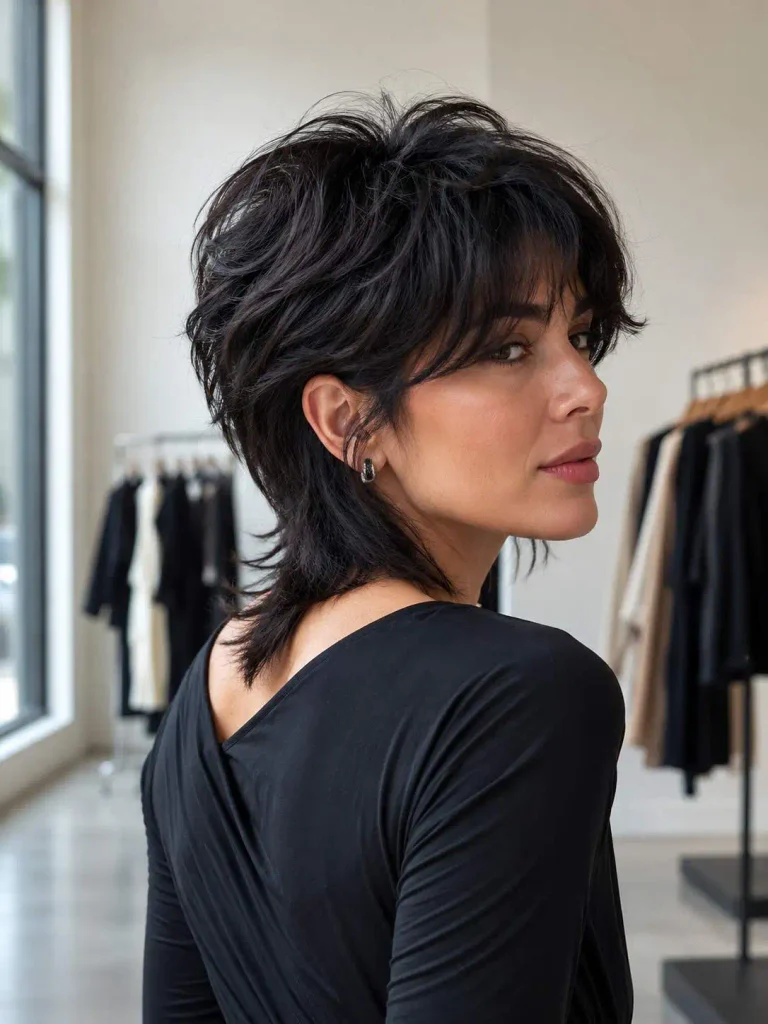
23. Coily Curly Mixie Pixie Mullet
Tight coils are shaped into graduated crown layers, with tiny spirals at the temples and extra length at the back for a curly mullet line. Shown in jet black, this look keeps dense hair airy and separated.

24. Mixie Pixie Mullet Plus Size
A lifted crown and cheek-skimming layers frame the face, while the sides stay airy and the nape tapers into feathered length. From the front and in profile, the shape looks balanced.
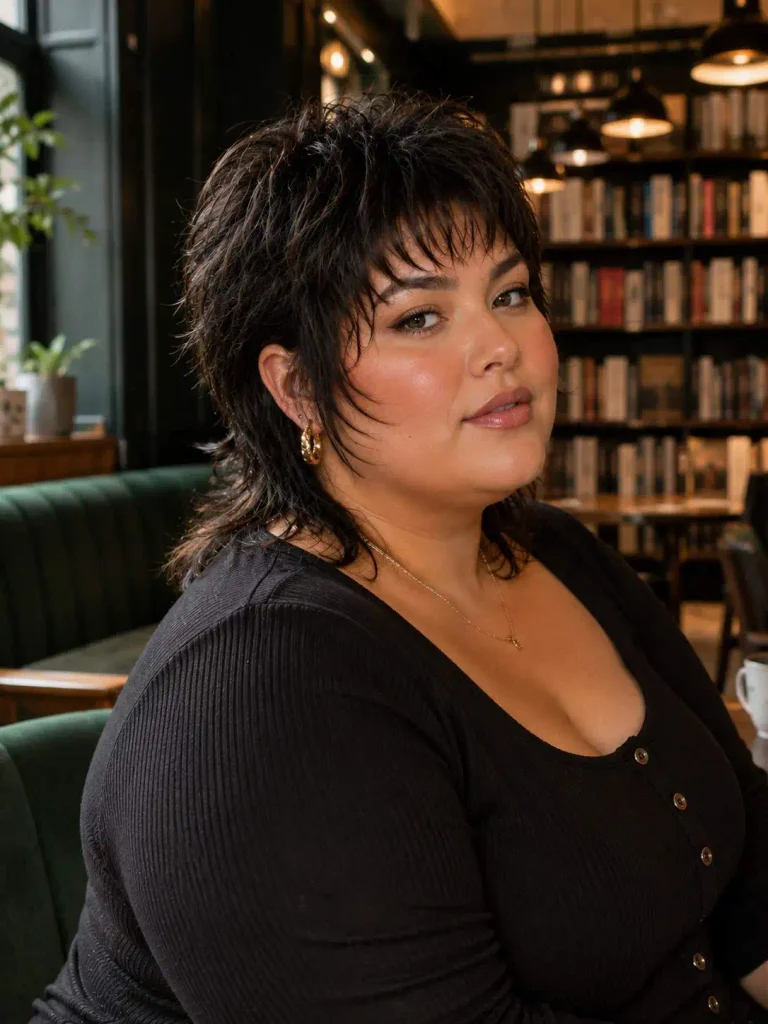
25. Androgynous Mixie Pixie Mullet Cut
Short layers sit close through the crown and temples, while a slightly longer nape adds contrast at the back. A clean fringe and wispy side pieces keep this look balanced in a cool dark brown. It can be worn sleek with pomade, messy with a texture spray, or feathered with a blow-dryer, depending on the occasion.

To compare other approaches, read our feminine mullet shags and bixie cuts guides. They cover related cuts, finishes and styling choices you can weigh against this look.
Styling and upkeep
Style a mixie with your fingers, not a brush, so the layers stay piecey. Work a pea-sized amount of styling cream or matte paste between your palms, then pinch small sections at the crown and the temples to separate them. A little texturizing spray at the roots gives the crown its lift, and a light mist through the nape keeps the tail from falling flat. Wavy and curly hair needs the least help — scrunch a curl cream into the ends and let it dry. Straight hair needs a quick pass with a straightener or a round brush at the crown to set the shape before the product goes in.
The mixie needs a tidy-up every four to six weeks to keep the crown from going flat and the nape from growing into a tail longer than you wanted — the tail is the part that changes fastest, so keep an eye on it. Between visits, wash with a light shampoo and a conditioner that rinses clean, and avoid heavy oils and waxes at the roots, which flatten the crown. If the front starts to look thin, a little dry shampoo at the roots brings the texture back and lifts the crown without adding weight. How will you know it is working? If the shape falls into place with a quick finger-style and a touch of product, it is.
Frequently asked questions
Is a mixie the same as a bixie?
No, though they are related. The difference is at the back: a bixie has a shorter nape and reads like a bob from behind, while a mixie keeps a longer nape, so the tail is visible from the side and the back. If you want the mullet length, a mixie is the one; if you want a shorter back, look at a bixie.
Will a mixie suit a round face?
Yes. The height at the crown lengthens a round face, and longer side pieces that angle down past the cheeks soften the width. A mixie with a short fringe and a lifted crown is a good version for a round face, while a blunt, straight fringe can make the face look wider.
How often does a mixie need a trim?
Most mixies need a tidy-up every four to six weeks, because the nape and the crown lose their shape before the rest. A sharper mixie with an undercut needs the shortest interval, since the undercut grows out unevenly, while a softer mixie with a gentle nape can stretch a week longer.
Can I grow a mixie out into a bob?
Yes, and this is the natural path for a mixie. The front reaches bob length first while the nape keeps growing, so the shape passes through a longer shag before it settles into a bob. Keep the crown trimmed while the nape catches up, and the transition will look like a choice rather than a grown-out cut.
Does a mixie work with straight hair?
Yes. Straight hair makes every line of the cut visible, so the layers have to fall cleanly when the hair is dry. Ask for the layers to be cut dry or checked dry, and use a light texturizing spray to keep the piecey finish. A soft mixie with a gentle nape is the easier first step if you have never had a short cut before.
The right mixie is the one that keeps its contrast in balance: a crown with lift, a fringe that suits your face, a nape long enough to read as a mullet and short enough to stay intentional. The twenty-five looks above cover soft and sharp mixies, straight and curly hair, fine and thick, with undercuts and shaved sides. Before your appointment, save two or three photos and take them to your stylist, with a note of how long you want the nape and whether you want the front short or sweeping — those two details are what make the cut a mixie rather than a grown-out pixie.