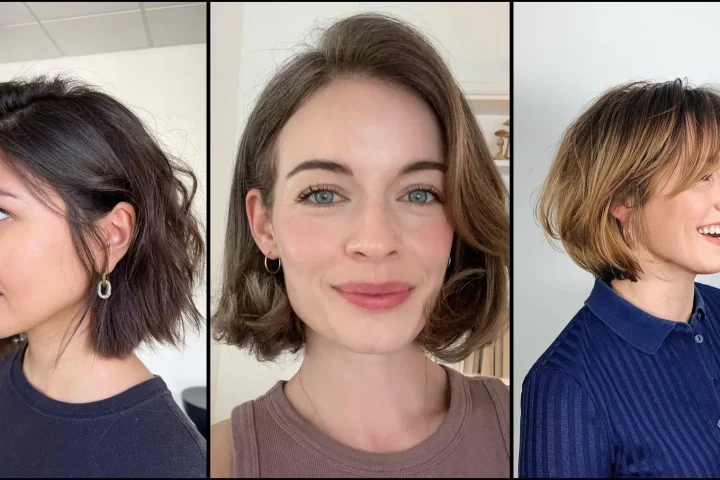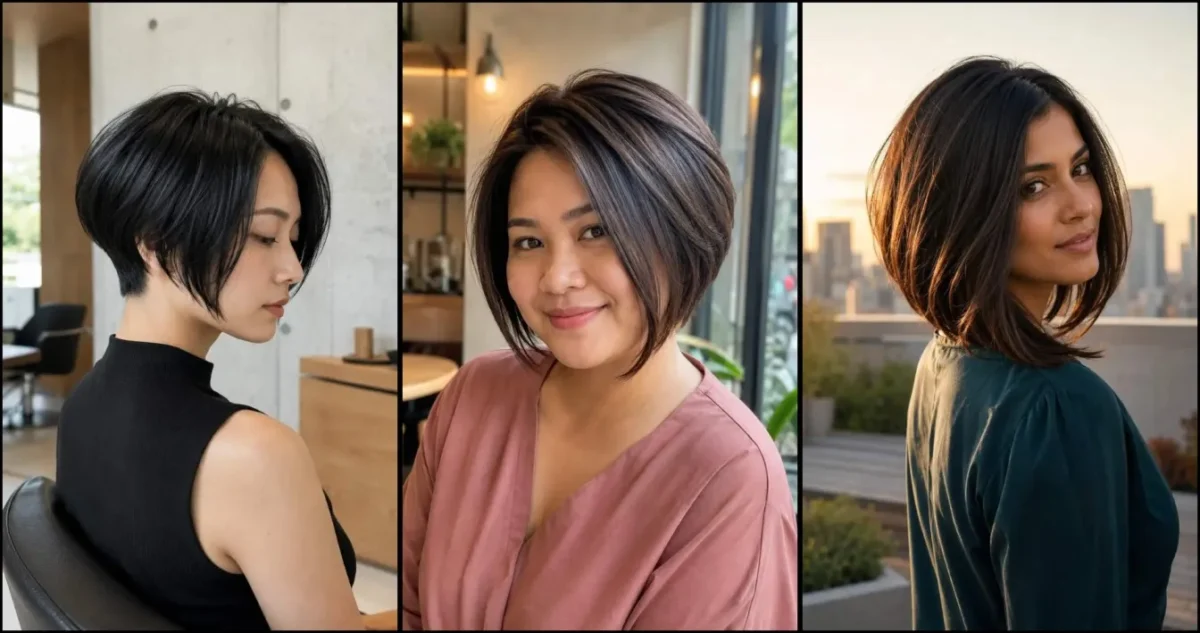
The stacked angled bob is one of those cuts that looks effortless from the front and does all its work at the back. Short graduated layers build a rounded shape through the nape, and the length steps down toward the front, so the face is framed by longer pieces while the back stays neat and lifted. It is a cut that suits people who want volume without length, and it works just as well on fine hair that needs lift as it does on thick hair that needs weight taken out of the back. The best part is how little it needs in the morning: the graduation holds the shape, and a quick blow-dry is usually enough.
The photos below show the range, from a soft low stack that sits close to the neck to a high, dramatic shape with a steep angle toward the chin. Length matters too. A chin-length version feels sharp and modern, while one that reaches the jaw or the collarbone is softer and easier to grow out. When you look through the list, pay attention to the back view as well as the front. The angle and the height of the stack are what decide whether the cut gives you lift, or whether it sits too full at the back. Those are the details to agree with your stylist before the cutting starts.
Read the reference from the side and back
- A low stack keeps the rounded shape near the nape. A higher stack creates a stronger, more exposed back profile.
- A gentle front angle preserves a bob-like outline. A dramatic angle leaves noticeably longer front pieces that may need different styling.
- Dense hair can create a very full stack; fine strands may need a more restrained graduation to preserve the perimeter.
Discuss your neckline and routine
Show the stylist how your nape grows and whether you want that area close, soft or covered. Ask how the shape will sit without a round-brush finish. Regular reshaping may matter more than it does with a longer, softer cut, but the timing depends on your growth and tolerance for a changing outline. Bring a back-view reference, not just a face-framing photograph.
How to choose a stacked angled bob that works for your hair
The two decisions that matter are how high the stack goes and how steep the angle is. A low stack keeps the rounded shape near the nape and reads as a neat, classic bob. A high stack pushes the volume up and shows more of the back, which looks striking but needs the hair to hold its shape. A gentle angle, where the front is only a little longer than the back, is easy to wear and easy to grow out. A steep angle gives long front pieces and a bold outline, but those pieces need more styling to keep them smooth.
Hair texture changes how the stack behaves. Fine hair gets the lift it usually lacks, because the graduation builds volume through the back. Thick hair can end up too full if the stack is cut too high, so the stylist may thin the interior or keep the graduation lower. Curly hair will shrink as it dries, which makes the back look shorter than the cut suggests, so ask for the length to be checked dry. Wavy hair usually gives the easiest version, with movement through the front pieces and a shape that does not need tools every day.
Your neckline matters more here than with most bobs. A short stack exposes the nape, so it shows every few weeks of growth as a line that needs cleaning up or blending. If you like a covered back, a longer stack with softer graduation is the better choice. Bring a photo of the back view you want, not just the front. The front pieces frame the face, but the back is where the cut succeeds or fails, and it is also the part you cannot check in the mirror without help.
Classic Stacked Angled Bob Haircut
Neat graduated layers build through the nape and crown, then extend into smooth front pieces that fall slightly longer at the jaw. In a rich chestnut brown, the forward line looks clean and even.

Short Stacked Angled Bob Style
Closely tapered at the nape, this cut builds compact volume through the back while the front corners skim the cheekbones. Cool ash blonde shows the crisp proportions. The short nape exposes the stacked shape. Styling time depends on texture and drying method; start with a small amount of lightweight product at the crown and adjust as needed.
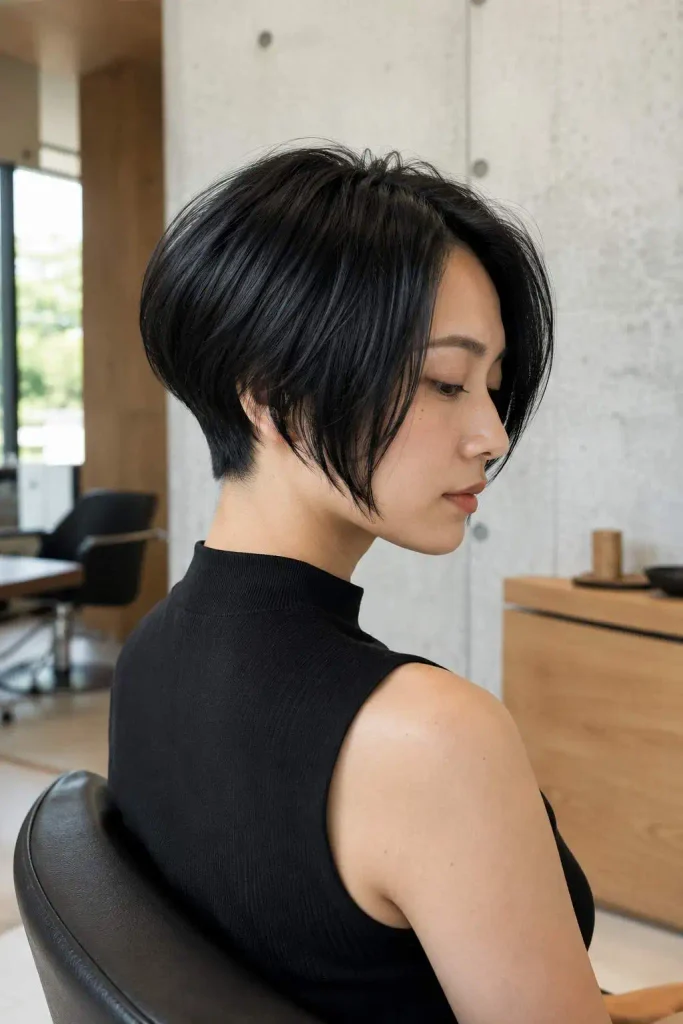
Medium Angled Stacked Bob Haircut
Sitting between the jaw and shoulders, gradually stacked back layers support longer side panels that sweep forward at a gentle angle. Warm honey brown shows the movement. The longer front can be worn smooth or in loose bends. Ask your stylist how quickly the angled outline is likely to change with your growth rate rather than relying on a fixed trim schedule.

Long Stacked Angled Bob Haircut
Front sections stretch toward the collarbone from a subtly shorter, fuller back, forming a long diagonal line with internal layers. Dark chocolate brown keeps the outline sleek.
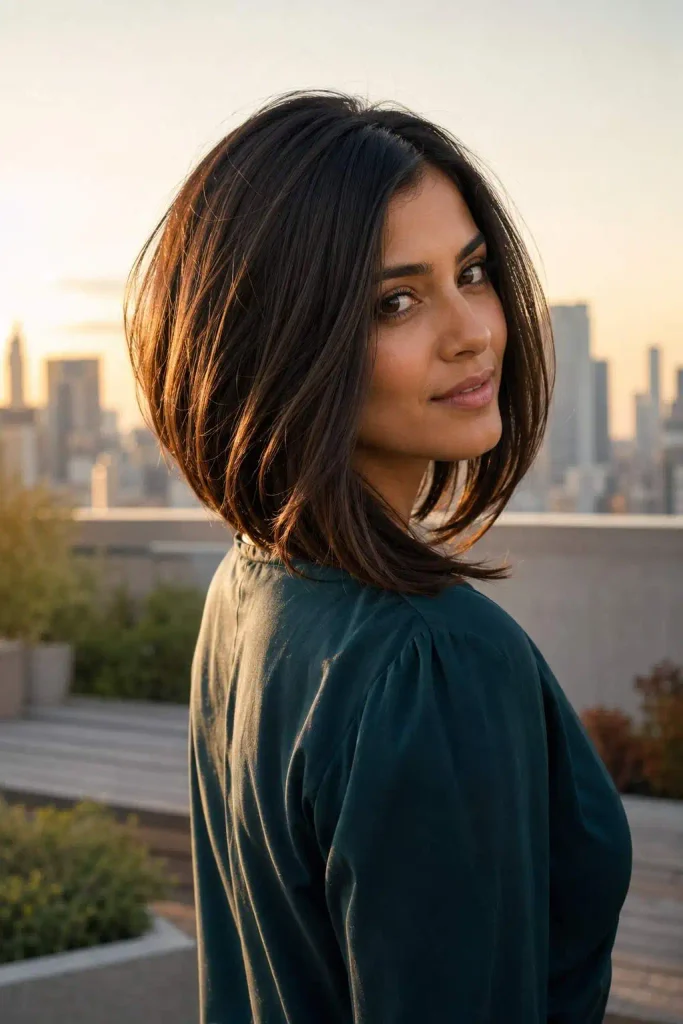
Shoulder Length Stacked Angled Bob
Low graduation runs through the back beneath a gently lifted crown, with longer front pieces reaching the shoulders. Light caramel brown shows the swing. These cuts give medium or thick hair a lighter silhouette, and the length still allows tucked sides, loose waves, or a quick half-up clip.

Stacked Angled Bob With Layers
A defined shorter back pairs with blended layers through the crown and sides, adding movement without weakening the longer front perimeter. Here the color is a medium golden brown that shows the layering.
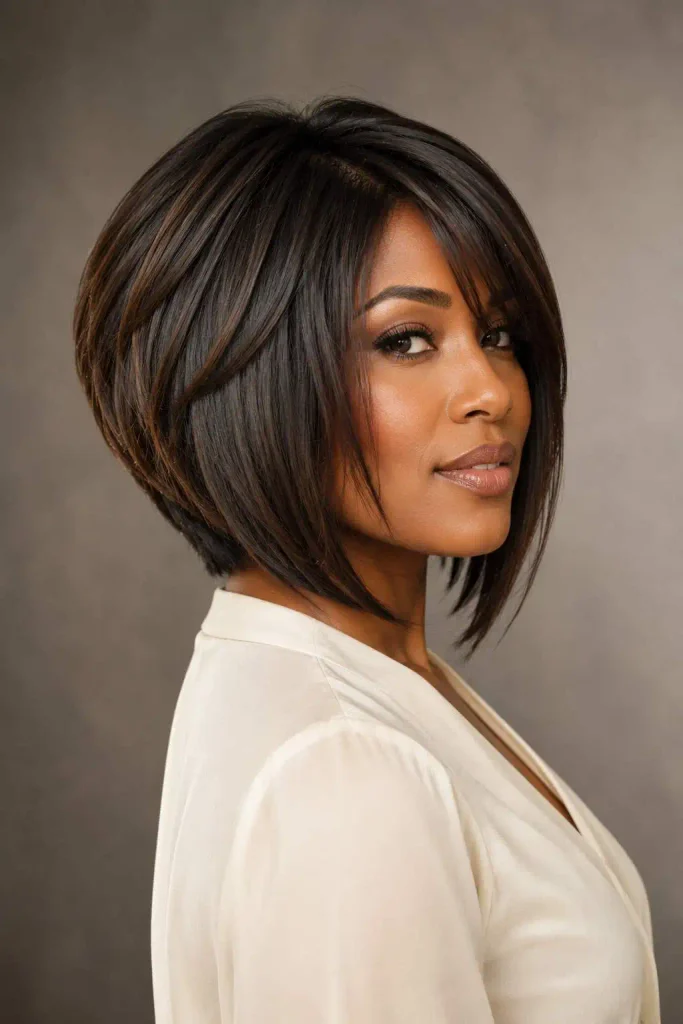
Stacked Angled Bob For Fine Hair
Graduation at the back creates lift, while the front and lower perimeter stay solid so the ends never look thinned out. In a light ash blonde, the compact shape looks fuller. These cuts need little product, and a root-lift spray before blow-drying adds support at the crown.

Fine Hair Bob With Bangs
A dense angled perimeter pairs with restrained crown layering and a light fringe sitting across the brows. Little hair is taken from the sides.
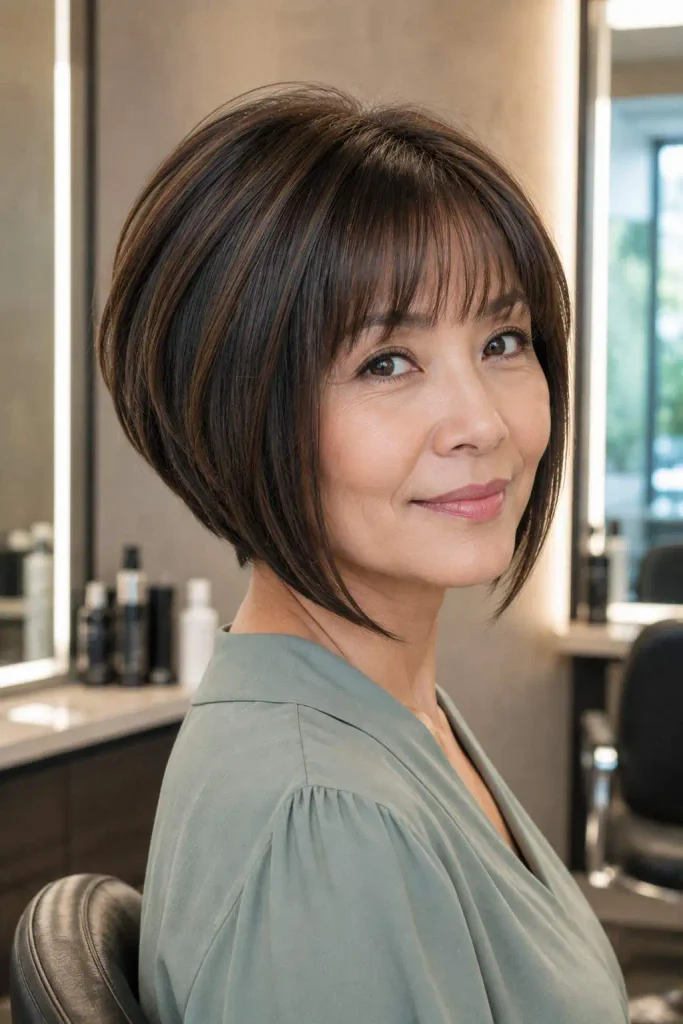
Stacked Angled Bob Thick Hair
Weight is removed under the crown and through the interior, while longer surface layers and a strong angled edge stay at the front. Deep espresso color shows the smooth fall of the longer front.

Curly Stacked Angled Bob Hairstyle
Shorter curls shape the back and nape, while front ringlets stay slightly longer, with graduation adjusted for shrinkage. Rounded volume frames the face without widening the lower shape.
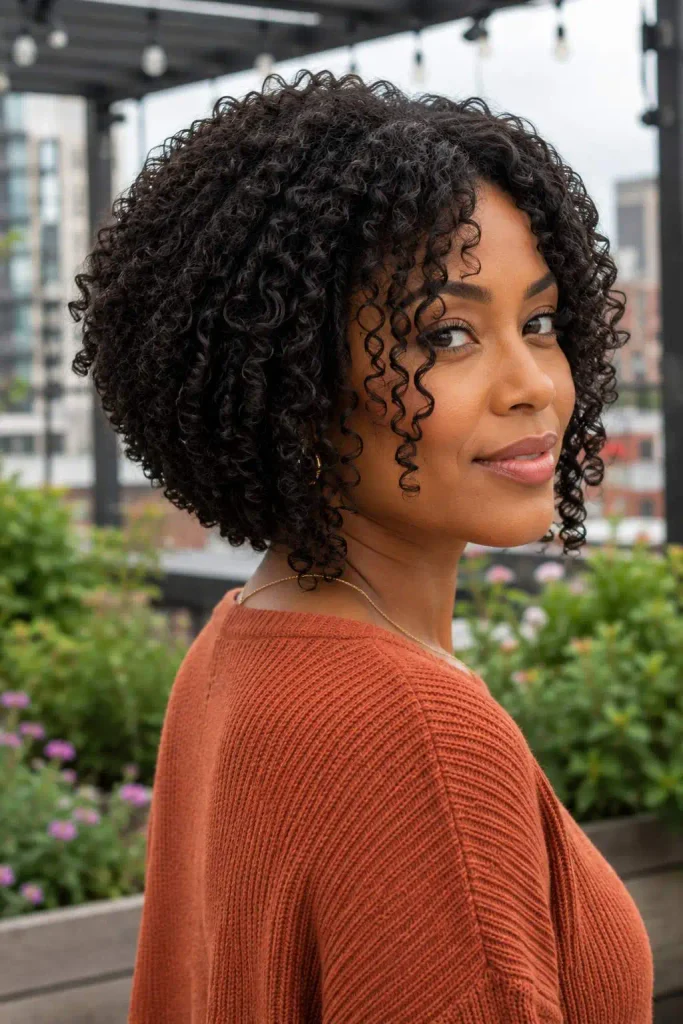
Wavy Textured Angled Stacked Bob
Sides are broken up with piecey layers, loose bends, and airy ends above a gradually stacked back, still angling longer at the front. Sandy blonde lengths show each bend.
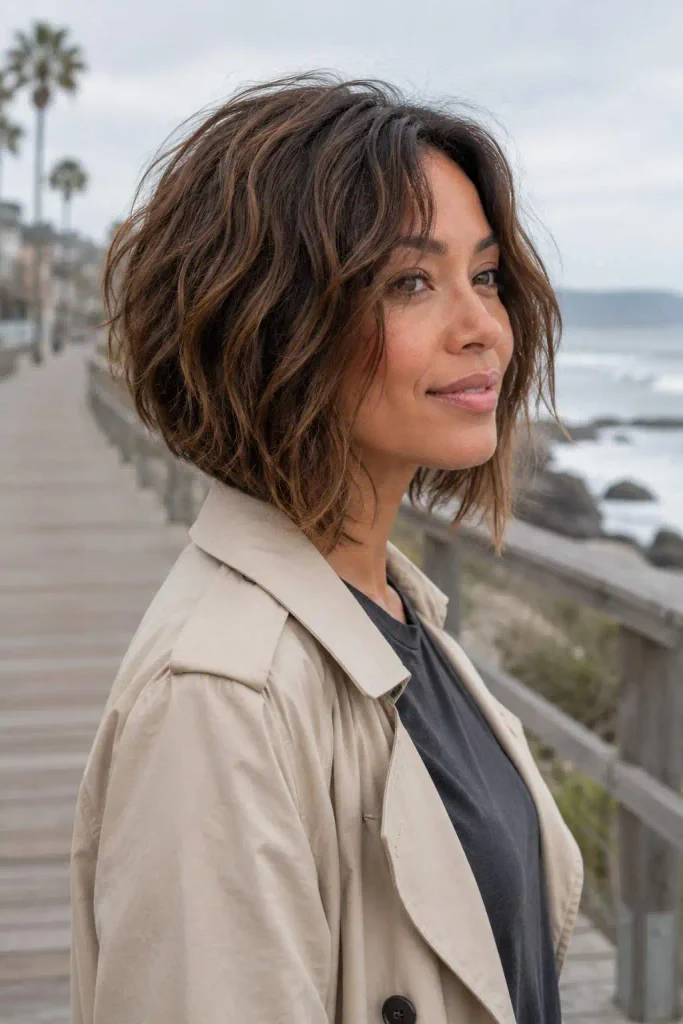
Sleek Straight Stacked Angled Bob
A smooth graduated back and compact crown lead to sharply defined front panels falling in a precise diagonal toward the chin. Glossy jet black shows the glassy finish.
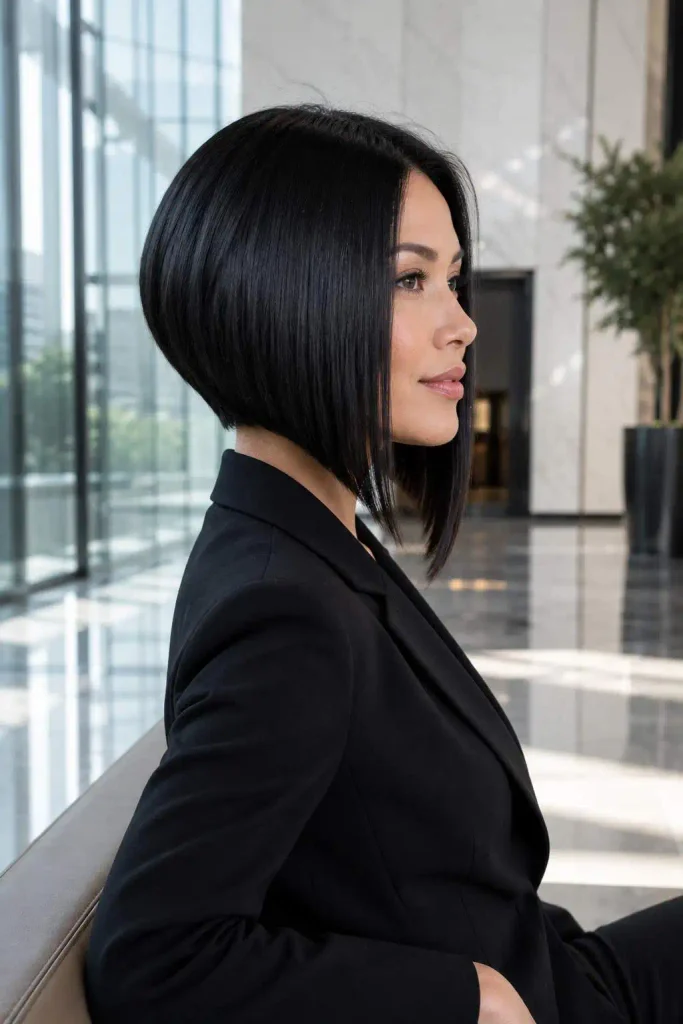
Stacked Angled Bob With Bangs
Full graduated layers at the back balance longer front sides and a blunt fringe across the forehead. Light chestnut color shows the clean geometry of the cut.
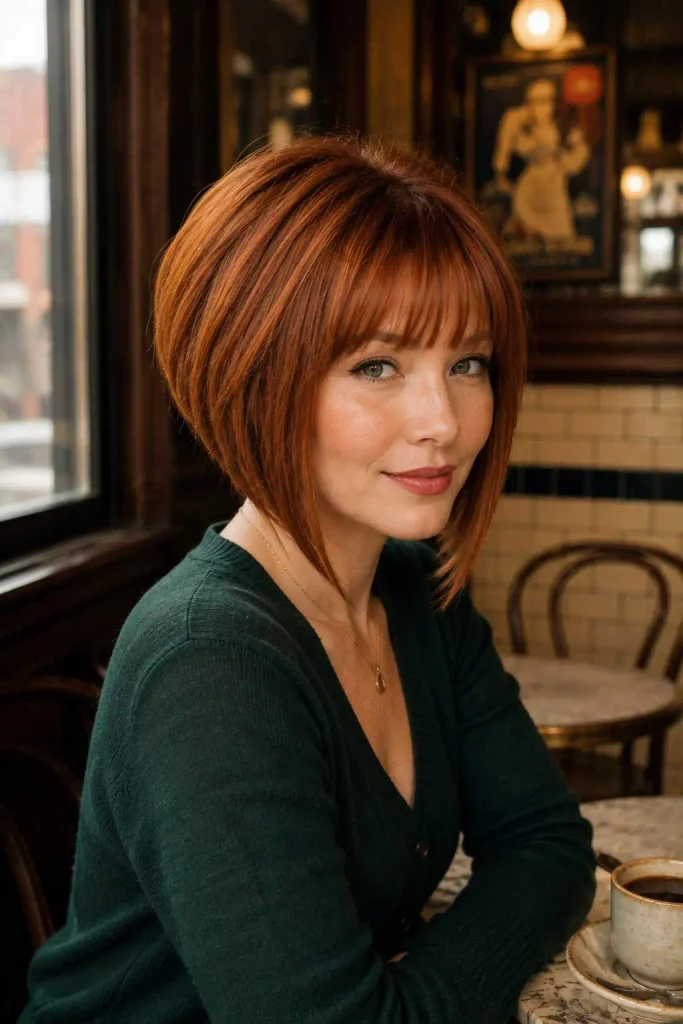
Angled Bob With Stacked Back
Visible graduation rises from a short nape into a rounded crown, then drops into longer front sections forming a forward line along the jaw. Medium mocha brown highlights the profile. These cuts look best in side views, and a round brush lifting the crown while drying keeps the stack defined.
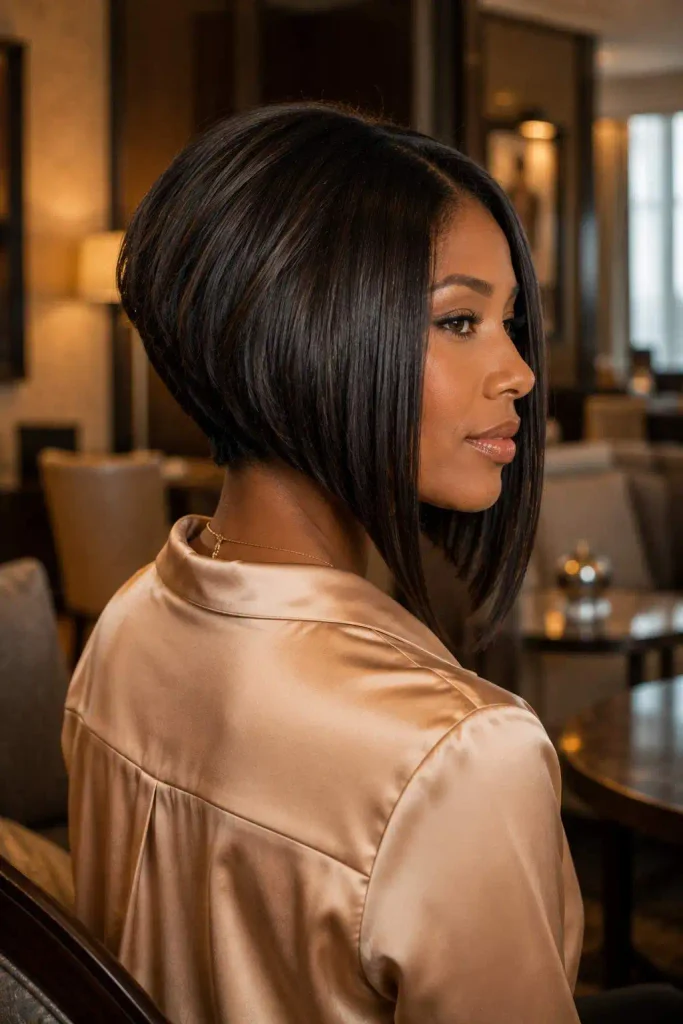
Stacked Angled Bob Back View
From behind, the clean neckline and graduated layers build smoothly from the nape into the crown, with side lengths just visible as they extend forward. Rich dark brown makes each layer easy to read. This look photos help a stylist copy the stack, so bring one to your appointment.

Dramatic Stacked Angled Bob Cut
A noticeably short nape and high back volume lead into front pieces that drop at a steep angle near the chin. Platinum blonde sharpens the contrast.
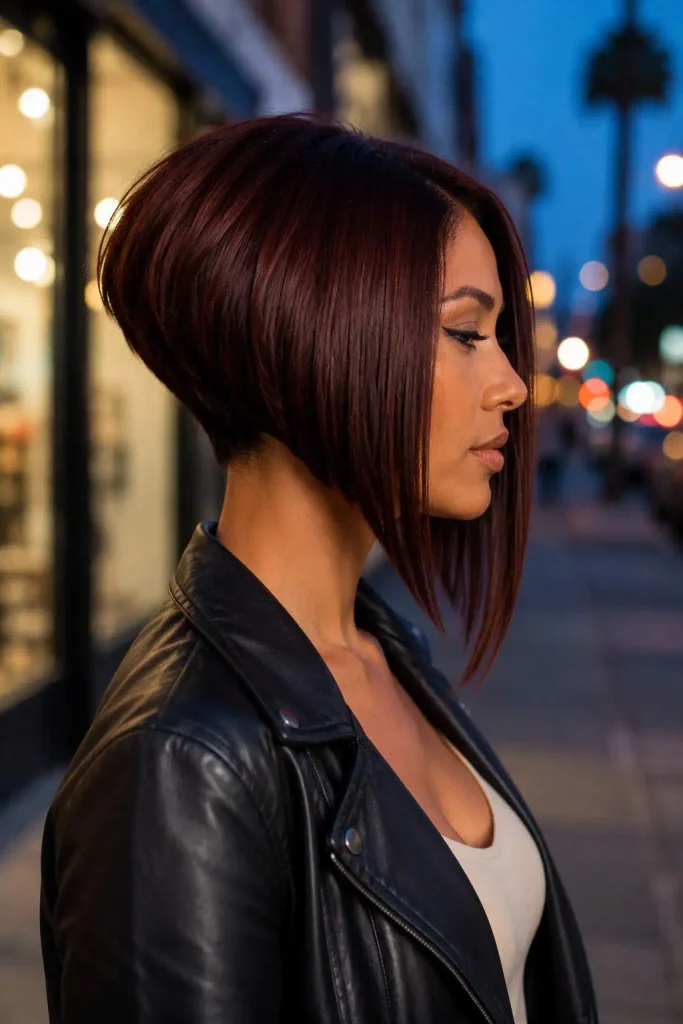
High Stacked Inverted Bob Haircut
Shorter graduated layers sit high on the back of the head, creating pronounced crown lift above a tight nape while the front stays longer. Cool dark brown keeps the shape sleek. This look styles visually lengthen the neck, and a volumizing mousse blow-dried upward at the crown holds the height.

Stacked Angled Bob With Undercut
Hidden length is removed beneath the nape, letting longer stacked layers fall cleanly over a cropped base while the front stays angled and full. Movement increases with less bulk.

Chin Length Stacked Angled Bob
Front corners stay close to the jaw while the back sits shorter and slightly rounded, keeping the silhouette compact. In a golden blonde, the shape looks crisp.

Short A Line Stacked Bob
Straight, solid sides pair with a tapered nape and graduated back, lengthening gradually toward the front to form a clear triangle. There is very little layering.

Stacked Bob For Round Face
A lifted back sits behind long front pieces that fall below the widest part of the cheeks, with a side part adding vertical movement. Medium ash brown keeps the line clean. These cuts visually lengthen the face, and keeping the side part off-center rather than in the middle avoids extra width.

Asymmetrical Stacked Angled Bob Style
Balanced graduation at the back contrasts with one front side that falls noticeably longer than the other. Dark caramel brown makes the uneven diagonal easy to see.
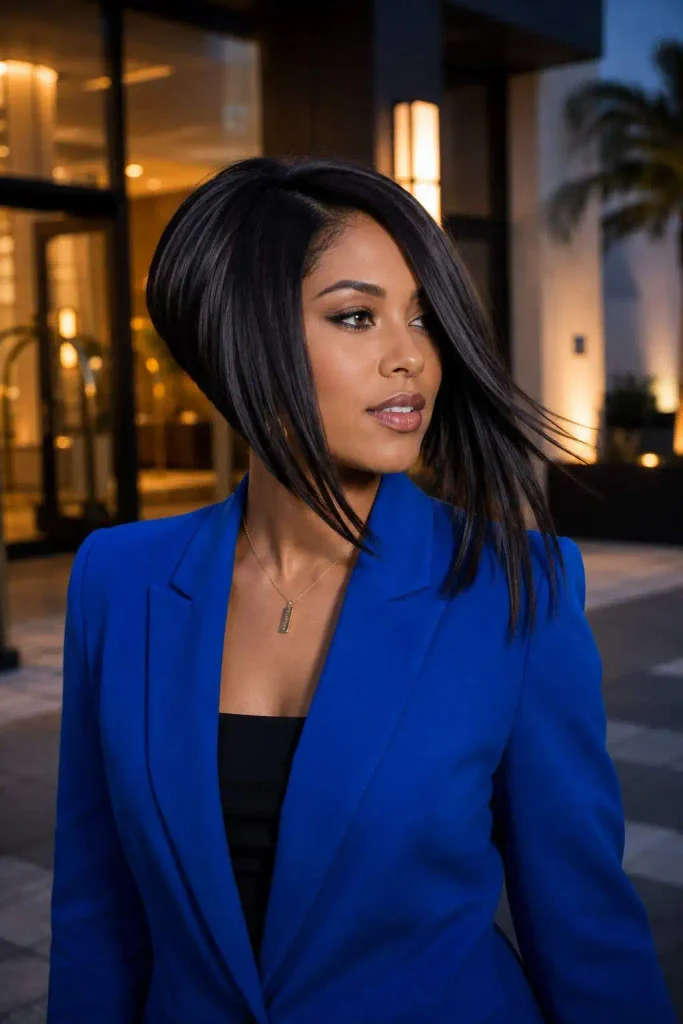
Stacked Angled Bob Pixie Cut
A closely shaped nape and short crown layers blend into longer bob-like sections through the sides and front. Diagonal length at the front keeps it from looking fully cropped. This look shapes in a honey blonde need minimal styling, and a light paste worked through the crown adds piecey lift.
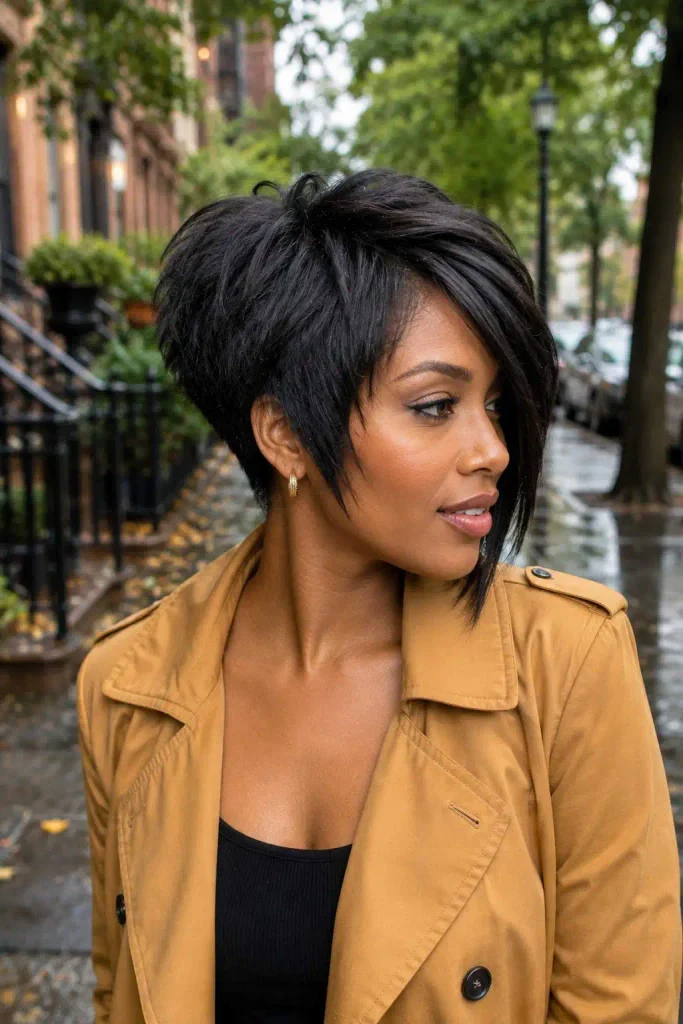
Victoria Beckham Stacked Angled Bob
Sleek front panels extend steeply toward the chin from a deep side part, set against a short, sculpted back. Deep brunette color recalls the original early-2000s version. These cuts look current with a less rigid finish, and a paddle-brush blowout rather than a flat iron keeps some movement.

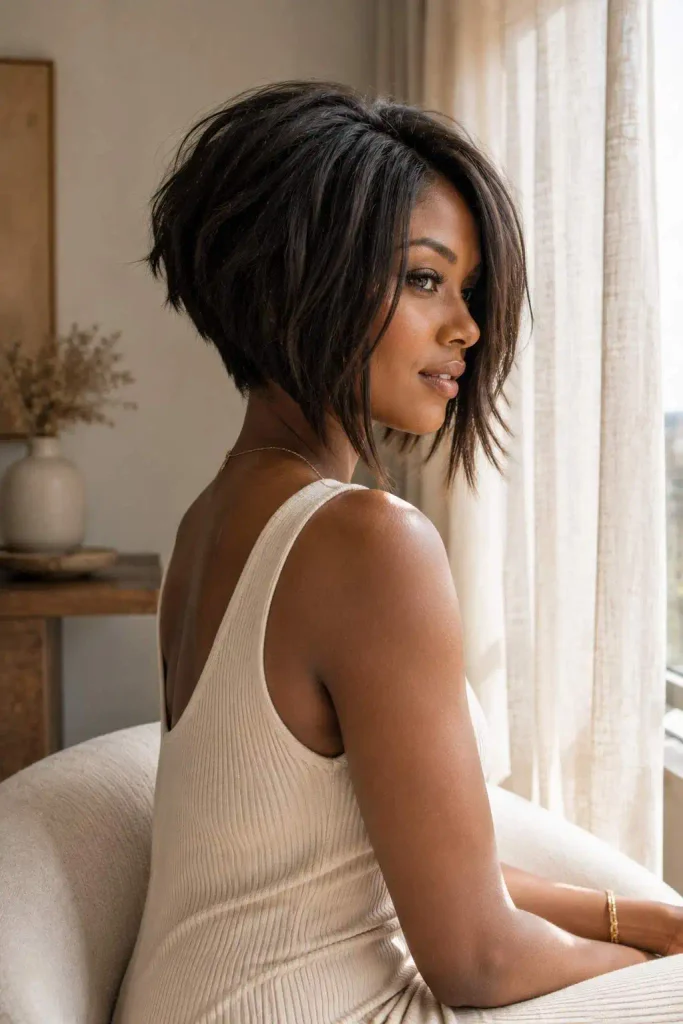
Modern Textured Stacked Angled Bob
Airy crown layers, subtle piecey ends, and relaxed bends through the longer front sections sit above a clean nape. Warm bronde color shows the loose movement at the front. These cuts hold their shape with little effort, and a light dry texture spray at the ends keeps the bends separated.
If you want to compare the shape or styling method, see our blunt bob haircuts and fine-hair bob shapes articles. Use the details in each guide to decide which reference is most practical for your hair.
Styling and upkeep
A stacked bob keeps its shape best when it is dried with a round brush, or at least dried with the back lifted at the roots. A flat brush and a dryer on a medium setting will do it. The front pieces need the most attention, because they are the longest and show any kinks. A flat iron through the front on low heat finishes the shape, but keep the iron away from the stacked back or the graduation will flatten out. A little smoothing serum on the ends is enough. Heavy creams weigh the stack down and undo the lift.
This is a cut that needs regular reshaping. Every four to six weeks is normal, because the stack grows out into a triangle if it is left too long and the front pieces start to flip. Between appointments, a light texturising spray can lift the crown, and a satin pillowcase helps the back keep its shape overnight. If the back starts sitting too full, resist the urge to thin it yourself. A quick tidy-up at the salon is cheaper than fixing a section that was cut too short.
Frequently asked questions
Will a stacked angled bob suit fine hair?
Yes, it is one of the best bobs for fine hair. The graduation through the back builds volume where fine hair usually falls flat, and the front pieces stay solid so the ends do not look thin. The stack should be kept restrained, or the shape can look wider than it is long.
How often does it need cutting?
Every four to six weeks is normal. The stack loses its shape as it grows, and the back can start to look heavy or triangular. A longer, softer version stretches a little further, but the nape still needs cleaning up.
Can I wear it straight and curly?
Yes. Straight it shows the angle and the clean lines best. Curly or wavy it looks softer, and the graduation adds lift through the back. Ask the stylist to cut it in a way that works with your natural texture, because a cut designed for straight hair can behave differently once the curls come back.
Does it suit a round face?
It can, because the longer front pieces fall below the jaw and narrow the face. The key is keeping the stack from sitting too wide at the cheeks. A longer front and a restrained stack work better than a short, very full version.
Can I tie it back?
Most versions can be gathered into a low ponytail, though a short one will leave the nape layers free. The longer front pieces are usually long enough to tie, and the stacked back stays out of the way. If you tie your hair up most days, tell the stylist so they keep some length at the sides.
The stacked angled bob works when the back and the front agree with each other. The stack gives the lift, the angle gives the line, and the two need to match your hair and the amount of upkeep you are willing to do. Save two or three photos from this list, including at least one back view, and show them to your stylist with a note on how often you want to come back for a trim. A short conversation about the stack height and the angle is what turns a good-looking reference into a cut that still looks right six weeks later.