Choosing a haircut for fine hair starts with a distinction most people miss: fine hair is about the diameter of each strand, while density is about how many hairs grow across the scalp. You can have fine strands and plenty of hair, or thicker strands with low density — and those combinations respond differently to the same cut. The right choice is not a particular style but the outline, the layering and the upkeep that suit your own hair. This guide walks through what to look at in a reference photo, what to ask at the consultation and how to judge whether a cut will work in real life, not just in the salon chair.
The details that decide it are practical: where the shortest layers sit, whether the bottom line stays connected or is tapered away, how the fringe uses hair that would otherwise add fullness elsewhere, and whether you can live with the drying and styling the cut asks of you. A good consultation answers those questions before the scissors come out, so you leave with a shape that holds its own between appointments.
Check the perimeter before asking for layers
Look at how the hair ends in your reference photo. A straight, defined line around the bottom can make the visible edge appear fuller. A heavily tapered edge gives more movement but may look thinner if your density is already limited. Neither outline is automatically better; the question is where you want to keep visual weight.
Ask your stylist to show you where the shortest layers will sit, whether the bottom line stays connected and how the shape will look without a round-brush blowout. Photos of air-dried hair are often more useful than a heavily styled salon finish.
Compare bobs, pixies and shoulder-length cuts
A chin-length bob places the perimeter near the jaw, where a strong line is easy to see. A collarbone-length cut leaves more room to tie hair back, although the ends may need a smaller amount of layering to avoid looking sparse. A pixie reduces the weight pulling on the top, making short styling easier for some people, but it also exposes your natural growth patterns.
For photo references, compare fine-hair bob haircuts, modern pixie cuts and medium-length cuts. Bring one example you like and another showing a feature you would rather avoid.
Choose bangs based on your front hairline
Bangs use hair that would otherwise contribute to the sides or top. A full, deep fringe can create a strong front edge, while a few light pieces may preserve more density around the temples. If your hair separates around a cowlick, ask how the fringe will sit after washing and what daily styling it needs.
See our bangs for thin hair guide for examples with different fringe depths and shapes. A long curtain fringe is often easier to pin away while it grows, though individual growth patterns matter.
Plan for your natural texture
Fine straight hair usually reveals the haircut’s perimeter clearly. Fine wavy hair can gain apparent volume from bends and separation, but waves may make one side spring up more than the other. Fine curly hair needs a shape that accounts for shrinkage; trimming curls as though they hang straight can leave the dry result shorter than expected.
Discuss whether the stylist will check the shape dry. If you wear your natural texture most days, bring a reference showing that texture instead of a smooth, heat-styled version.
Build root lift without making the ends heavy
Start with a clean scalp and a small amount of product. Try moving your part to see whether the crown gains height before buying more styling products. When blow-drying, lift the roots with gentle tension and aim the airflow in the direction you want the hair to fall. Let it cool before touching it repeatedly.
Conditioning still matters for fine hair, particularly where the ends tangle. The American Academy of Dermatology’s hair-care guidance recommends applying conditioner to the ends of fine or straight hair and limiting excess heat. If you use hot tools, keep the temperature low or medium and follow the tool’s safety instructions.
Our volume-boosting hairstyle ideas show how a part change, a rounded blowout and a short perimeter create different kinds of lift.
What to tell your stylist
- How often you wash and style your hair, and whether you use heat.
- Whether your priority is fullness at the ends, height at the crown or easier air-drying.
- How much hair you are willing to lose from the perimeter to create movement.
- What bothers you in your current cut, such as a flat crown or thin-looking ends.
- Whether you need to tie your hair back for work, sport or daily comfort.
Ask the stylist to explain the maintenance of the proposed cut and show where each layer ends. You can also ask for a small initial change, then assess the dry result before taking off more length.
When styling changes will not solve the problem
A haircut can change the appearance of fullness. It cannot replace hairs that have been lost. If you notice sudden shedding, a widening part, irritated scalp or patches of hair loss, seek advice from a qualified clinician or dermatologist rather than trying to conceal the change with repeated heat styling. The AAD’s advice for people with hair loss recommends gentle care and professional assessment where appropriate.
Make a decision from two real-life photos
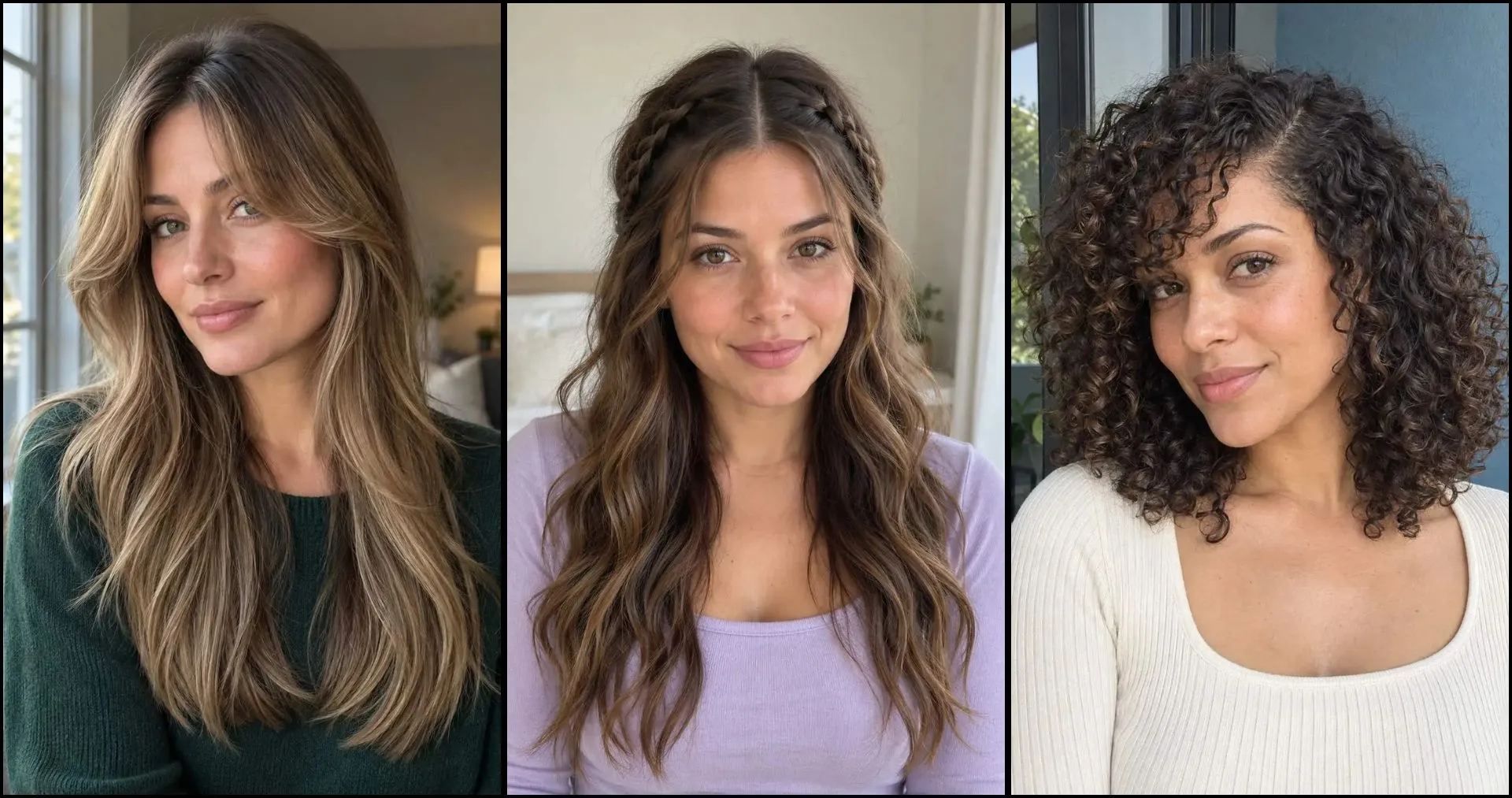
Before your appointment, choose one reference that resembles your natural texture and one with your preferred finished outline. Write down which part of each photograph matters: the fringe, length at the nape, fullness at the ends or crown height. That gives your stylist a more precise starting point than the haircut name alone.
For closely related choices, compare hairstyles for thin-looking hair and long bob shapes.
Questions to ask your stylist at the consultation
Start with the outline. Ask to see the shape dry as well as wet, because fine hair can change length and fall as it dries, and a cut checked only while wet may look different at home.
Then ask about the upkeep. How often will you need a trim to keep the edge looking full, and what happens to the shape as it grows? A blunt bob keeps its line for a few weeks and then softens; a heavily layered cut grows out more gradually but needs the layers reshaped to stay intentional. Ask what the styling takes each morning — a round-brush blowout, a quick diffuse, or nothing at all — and whether the cut works with air-drying. If you tie your hair back for work or sport, say so, because a cut that cannot be tied back will frustrate you daily.
Finally, ask about products and weight. Fine hair shows product build-up fast, so ask how much product the style needs and where it goes — a small amount at the roots for lift is different from a heavy cream through the ends. Ask whether the conditioner should go only on the ends, and whether heat protection is needed for the tools you actually use. The right questions do not take long, and they tell you whether the cut fits your hair, your routine and your patience before anything is cut.
Frequently asked questions
What is the best haircut for fine hair?
There is no single best cut — it depends on your outline, your density and your routine. A blunt bob keeps the ends looking full, a pixie lifts the crown, and a collarbone cut leaves room to tie the hair back. The right choice is the one whose outline, layering and upkeep suit your own hair, so bring reference photos and talk through the trade-offs with your stylist.
Should fine hair have layers?
Layers can help, but only in the right place. A few layers around the face or at the crown add movement without thinning the ends, while heavy layering through the lengths can make fine hair look sparse.
How short should I go with fine hair?
Shorter usually reads as fuller, because the perimeter is closer to the face and there is less length pulling the hair flat. A chin-length bob or a pixie are common choices, but a collarbone cut can work too if the ends stay blunt. The question is not how short, but where the shortest layers sit and how much hair you are willing to lose from the perimeter to create movement.
Can fine hair be air-dried?
Yes, if the cut is shaped for it. Fine straight hair usually shows the haircut’s perimeter clearly when it air-dries, and fine wavy hair can gain apparent fullness as it dries. Ask whether the stylist will check the shape dry, and bring photos of air-dried hair rather than a heavily styled salon finish.
How often should fine hair be trimmed?
Often enough to keep the edge looking full — usually every six to eight weeks for a blunt bob, and every four to six weeks for a pixie. A blunt bob keeps its line for a few weeks and then softens, so the trim keeps the perimeter strong. Ask your stylist how the shape grows out, so you know what to expect between appointments.
Choosing a haircut for fine hair is mostly about the outline: a defined perimeter, layers placed where they help rather than where they thin, and a fringe that does not steal fullness from the rest of the cut. Ask the questions in this guide at your consultation, bring two real-life photos, and choose the shape you can live with between appointments. Then the cut works for your hair, your routine and your patience, not just for the afternoon you leave the salon.