
A wispy fringe is the gentlest way into bangs, and the French version is the softest of them all. The strands are cut to different lengths and left separated, so the forehead shows through in places and the fringe reads as texture rather than a solid line. It is the kind of fringe that works with a jaw-length bob or with hair down to the waist, because it does not demand a particular length or a lot of daily styling. The photos below show how different it can look: sometimes the pieces skim the brow, sometimes they fall longer and open to the sides like curtains, and sometimes they stay short and feathery at the centre.
What makes them French is the finish rather than a rule. The hair is cut dry or near-dry, the section is kept light, and the ends are left a little uneven so the fringe moves with the rest of the hair. They suit people who want a change without committing to a heavy, blunt fringe, and they grow out more kindly than most bangs do. When you look through the list, pay attention to where the shortest pieces sit and how much forehead shows. Those two details matter more than the haircut underneath, and they are the first things to mention when you ask for the style.
Choose a fringe with enough flexibility
- A shallow section leaves more hair through the sides and lengths. A deeper section can create more coverage but may be heavier than the reference suggests.
- Brow-skimming pieces need a different maintenance plan from a longer curtain fringe. Check the dry length before trimming.
- Your hairline may make one side sweep more readily than the other. A slightly asymmetric finish can be easier than forcing a perfect split.
Keep the roots light
Reset the fringe while damp and direct it into place before shaping the ends. Start with very little styling product near the roots. If the strands separate too much, reassess the amount of product or the fringe section rather than immediately cutting it shorter. Ask the stylist to show how the bangs can be pinned or tucked when you want them off your face.
How to choose a French wispy fringe that works for your hair
Start with your hairline and the way your hair falls on its own. A cowlick at the front, a strong side part or a sweep that naturally falls to one side will decide where the shortest pieces can sit. Bring a photo of your hair on an ordinary day, not only a styled one, and ask the stylist to show you where the fringe will break. If your hairline pulls the fringe apart in the middle, a soft centre part may be the most flattering option rather than something to fight.
Density decides how much hair the fringe should take. Fine hair gives a light, airy fringe easily, but taking too wide a section can thin out the lengths behind it. Thick hair needs thinning through the fringe, or it will sit heavy and look more like a straight fringe than a wispy one. Curly and wavy hair will spring up as it dries, so the fringe must be cut longer than the reference looks in the photo. Ask the stylist to cut it dry or near-dry, and look at the length when your hair is doing what it normally does.
Think about the grow-out before you commit. A wispy fringe grows out more gracefully than a blunt one because the pieces are already separated and uneven. Even so, there will be a few weeks when the pieces hang around the eyes and need pinning back, so plan for that. If you wear glasses, bring them to the appointment. The frame changes how the fringe sits, and a stylist who can see the frames will place the shortest pieces where they do not crowd them. The same goes for a hat or a headband you wear most days.
Soft French Girl Wispy Bangs
Feathery, separated pieces sit lightly across the brows, with slightly longer edges blending into cheek-skimming layers and loose lengths. In a light chestnut brown, the airy spacing shows clearly.

French Wispy Bangs With Layers
An eyebrow-grazing fringe connects to long face-framing pieces that step from the cheekbones into feathered lengths. Warm honey brown highlights the movement through the sides.

Long French Wispy Bangs Hair
Falling just below the brows, the fringe has tapered outer pieces reaching the upper cheeks, while long hair carries internal layers. Dark chocolate brown keeps the lengths glossy. This look sweeps aside easily as the fringe grows, and trims every five to six weeks keep it out of the eyes.

Medium Hair French Wispy Bangs
A light, broken fringe frames a collarbone-length cut with subtle cheekbone layers and gently flipped ends. Cool ash brown shows the balanced shape and the movement at the ends.

Short Hair French Wispy Bangs
Piecey temple sections and airy pieces around the ears sit beneath a light, broken fringe on a cropped, layered cut. Golden blonde color brightens each strand around the face.

French Bob With Wispy Bangs
Sitting at the jaw, this bob has gently beveled ends, slight crown lift, and a delicate fringe that opens through the center. Glossy espresso brown shows the compact shape.

Textured Bob Wispy Curtain Bangs
Choppy ends and light crown lift pair with a split fringe that starts airy over the forehead before lengthening toward the cheekbones. Warm caramel bronde shows the broken edges and crown lift.
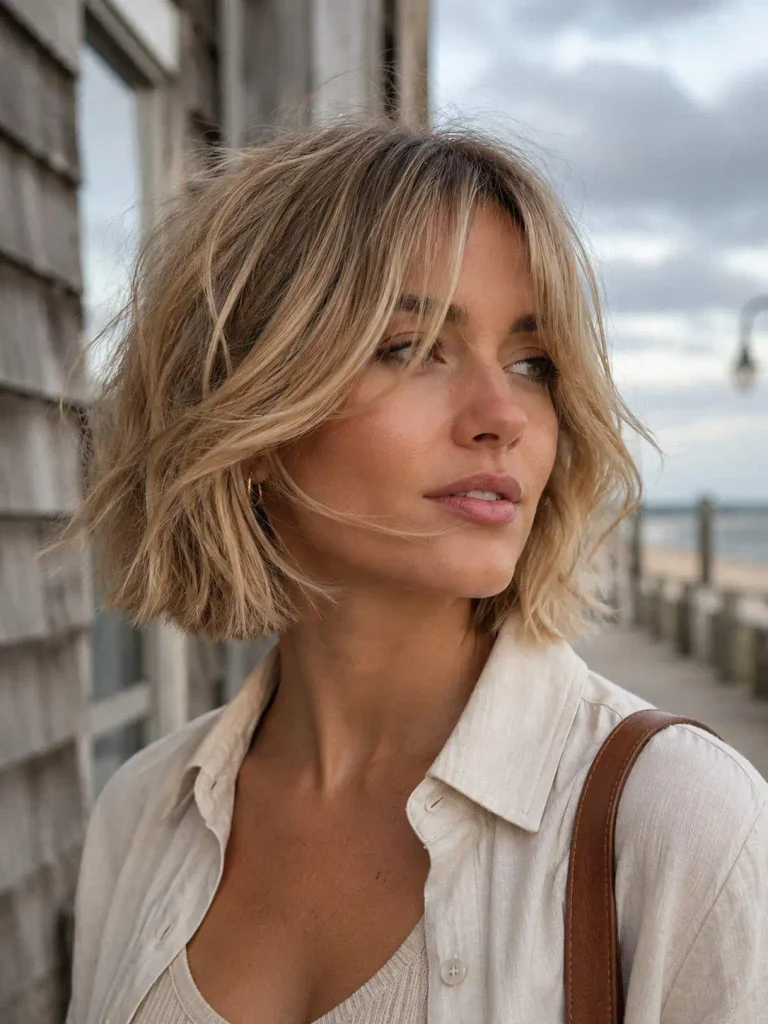
French Wispy Bangs Round Face
Light through the center, the fringe extends longer at the outer corners, where cheek-skimming layers create vertical lines beside the face. Rich mocha brown keeps the frame defined. The lighter centre of the fringe exposes more of the forehead, while longer outer pieces frame the cheeks. Choose those lengths according to how much fringe you want near your eyes.
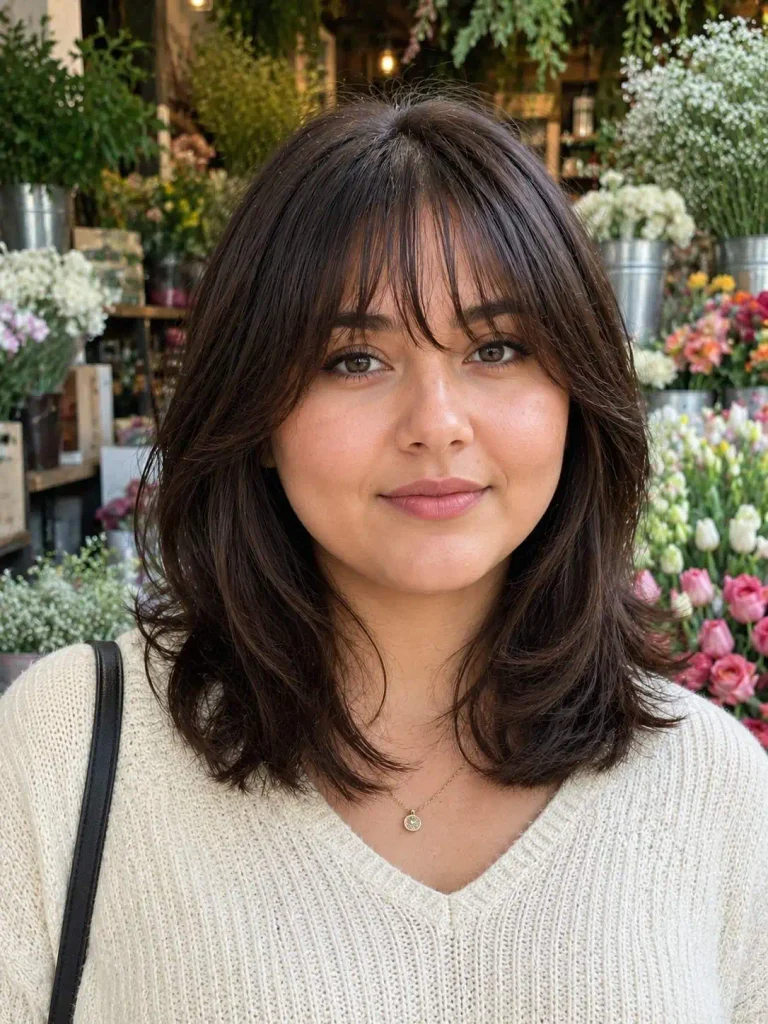
Wispy French Bangs Oval Face
Slightly curved edges sit across the brows, while long side pieces merge into jawline layers and shoulder-length movement. These cuts work with straight styling or loose waves, and a light mist of texture spray keeps the fringe from clumping.

French Wispy Bangs With Glasses
Fine, separated pieces skim the brows without crowding the frames, while longer sides blend into cheekbone layers. Dark ash brown contrasts well with both thin and bold eyewear.

Blonde French Wispy Bangs Layers
Fine fringe pieces pair with creamy blonde face-framing layers and blended lengths, with slightly deeper roots keeping the strands visible. Each feathery strand catches the light around the eyes.

Brunette French Wispy Bangs Hair
A deep chocolate base carries warm brown ribbons through the lengths, with fine fringe pieces separated over the forehead. Longer layers frame the cheeks and fall past the shoulders. this style looks glossy with a monthly gloss treatment, and a lightweight serum on the ends keeps the ribbons reflective.

Ginger French Wispy Bangs Layers
Coppery fringe pieces fall in separated strands, while strawberry-copper layers sweep from the cheekbones into flowing mid-length hair. Warmth runs through the whole cut, from the fringe to the ends.

Curly Hair French Wispy Bangs
A small, airy section of defined curls sits across the forehead, with shorter coils near the brows and longer spirals around the cheeks. Against dark brown hair, each defined curl stays visible. This look needs a dry curl-by-curl cut, and a light curl cream scrunched into damp fringe prevents bulk.

Wavy Hair French Wispy Bangs
Longer side pieces disappear into loose S-shaped waves and face-framing layers near the cheekbones, below a fringe sitting over the brows. Sandy blonde lengths show the bends and loose movement.

Straight Hair French Wispy Bangs
Fine forehead pieces and tapered temples lead into long, sleek layers falling past the shoulders. Glossy jet black makes the feathery spacing across the forehead easy to see. This look needs a precise, light cut rather than blunt density, and a flat brush with the dryer aimed downward smooths the fringe.

French Wispy Curtain Bangs Hair
A light center fringe leads into longer pieces curving outward toward the cheekbones, blending into flowing layers. Its open middle keeps the face bright and the brows visible.
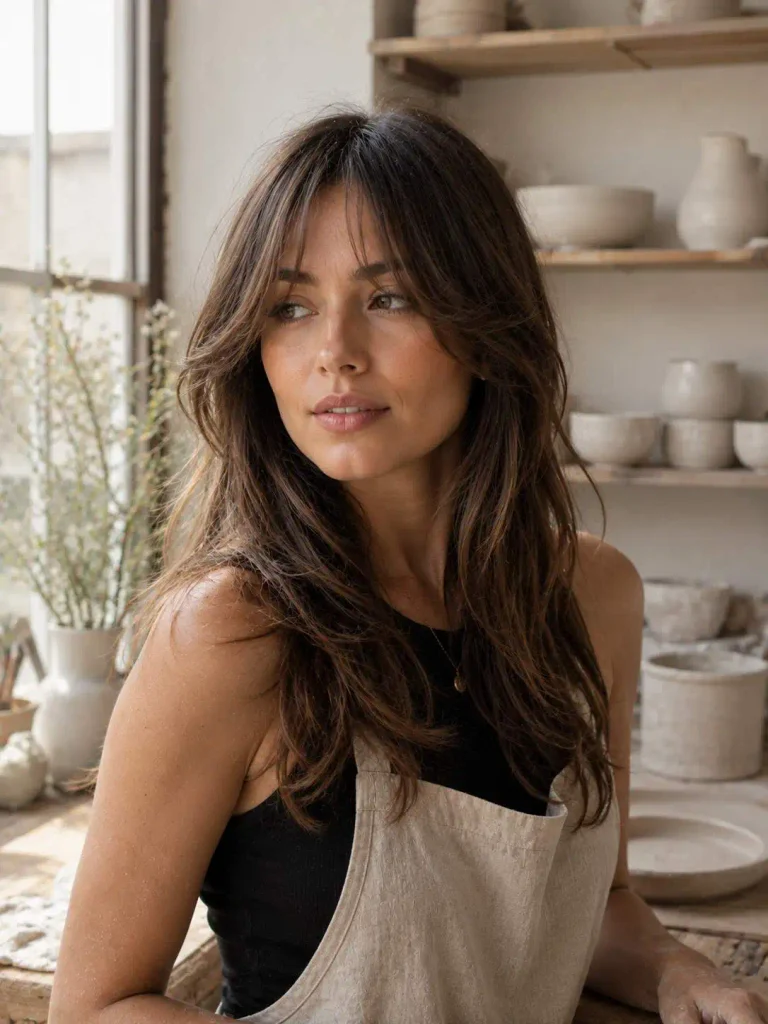
Side Part French Wispy Bangs
Sweeping across one side of the forehead, the broken fringe leaves the opposite side open into longer temple pieces and layered lengths. Medium golden brown shows the asymmetry. This look works well with loose waves, and drying the fringe across the forehead with a paddle brush sets its direction.

Butterfly Cut With Wispy Bangs
Heavy face-framing layers start with a light fringe at the brows and expand into cheekbone, jawline, and collarbone pieces that flip away. Rich auburn color shows each tier as it moves. This style needs a round-brush blowout, and Velcro rollers placed at the crown for ten minutes add volume.
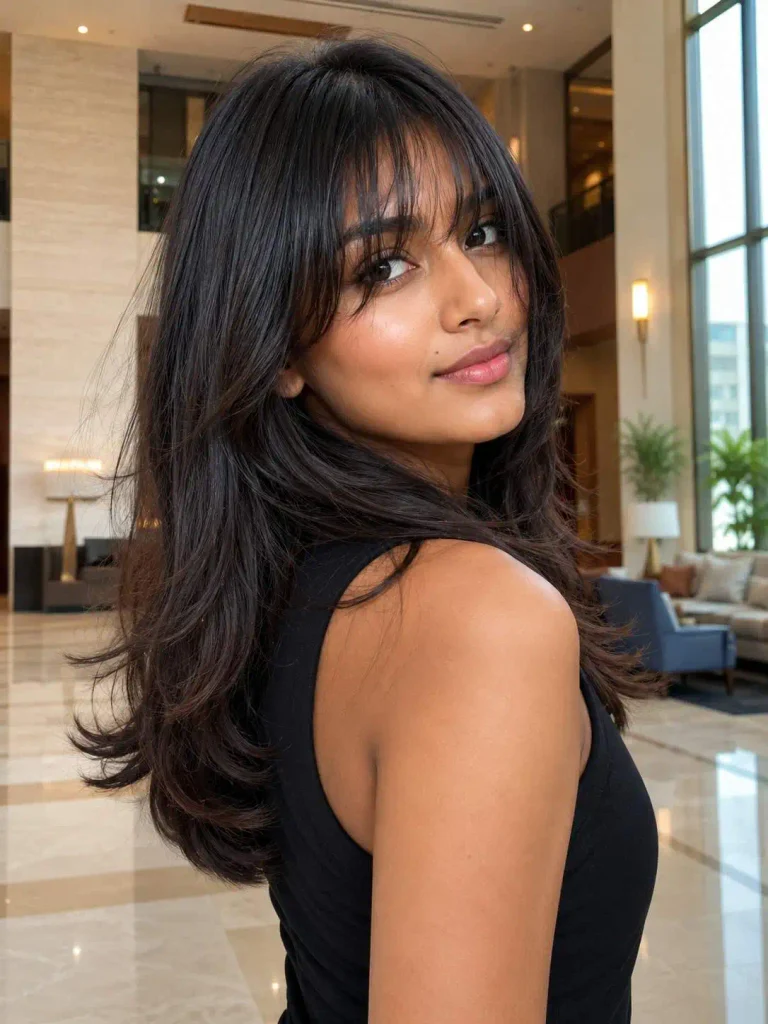
Ponytail With French Wispy Bangs
Fine eyebrow-skimming pieces and longer temple strands stay loose, while the rest gathers into a relaxed mid-height ponytail. Light ash blonde shows the contrast between the loose front and the gathered back.

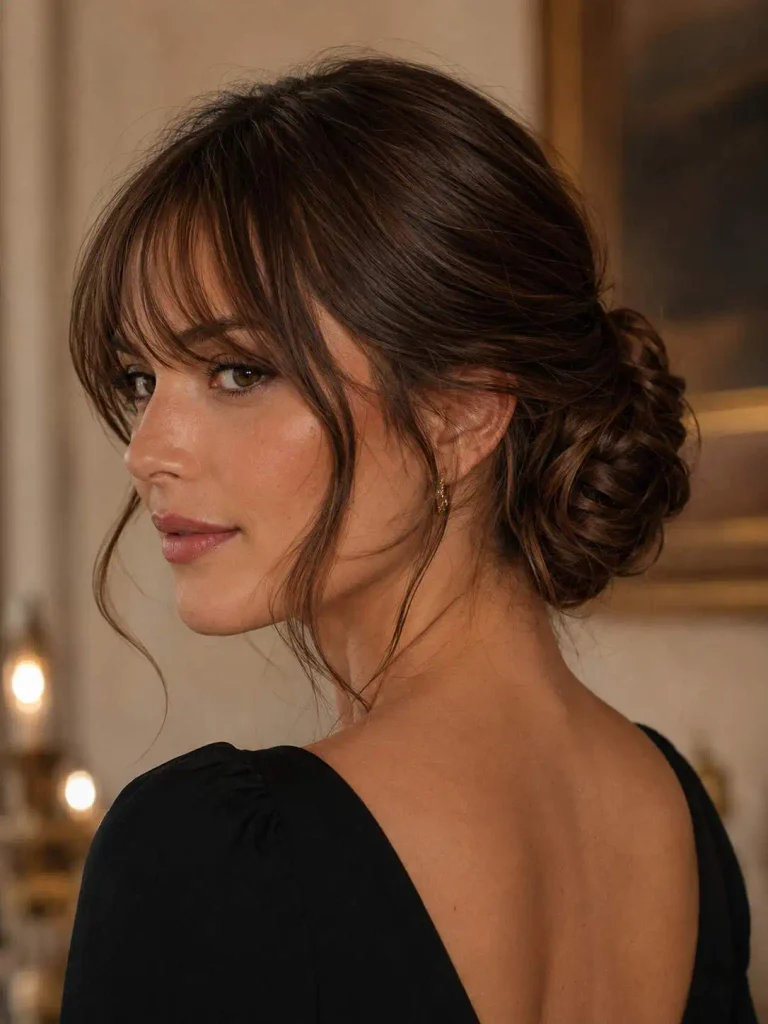
Updo With French Wispy Bangs
A loosely pinned low bun sits behind light fringe pieces over the brows, loose temple strands, and tiny face-framing sections near the cheekbones. Dark honey brown keeps the look warm and shows the loose front pieces.
French Twist With Wispy Bangs
Pinned into a sleek vertical roll at the back, the hair contrasts with a front where fine fringe pieces skim the brows and longer sides curve around the temples. Cool espresso color shows the clean silhouette. This look styling needs hair at least shoulder length, and a few U-pins along the seam keep the roll secure.

Thick Hair French Wispy Bangs
Narrow, separated pieces cross the forehead, while the rest of the cut keeps its fullness through longer face-framing layers. Deep brunette color shows the volume through the lengths and ends. This look needs density removed from the fringe, so asking your stylist to point-cut the bangs keeps them light.

Small Forehead French Wispy Bangs
Tiny separated pieces sit around the upper brows, with delicate side strands blending quickly into temple layers. Light caramel brown keeps the delicate fringe airy and open. This look should stay shorter and lighter than usual, and starting the fringe section farther back keeps it from looking too full.

Nineties French Wispy Bangs Hair
Here, a fuller, piecey fringe pairs with feathered brow-length strands, curved side sections, and bouncy round-brushed lengths. Warm golden brown adds nostalgic character, with visible lift at the crown and swing through the ends. this style looks best with a blowout, and a 2-inch round brush with the ends rolled under recreates the bounce.

You can compare these ideas with our bangs for thin hair and French bob haircuts guides. Look at the differences in shape, maintenance and what works with your natural texture.
Styling and upkeep
A wispy fringe needs little product but regular attention. Style it while it is still damp, using a small round brush or your fingers to guide the pieces into place, and dry them first before the rest of your hair, because they set quickly. A tiny amount of hairspray or a light styling cream will hold the shape without making the pieces clump together. The fastest way to ruin the airy finish is too much dry shampoo or oil at the roots, so keep products away from the fringe and use a light hand.
Trimming is the upkeep. Most fringes need a small trim every three to four weeks, and the wispy pieces grow out unevenly, so check them in the mirror each morning rather than waiting for the appointment. A trim between haircuts is usually quick and cheap, and many stylists will do it for regular clients. If the fringe is getting in your eyes, pin it to the side with a small clip rather than cutting it shorter yourself, because a rushed snip at home is how a light fringe turns into a short one. At night, clip the fringe up or let it rest on a satin pillowcase so it does not crease.
Frequently asked questions
Do French wispy bangs suit a round face?
Yes, when the pieces are longer at the sides. A fringe that is light in the centre and falls to the cheekbones opens the face rather than closing it off. A short, straight-across fringe is the version that can make a round face look wider.
Will they work with glasses?
They usually do, because the pieces are fine and separated rather than thick. The fringe needs to sit above the frames or be long enough to fall past them, and the worst spot is a length that catches on the bridge. Bring your glasses to the appointment so the stylist can check.
How often do they need trimming?
Every three to four weeks is normal. The pieces near the centre grow down fastest and start to poke the eyes first. A quick tidy-up between haircuts keeps the shape without a full appointment.
Can I get them if my hair is curly?
Yes, but the fringe should be cut dry and left longer than the photo suggests, because curls spring up as they dry. The result is a softer, springier fringe rather than a straight one. A stylist who cuts curly hair regularly will know how much spring to allow for.
Are they easy to grow out?
Easier than most fringes. The pieces are already uneven and separated, so they blend into face-framing layers as they grow. There is still an awkward stage when they reach the eyes, but pinning them to the side or sweeping them into a curtain fringe carries you through it.
A French wispy fringe is a small change that makes a cut feel done. It suits people who want softness around the face without the commitment of a heavy fringe, and it grows out more kindly than most options. Save two or three photos from this list that show the length and the amount of forehead you like, and take them to your next appointment. Point out where the shortest pieces should sit and how much of your face you want to see, then let the stylist adjust the section to your hairline and texture. The best wispy fringe is the one that looks as though it grew that way.


