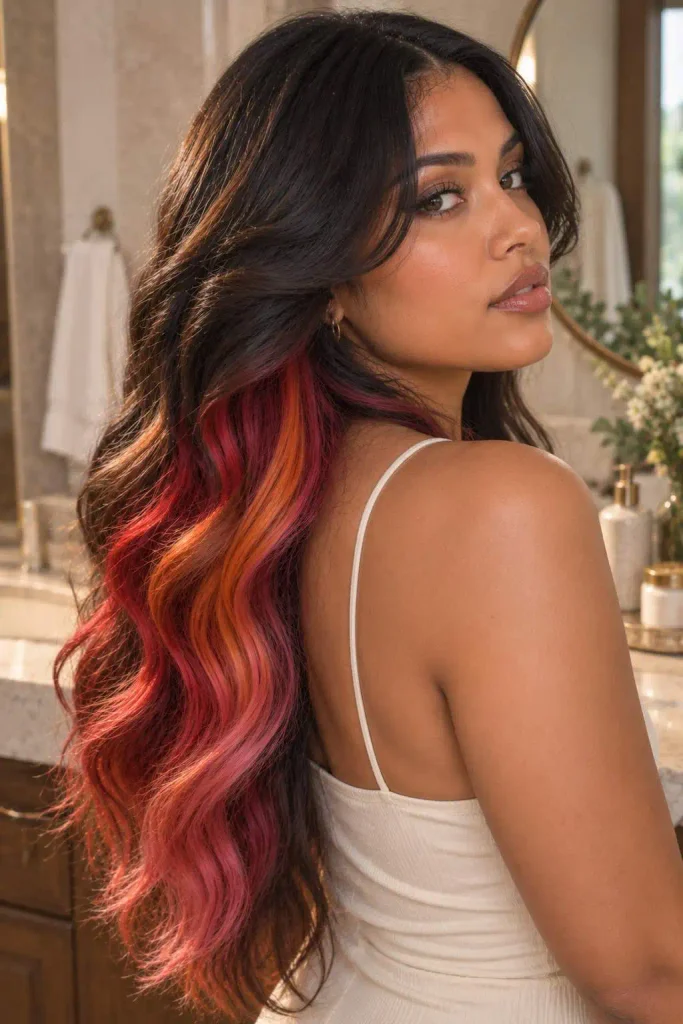
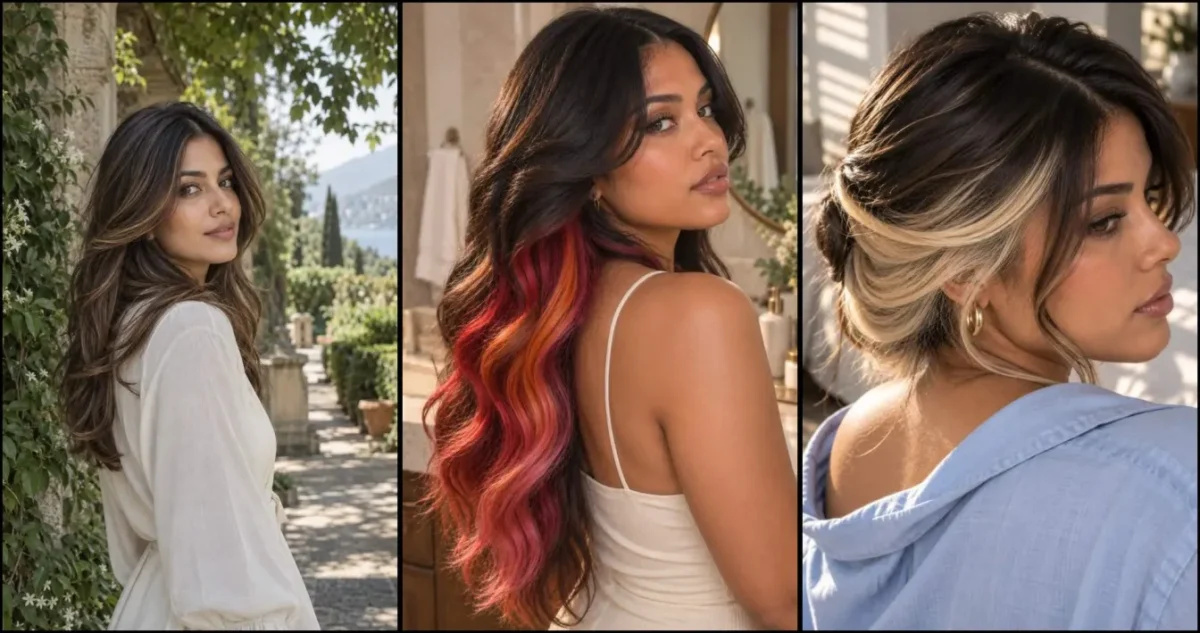
Halo hair color wraps a contrasting band around selected sections of the head, creating flashes of blonde, copper, pink, or blue as the hair moves. The placement can sit beneath the crown, circle the perimeter, or connect with face-framing pieces.
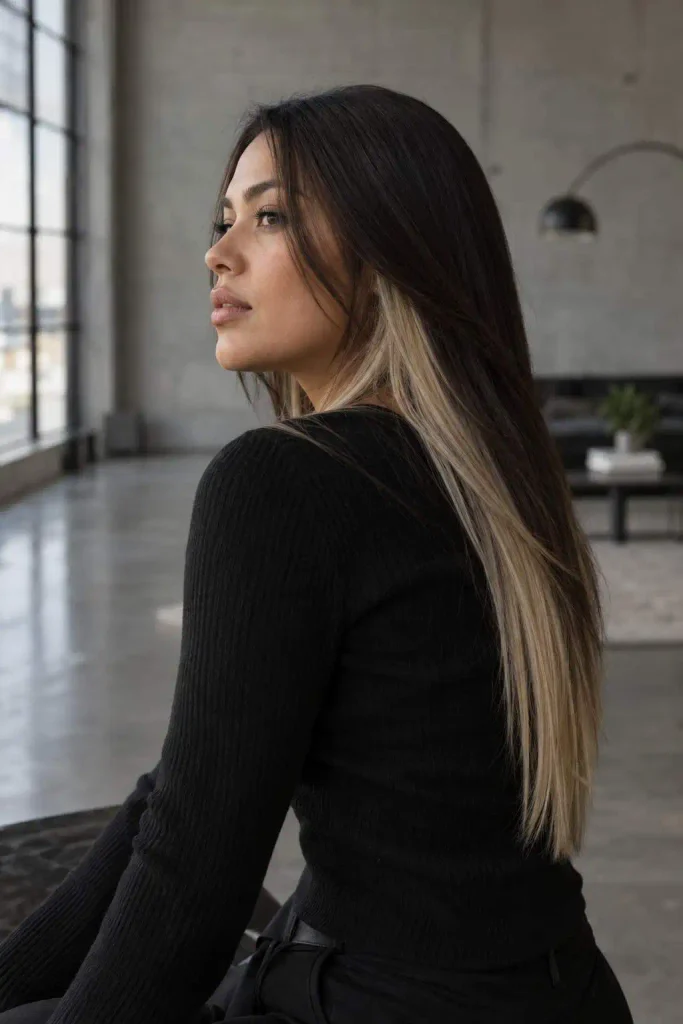
Blonde Halo Block Color
A pale blonde band sits beneath a deeper brown top layer, wrapping around the sides and nape so it flashes through loose movement. Ponytails reveal much more of it. Blonde Halo Block Color reads best on medium or long hair, and a purple shampoo once a week keeps the light section from turning brassy against the darker canopy.
Brunette Caramel Halo Layers
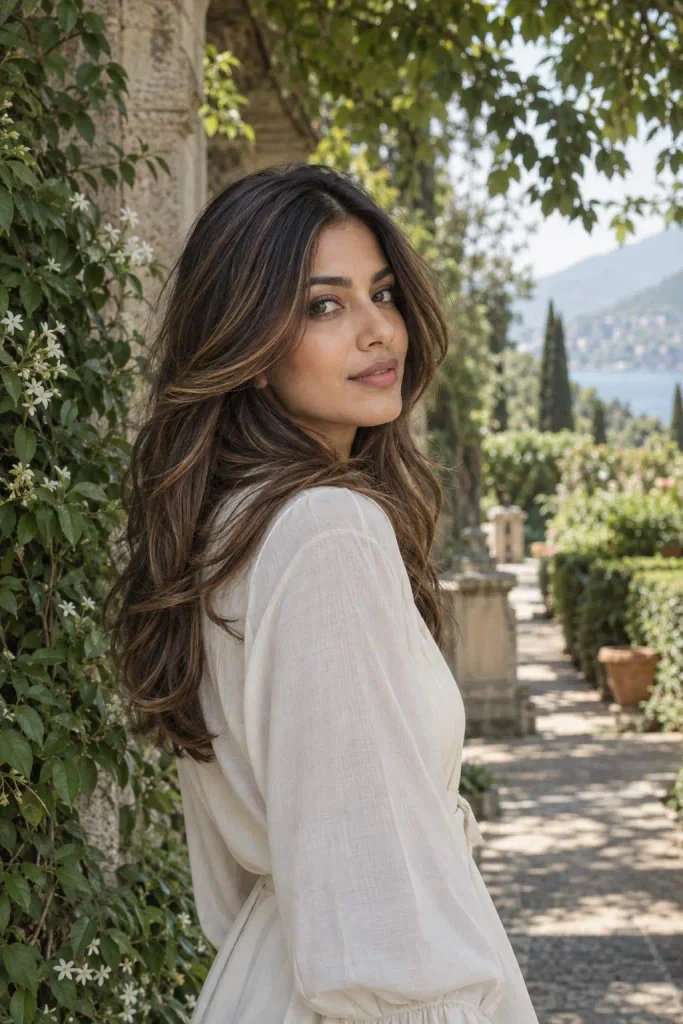
Mocha brown forms the base here, while toffee-toned ribbons are tucked around the lower perimeter and the face-framing pieces. Those caramel strands catch between darker sections and make each layer easier to see. Brunette Caramel Halo Layers suit long layered cuts, and a round-brush blowout with bent ends shows off the warm ribbons from the front and side.
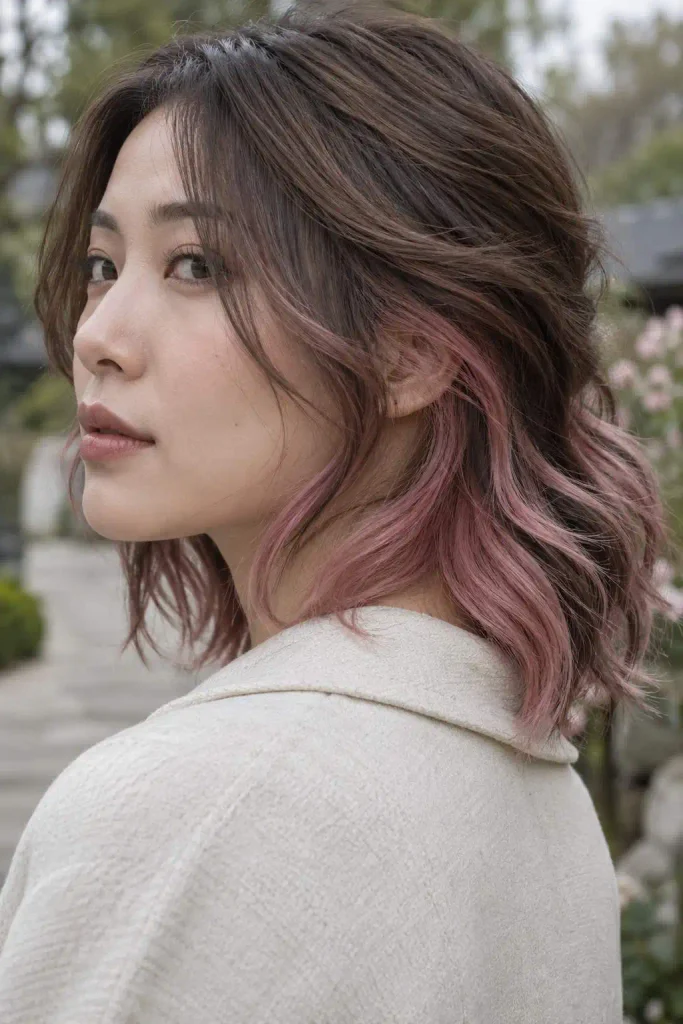
Pink Halo Underlayer Waves
Rose-pink sections hide beneath a neutral light brown crown, appearing between bends at the temples, sides, and neckline. Tucking one side shows more. For wavy hair at shoulder length or longer, Pink Halo Underlayer Waves work well, and a color-depositing pink conditioner every few washes keeps the hidden shade bright between salon visits.
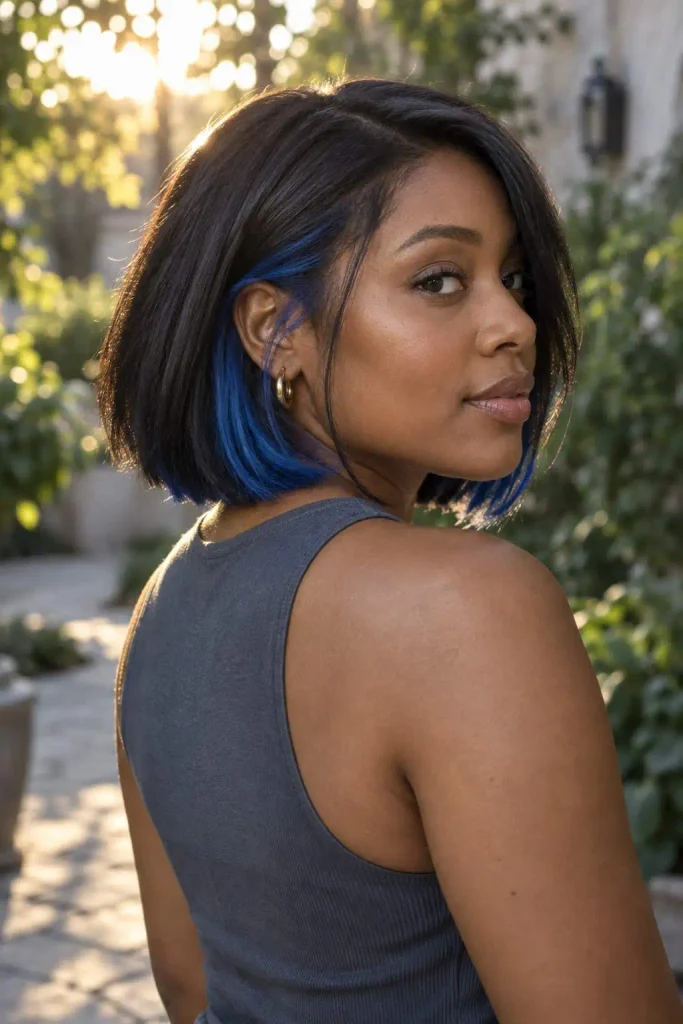
Blue Halo Black Bob
Inky black covers the surface of a chin-length bob, with cobalt blue sections placed beneath the side panels and along the back edge. A swing of the head exposes the band. On straight or slightly bent hair, Blue Halo Black Bob color stays crisp, and tucking the hair behind the ears turns the hidden blue into the main focus.
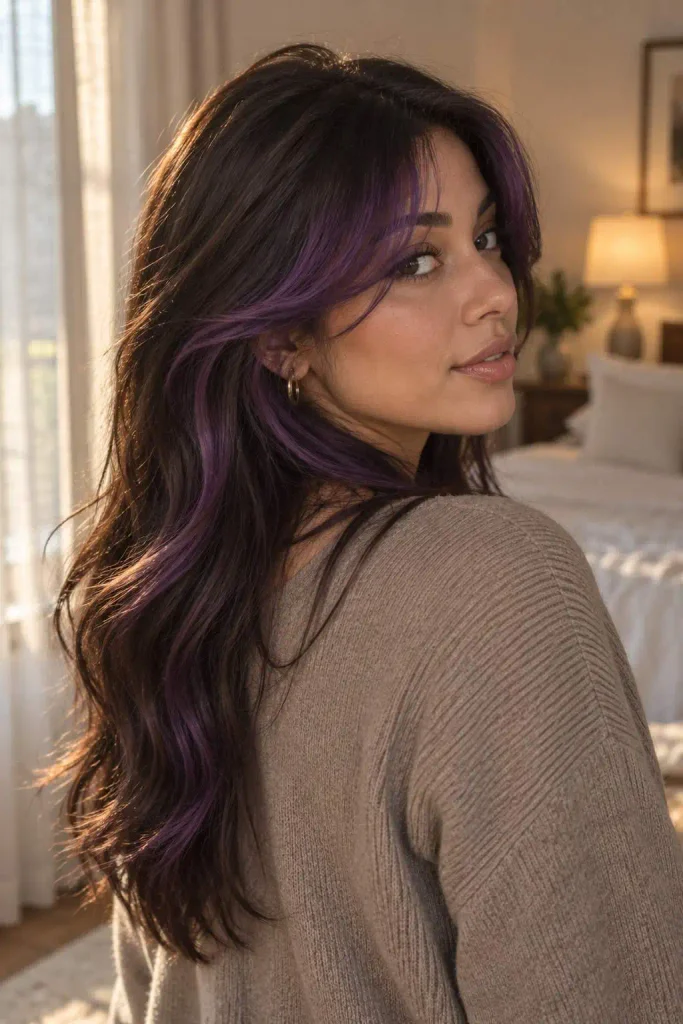
Purple Halo Curtain Bangs
Plum-toned violet runs through the fringe edges, temple pieces, and a hidden lower layer, while the crown stays a deep brown. Curtain bangs link the frame to the underlayer. Purple Halo Curtain Bangs suit medium and long cuts with a center part, and the bangs need a quick round-brush pass each morning to curve away from the face.
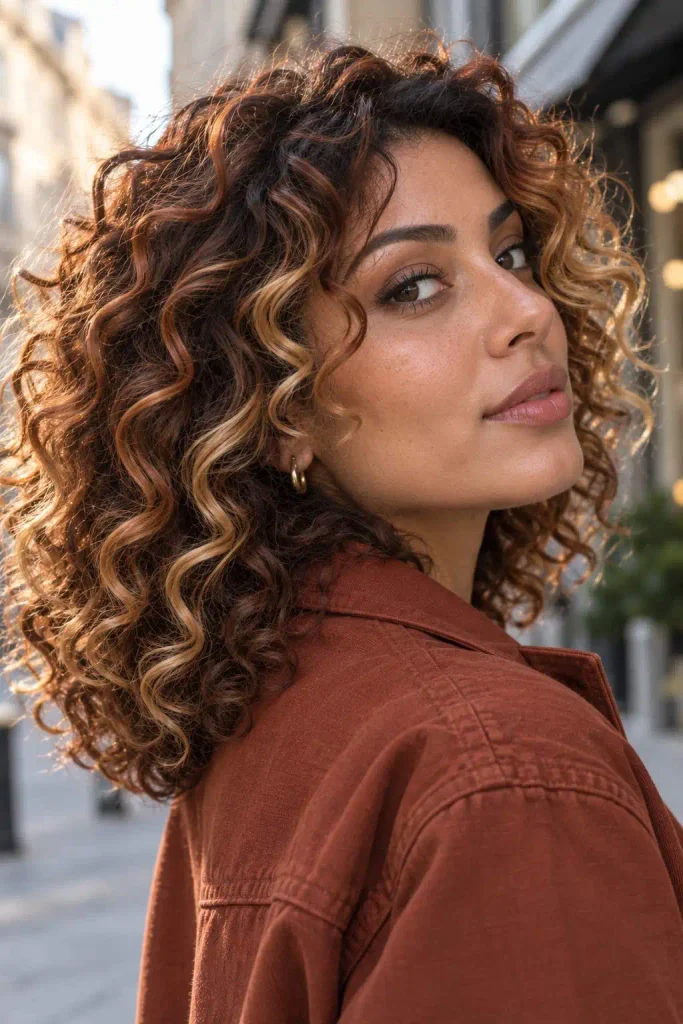
Copper Blonde Halo Curls
Amber copper and lighter gold blonde sit around the outer curl pattern, so both shades appear as the ringlets coil and shift. Inside, the base stays a medium brown. Copper Blonde Halo Curls show the most dimension on 3A to 3C curls, and a leave-in plus curl cream applied to soaking-wet hair keeps each ringlet separate.
Red Halo Brown Waves
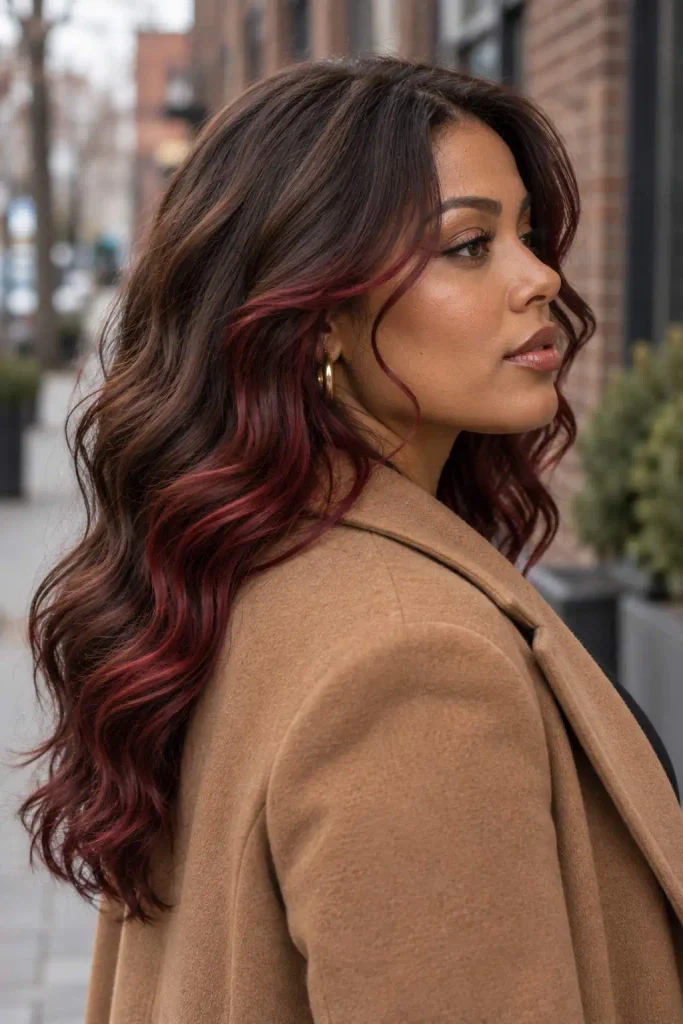
Chestnut brown forms the base, with wine-red color circling the lower hairline and peeking through front sections as broad waves separate. Contrast stays rich rather than neon. With deeper brunette roots, Red Halo Brown Waves grow out gracefully, and a large-barrel curling iron set to loose bends gives the red sections room to show.
Green Halo Dark Layers
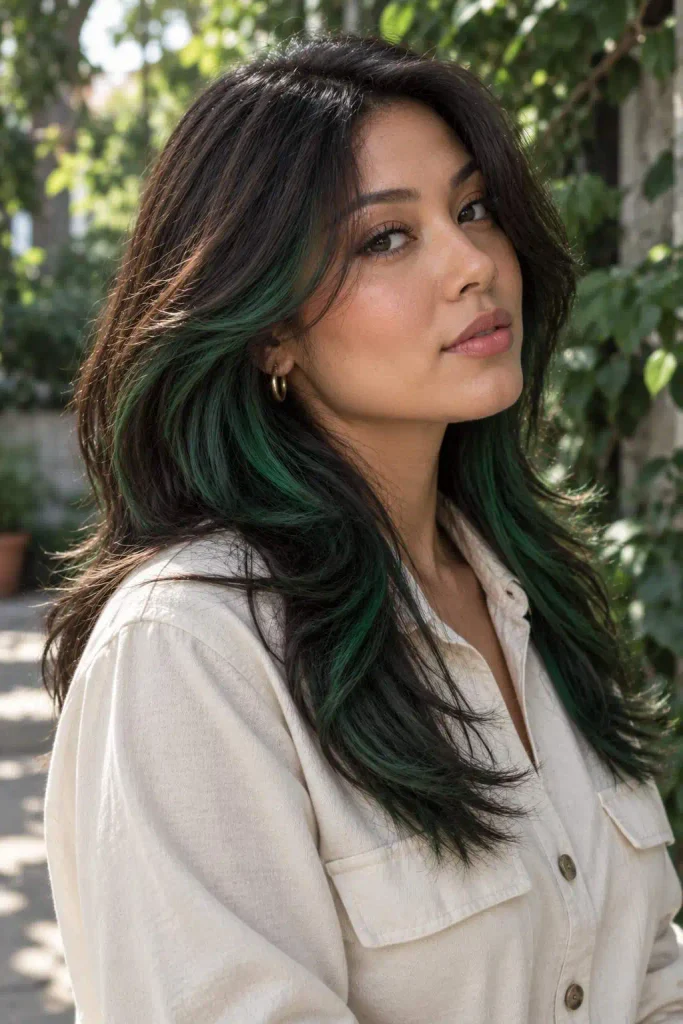
Forest green sections sit beneath espresso brown hair, with the deepest green showing near the sides, nape, and ends of each layer. Movement brings out narrow flashes. Green Halo Dark Layers work on long layered cuts, and since green fades quickly, washing with cool water and a sulfate-free shampoo helps the shade last longer.
Ginger Halo Natural Curls
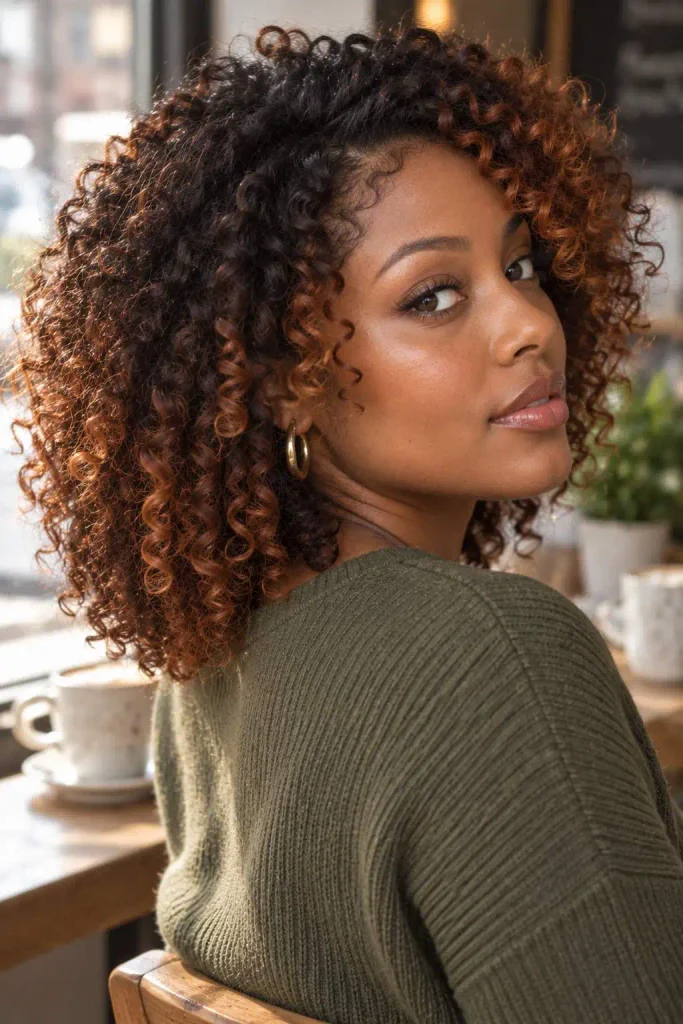
Cinnamon ginger frames the outside of a dark brown curl shape, concentrated at the hairline, temples, and selected lower coils. Rather than a rigid stripe, the color follows broken pieces of the curl pattern. Ginger Halo Natural Curls suit type 4 hair worn in a rounded shape, and a deep conditioner after lightening protects the colored coils.
Teal Halo Straight Hair
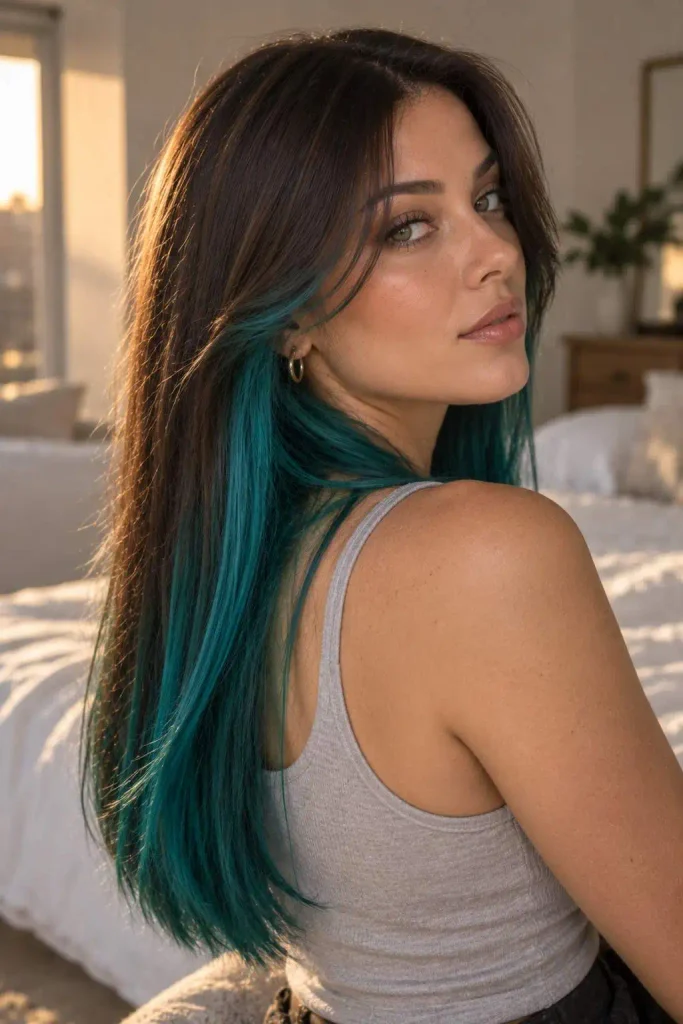
Blue-green teal sits in a clean lower band beneath a dark brown upper layer, easy to read from the side and back. Straight strands keep the line precise. Teal Halo Straight Hair looks best with a smooth flat-iron finish, and a heat protectant plus a lower temperature setting helps keep the semi-permanent teal from fading.
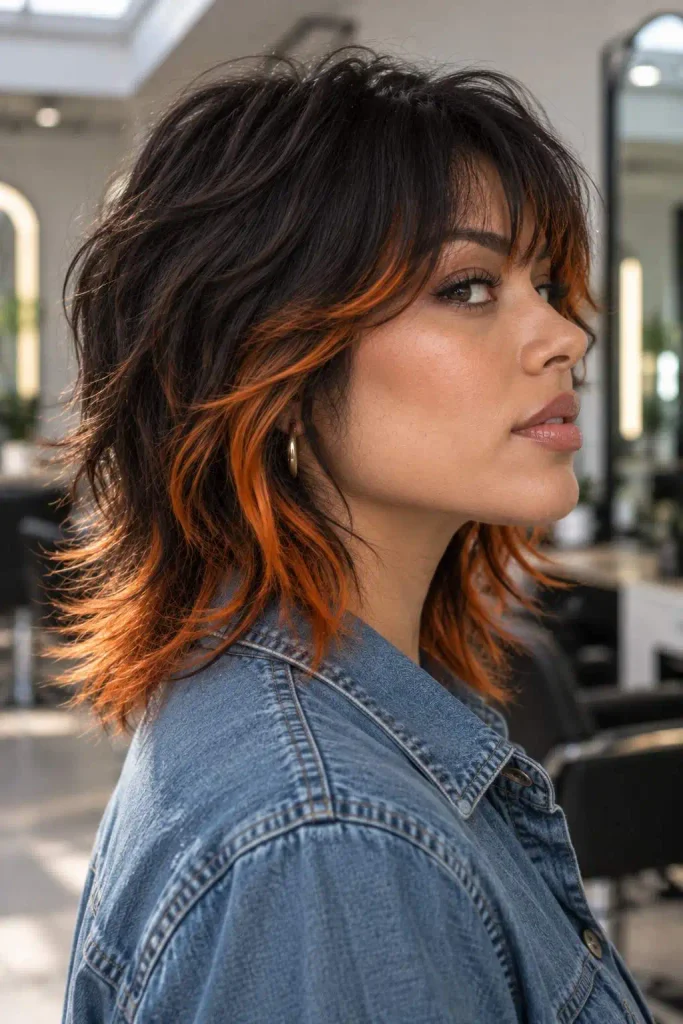
Orange Halo Black Shag
Burnt orange threads through the lower perimeter of a choppy black shag, showing at the fringe edges, side layers, and nape. Up top, the crown stays nearly untouched. Orange Halo Black Shag color suits wavy or straight hair at collarbone length, and a texture spray scrunched through the layers keeps flashing different pieces of the underlayer.
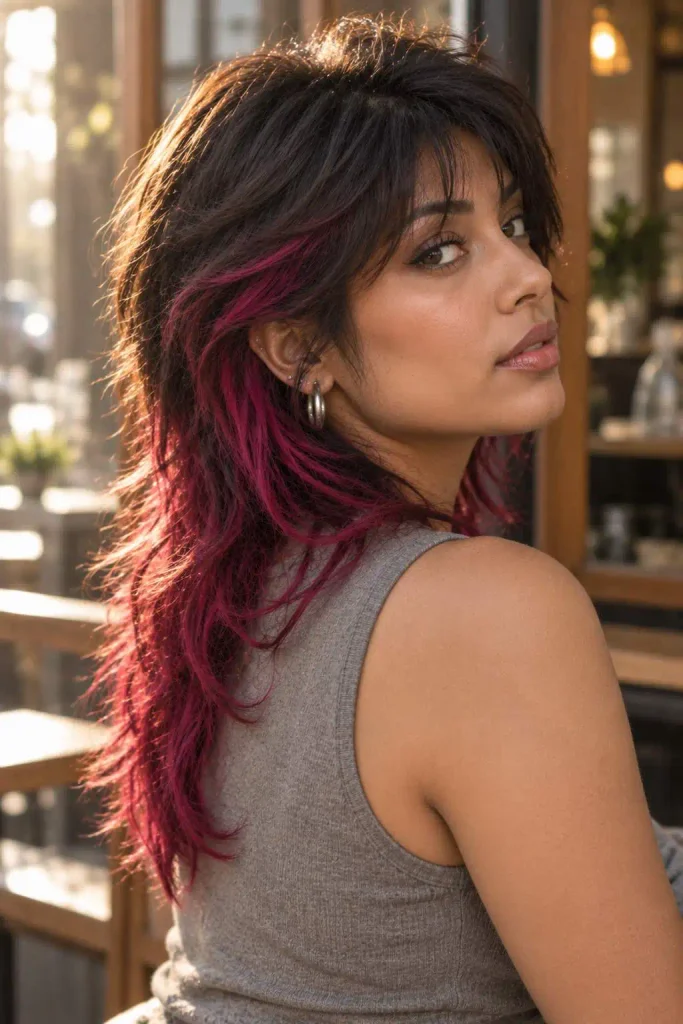
Magenta Halo Mullet Cut
Raspberry magenta panels sit under a dark crown and run through the longer back section, staying visible around the ears and neckline. Short top layers frame the color. Magenta Halo Mullet Cut color follows the shape of the mullet itself, and a pea-sized amount of styling paste keeps the shorter pieces separated so the raspberry band stays exposed.
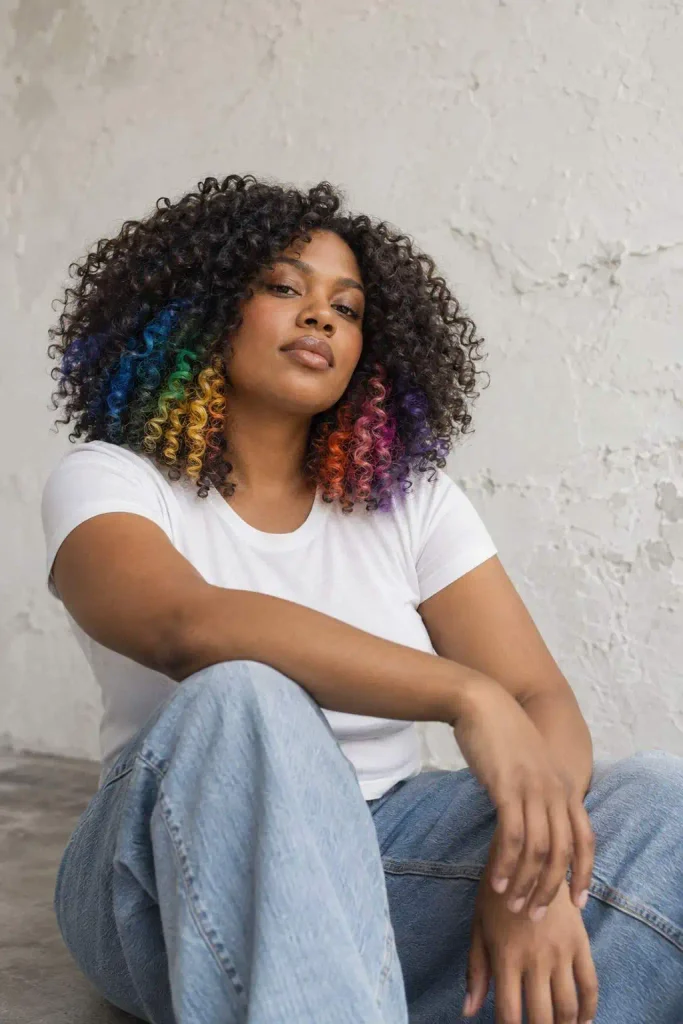
Rainbow Halo Curly Underlayer
Narrow sections of blue, green, yellow, orange, pink, and purple hide beneath a dark brown curl canopy. As curls overlap, several shades surface at once. Rainbow Halo Curly Underlayer color changes with volume and movement, and pineappling the curls overnight on a silk pillowcase helps keep the vivid sections from rubbing dull.
Grey Halo Mushroom Brown
Taupe mushroom brown forms the base, with smoky silver-grey sections circling the perimeter instead of an icy white band. Both shades share cool undertones. Grey Halo Mushroom Brown blends easily with existing silver strands, making it a practical choice for anyone transitioning to grey, and a blue toning shampoo keeps the brown from warming up.

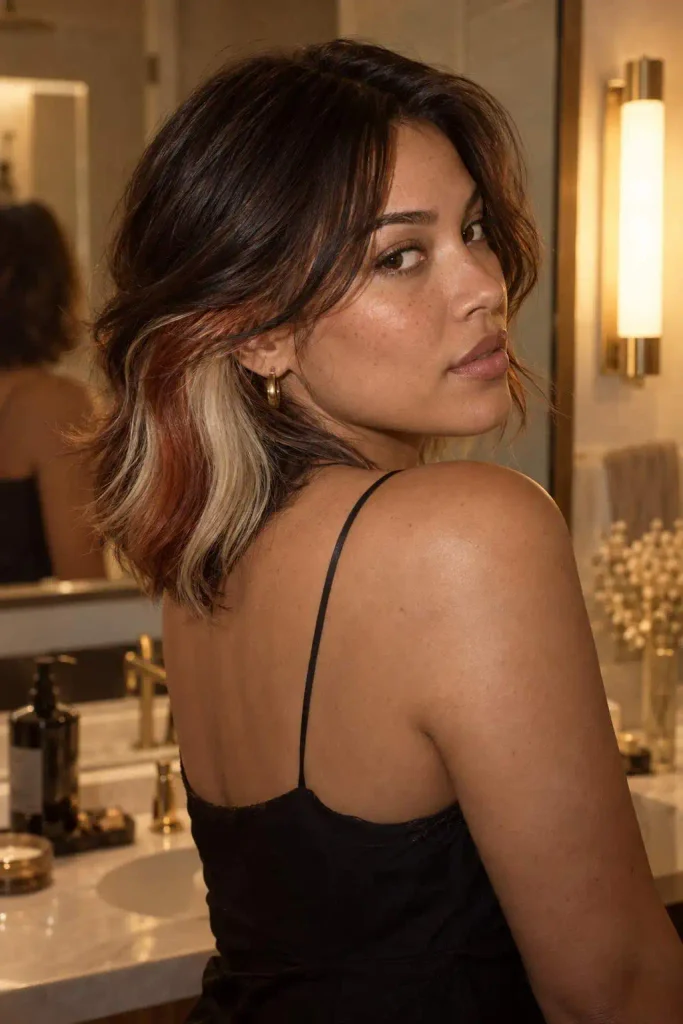
Calico Halo Color Blocks
Copper, golden blonde, and medium brunette panels divide the hidden perimeter into a patchwork that shows around the sides and nape. Movement in the top layer reveals each block. Calico Halo Color Blocks suit medium-length layered hair, and a bond-building treatment during lightening keeps the blonde and copper panels in good condition.
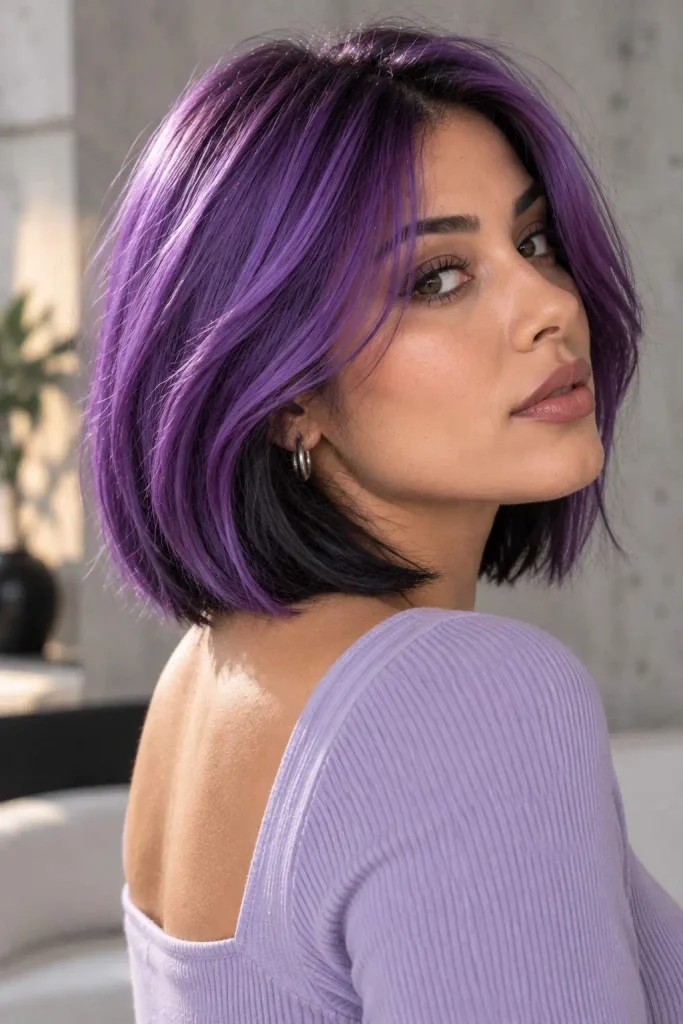
Reverse Purple Halo Bob
Violet covers the main surface of this chin-length bob, while a darker black ring sits beneath the sides and neckline. It flips the usual placement. Reverse Purple Halo Bob color shows its shadow effect when one side is tucked or curled under, and purple depositing masks keep the top shade from fading to lavender.
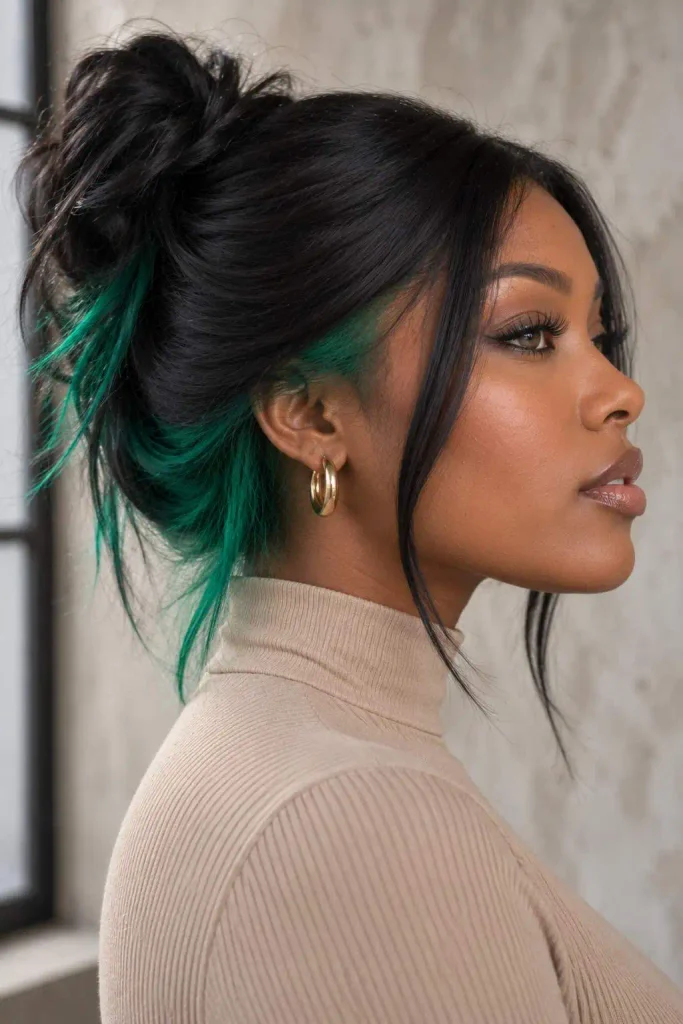
Hidden Black Green Halo
Jet black covers almost the entire crown, while an emerald green section circles beneath it, hidden until the hair separates near the ears or nape. Loose hair keeps it subtle. Hidden Black Green Halo color becomes obvious in braids, buns, and clipped styles, so it suits workplaces where vivid color needs to stay discreet.
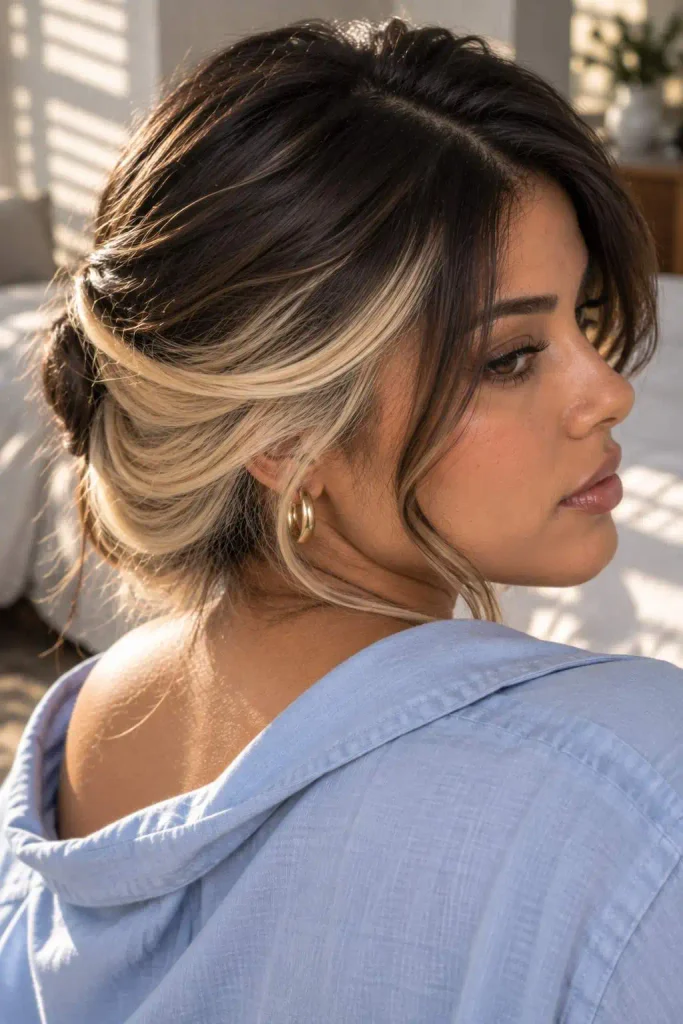
Side Part Blonde Halo
A golden blonde band follows the heavier sweep of an off-center part, set beneath a dark brown base. One temple shows a broader blonde section. Side Part Blonde Halo placement looks asymmetrical from the front, and flipping the part to the other side changes how much of the light band shows on any given day.
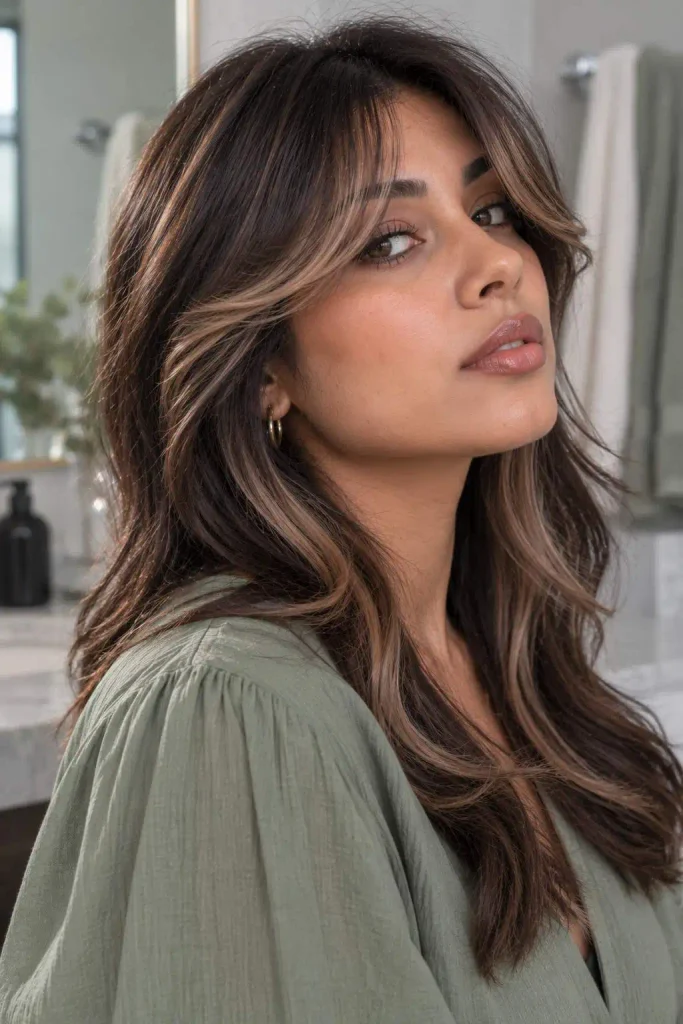
Curtain Bangs Brown Halo
Beige-brown contrast runs through the parted fringe edges and continues into a slim underlayer around the lower hairline. Underneath, the base is a deep espresso. Curtain Bangs Brown Halo color suits medium or long cuts, and blow-drying the bangs over a round brush lets the lighter fringe pieces echo the hidden band near the cheeks.
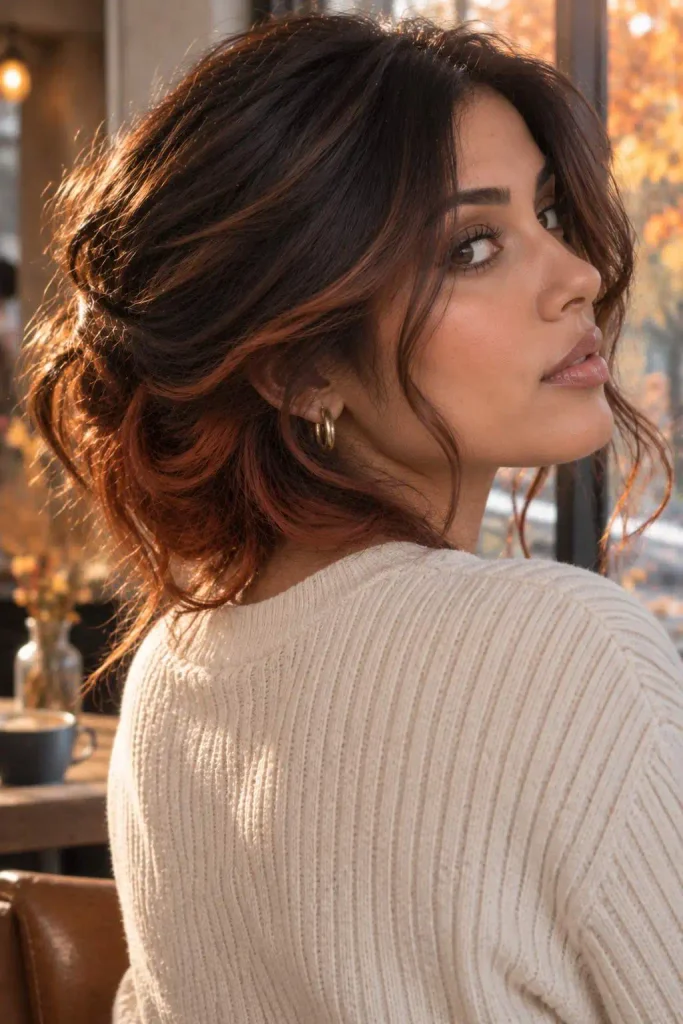
Fall Copper Halo Hair
Russet copper sits beneath the perimeter of a deep brown surface, showing best in waves and loose updos. Its tone falls somewhere between brick red and warm brown. Fall Copper Halo Hair pairs well with darker roots and long layers, and a copper gloss every six weeks refreshes the underlayer through the cooler months.
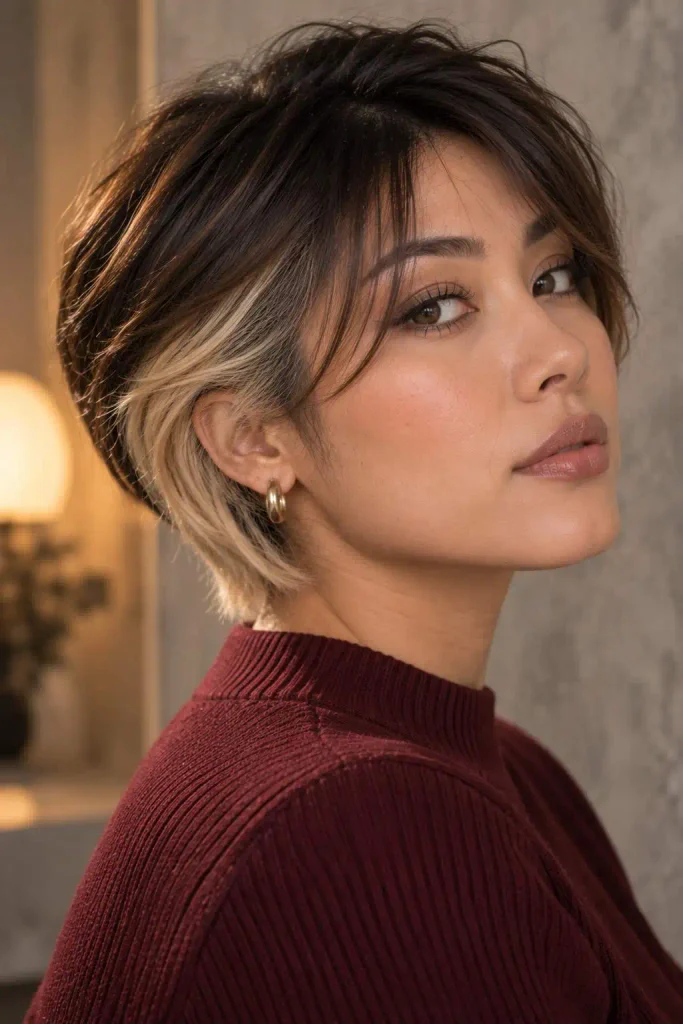
Short Hair Blonde Halo
Pale blonde shows around the ears, lower sides, and nape of a compact dark brown cut, where there is less length to cover it. Even a simple blowout reveals it. Short Hair Blonde Halo color works on pixies and short bobs, and touch-ups every eight weeks keep the regrowth line from showing at the nape.
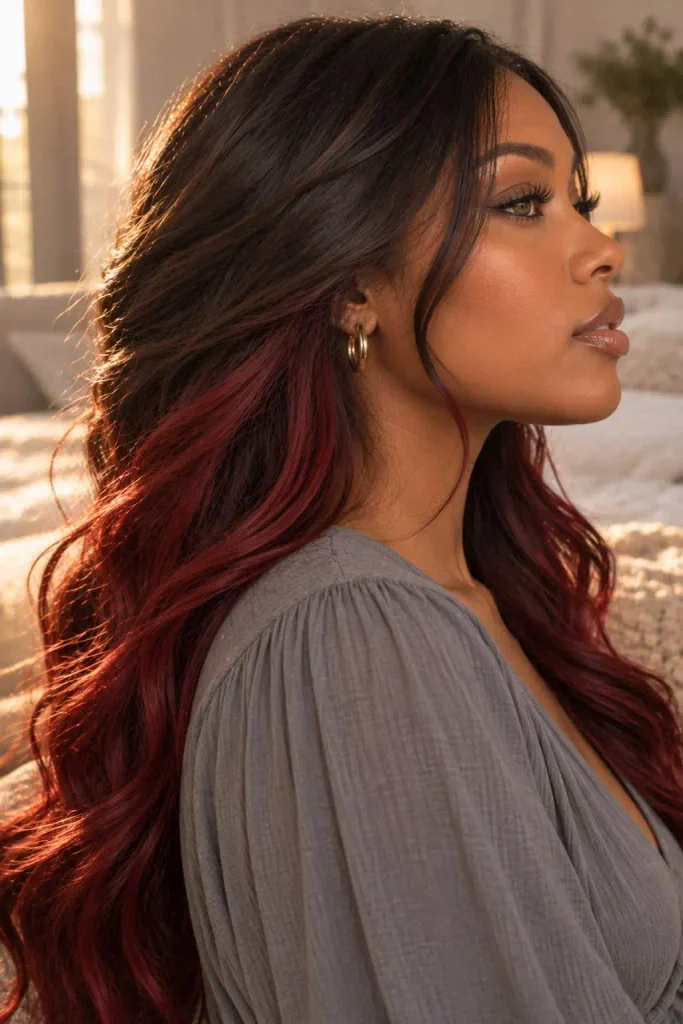
Long Hair Red Under Halo
Cherry red sections sit beneath a dark brown top layer, appearing through the lower lengths while the crown stays mostly unchanged. Loose waves bring the red forward as the lengths separate. Long Hair Red Under Halo placement has room to move through braids and ponytails, and washing every two to three days with cool water slows fading.
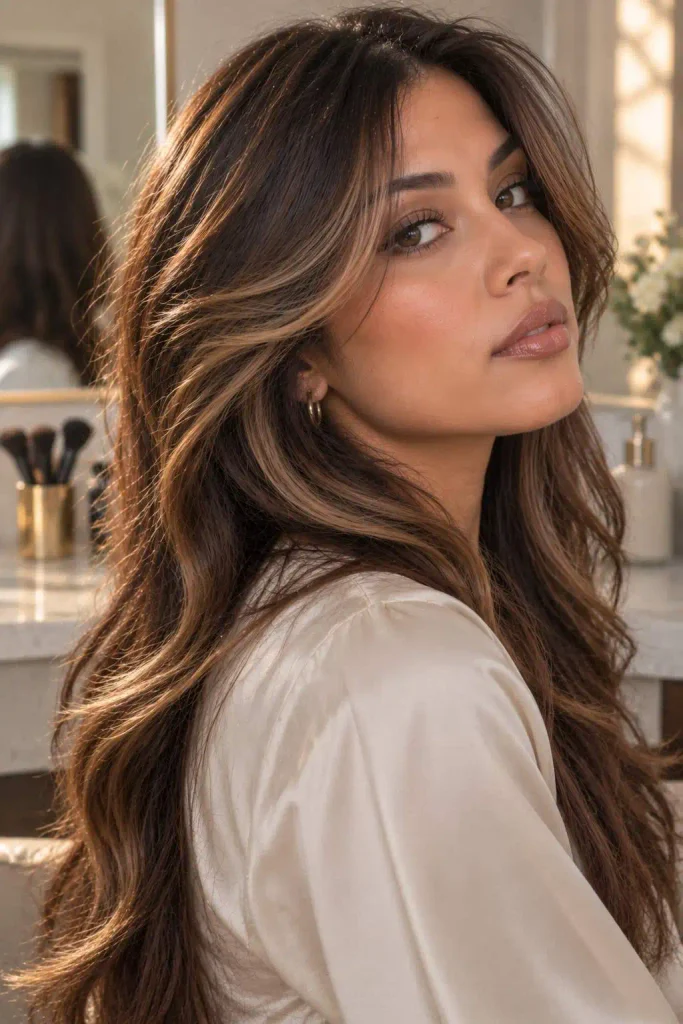
Layered Brunette Halo Highlights
Narrow honey-brown pieces thread around the face and lower perimeter, placed between darker chocolate sections instead of one heavy block. Each layer of the long cut exposes a different ribbon. Layered Brunette Halo Highlights keep the roots deep and the contrast restrained, so regrowth stays subtle and appointments can stretch to every three months.
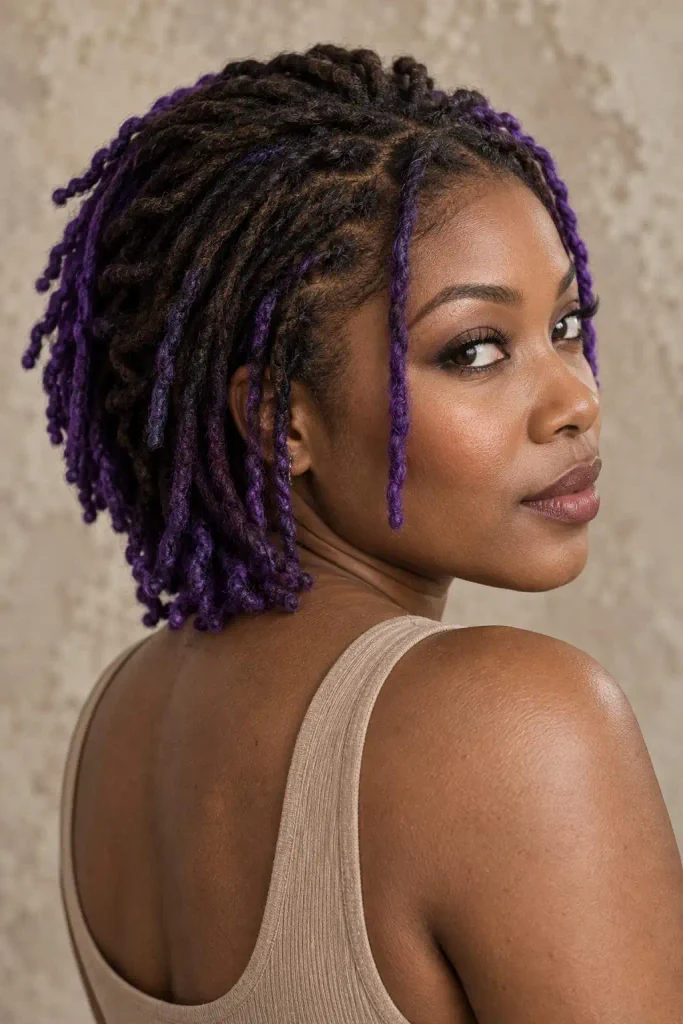
Locs With Purple Halo
Violet runs through selected perimeter locs while the crown and central sections remain a dark brown, creating a clear ring around the head. Color appears in evenly spaced pieces. Locs With Purple Halo placement shows from several angles, especially in high buns, and a light oil on the colored locs helps prevent dryness after lightening.
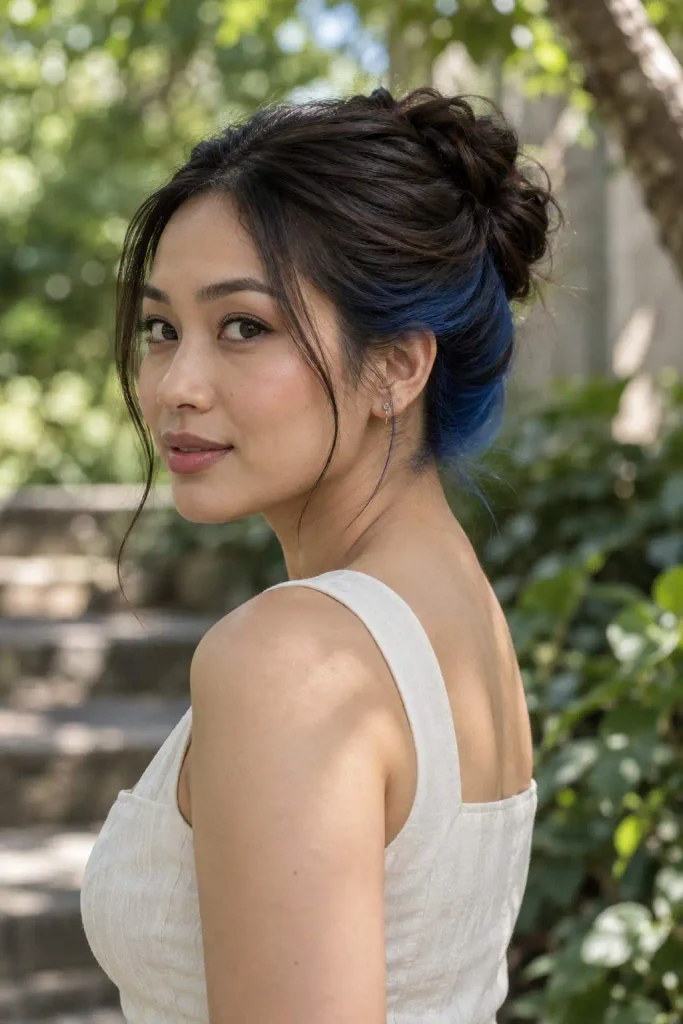
Updo Revealing Blue Halo
A dark brown top layer is lifted away from the neck, so a sapphire blue underlayer becomes the main visible detail around the sides and nape. Pinned styles turn it into a full reveal. Updo Revealing Blue Halo placement stays discreet when worn down, and a high twisted bun with a few face-framing pieces shows the most blue.
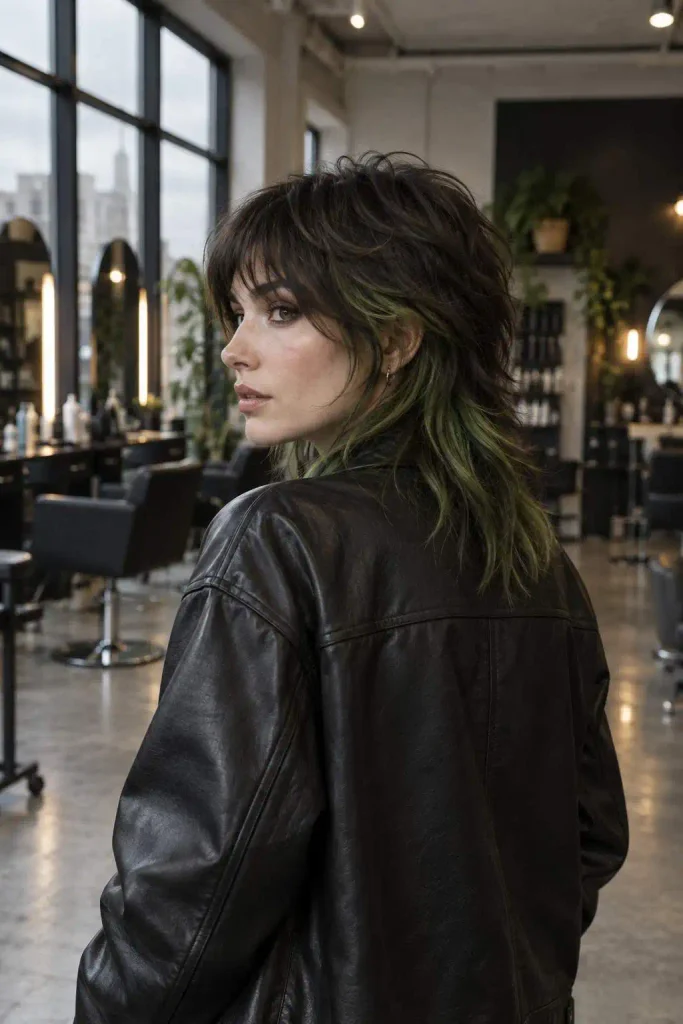
Wolf Cut Green Halo
Mossy green sections tuck beneath short crown layers of a dark brown wolf cut, surfacing through the longer sides and nape. Uneven, choppy pieces keep the shade appearing as the hair moves. Wolf Cut Green Halo color suits wavy hair with lots of layering, and air-drying with a sea salt spray helps separate the choppy ends.
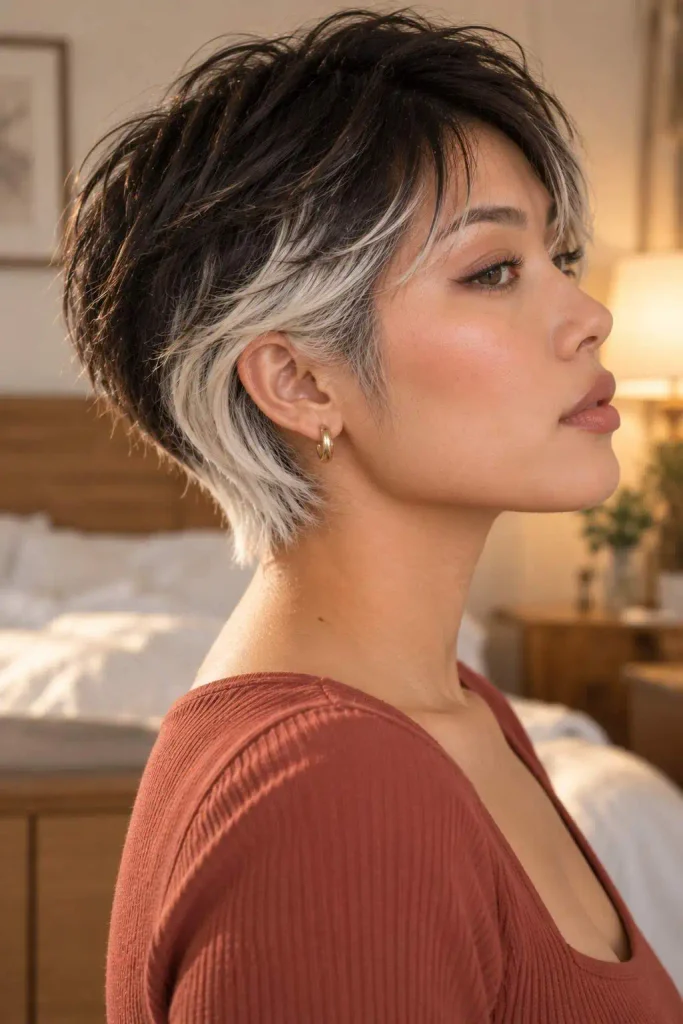
Pixie Cut White Halo
Ivory white traces the hairline and lower edge of a charcoal-black pixie, forming a high-contrast border around the short shape. Every angle shows it. Pixie Cut White Halo color sharpens a cropped silhouette without lightening the whole head, and a purple toning mask once a week keeps the ivory band from turning yellow.
Double Halo Black Blonde
Two separate rings repeat through the perimeter here, pairing a golden blonde band with a jet black band beneath a dark top layer. Each ring stays distinct. Double Halo Black Blonde color shows up in straight hair, waves, and half-up styles, and asking for precise sectioning at the appointment keeps the bands from bleeding together.
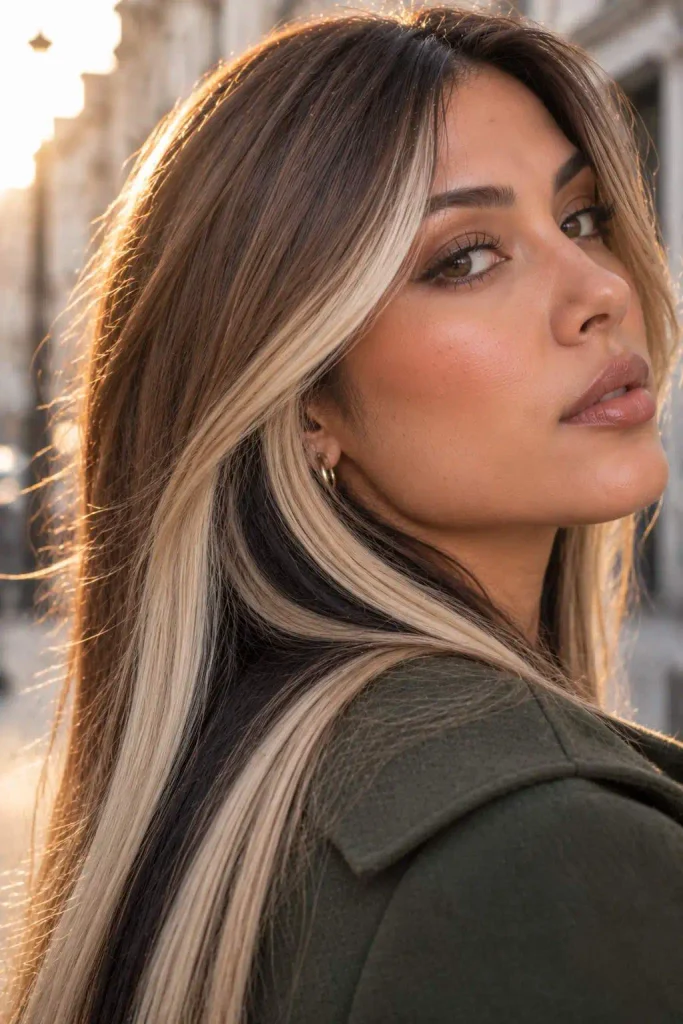
Two Tone Pink Purple Halo
Rose pink and violet split the hidden band into separate sections around the lower sides and back of medium-length hair. Above them, the top layer stays dark brown. Two Tone Pink Purple Halo color works best when the tones stay distinct, so rinsing in cool water and washing each shade with care prevents muddy blending.
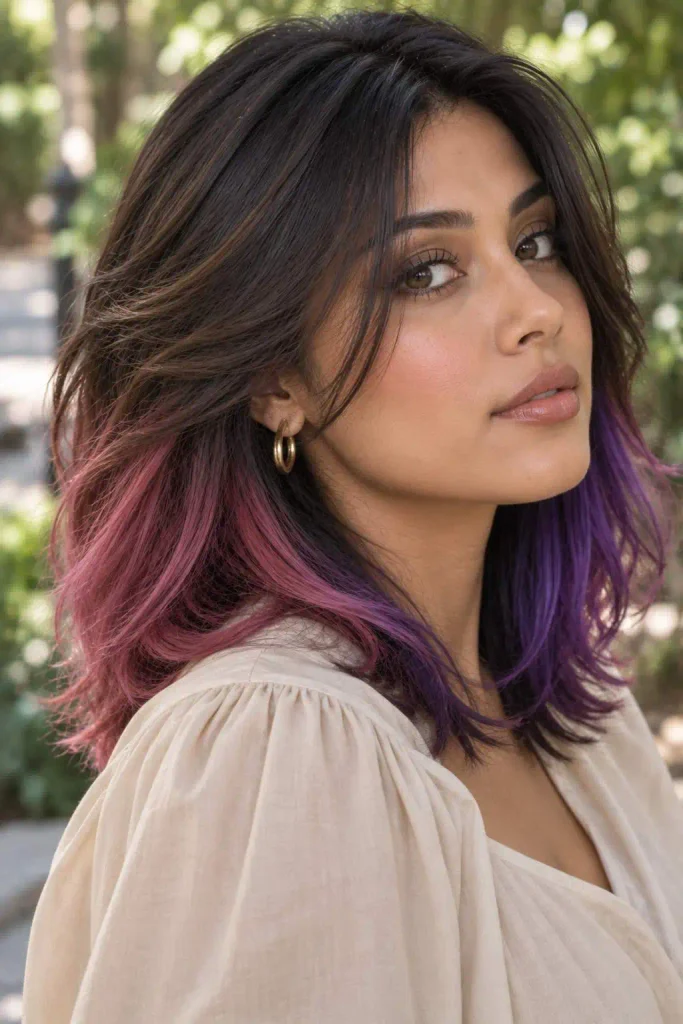
Three Color Sunset Halo
Red, orange, and pink run through separate perimeter panels, forming a warm gradient beneath a dark brown top layer. Each band stays visible. Three Color Sunset Halo hair shows most clearly on smooth waves or straight lengths, and a gloss-finishing serum helps the vivid sequence reflect light without the colors collapsing together.