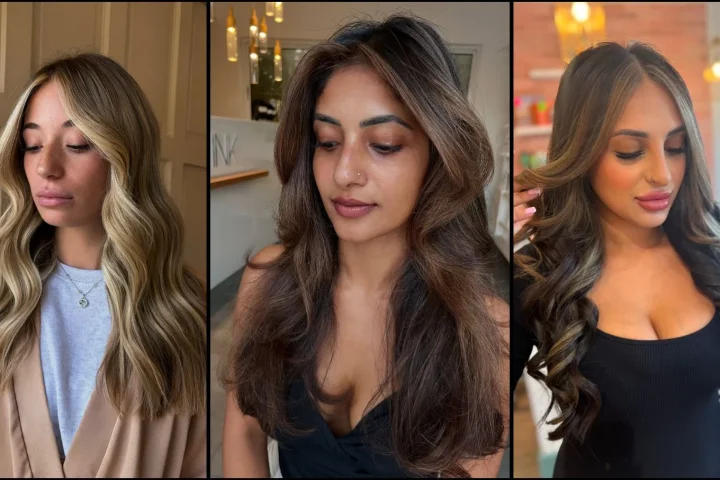
Gray blending is a kinder way to deal with coming gray on dark hair than dyeing the roots every few weeks. Instead of covering each silver strand, the colorist weaves in fine highlights and lowlights that match the gray as it comes in, so the regrowth line stops standing out so sharply. On dark hair the contrast is the whole problem: a solid dark color makes every silver strand at the parting easy to spot, while a blended result lets the silver sit among lighter pieces and look like it belongs. The 20 looks below show how that works on different lengths and different amounts of gray, from a few silver strands around the face to hair that is half gray. Some use a soft shadow root, others use fine highlights through the crown, and a few leave more silver visible for a salt-and-pepper effect. The right approach depends on how much gray you have, how dark your current color is, and whether you want to keep blending for years or are thinking of growing the color out completely. A good consultation starts with your hair history, so bring photos of your regrowth in daylight and be honest about how often you are willing to sit in the chair.
Decide what you want to keep visible
- Fine highlights can connect lighter strands with scattered silver. Lowlights add selected darker pieces when the result feels too uniformly light.
- A shadowed root changes the transition near the scalp. It does not make colored lengths turn naturally silver or remove every regrowth line.
- Growing out old dark dye can be a longer project than softening a few untreated grays. Ask what can be achieved without overprocessing the lengths.
Avoid a fixed maintenance promise
Bring photographs of your regrowth and explain the color history of the ends. Discuss whether you want ongoing blending or a transition toward untreated gray. Ask separately about lightening, toning and trimming old color away; they do different jobs. A clear gloss adds shine but does not necessarily neutralize yellow tones. Timing and tinted care should follow the formula and actual fading, not one schedule copied from a gallery.
How to choose your gray blending
Start by looking at where your gray actually is. Silver that gathers around the face and the parting is the easiest to blend, since fine highlights there connect straight to your natural gray. Gray that is concentrated at the crown needs more pieces through the top, and a soft root shadow can calm the line at the parting. Take a photo of your hair in daylight a week or two before your appointment, so your colorist can see the real pattern instead of guessing from the last dye job.
Texture changes how the blending reads. Fine hair shows each highlight clearly, so the pieces should stay narrow and close to your silver tones to avoid a striped look. Thick hair can take more pieces without looking busy, and it hides a root line better between visits. Curly and wavy hair breaks the color into smaller pieces as it moves, which makes the blend more forgiving, while straight dark hair shows a sharp regrowth line fastest and benefits most from a root shadow.
Think about how often you want to visit the salon. Blending is meant to stretch the time between appointments, and most people go eight to twelve weeks, with a toner in between if the silver starts to look yellow. A purple shampoo once a week keeps the silver bright, but use it sparingly on hair that is mostly dark, since it can dull the lowlights. Silver strands are often coarser and drier than colored hair, so a good conditioner matters more now than it did before.
Decide whether blending is a long-term plan or a step toward growing the color out. If you are heading toward fully natural gray, each appointment can lighten the old dark ends a little more and blend the line further, and regular trims slowly remove the old color. That takes patience, usually a year or more for shoulder-length hair, but the grow-out is much softer than letting a dark dye line grow in on its own.
Reference looks to compare
1. Soft Gray Blending on Dark Brown
Chocolate-brown hair carries fine, feathery strands of pewter and smoke woven through the mid-lengths rather than stacked at the roots.
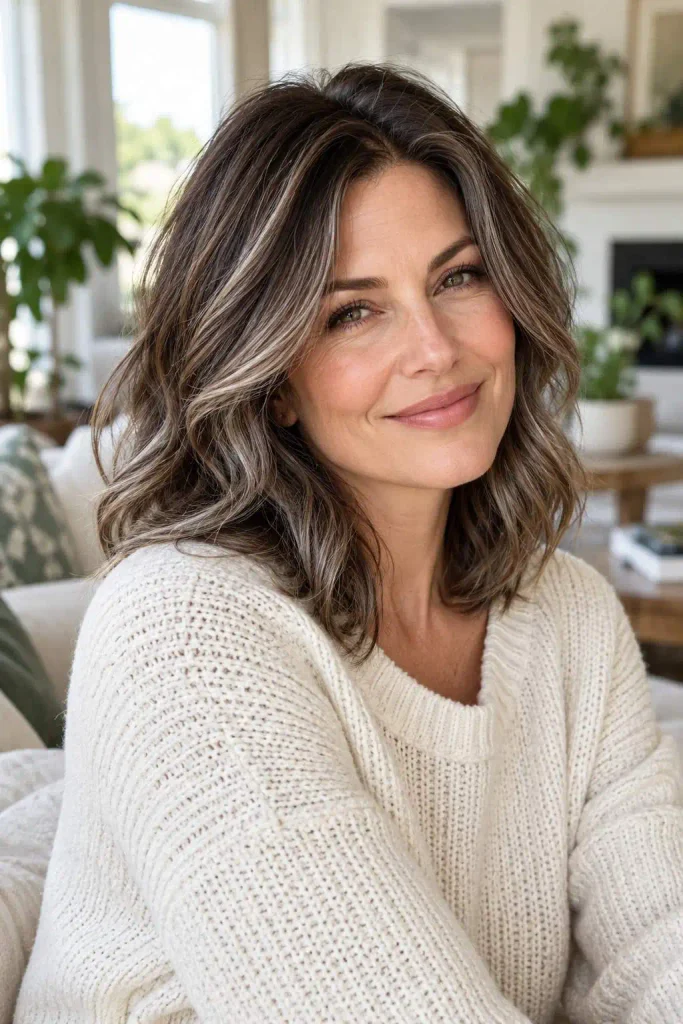
2. Dark Brown Gray Blending With Blonde
Ribbons of champagne blonde and ash-silver run through deep espresso lengths. Warm and cool tones overlap from the mid-shaft down in this look, so incoming silver regrowth can appear less distinct among the lighter pieces.

3. Ash Brown Gray Blending Balayage
Hand-painted sweeps of cool ash-brown and misty gray start at the mid-lengths and grow lighter toward the ends. The crown stays dark, and the color begins in softly blended pieces.

4. Silver Gray Blending on Black Hair
Jet-black hair is threaded with ultra-fine silver strands and finished with a charcoal gloss that catches the light. In this look, the tones sit close enough in depth that new gray at the parting looks like added dimension.

5. Dark Brown Babylights for Gray Blending
Whisper-thin babylights in toasted caramel and taupe are scattered through a dark brown base. Their speckled placement in this look disguises emerging silver at the roots, since the eye reads the gray as one more fine highlight.

6. Low-Maintenance Lowlights for Gray Blending
Deeper mocha lowlights are slipped between existing silver strands around the crown and temples. This look adds shadow where the gray clusters most, so the mix looks marbled and deliberate instead of patchy.

7. Salt-and-Pepper Gray Blending for Dark Hair
Charcoal, graphite and glinting silver strands are peppered evenly through dark, glossy hair from root to ends. Rather than hiding real gray, this look spreads it out so the whole head reads as one tonal mix.
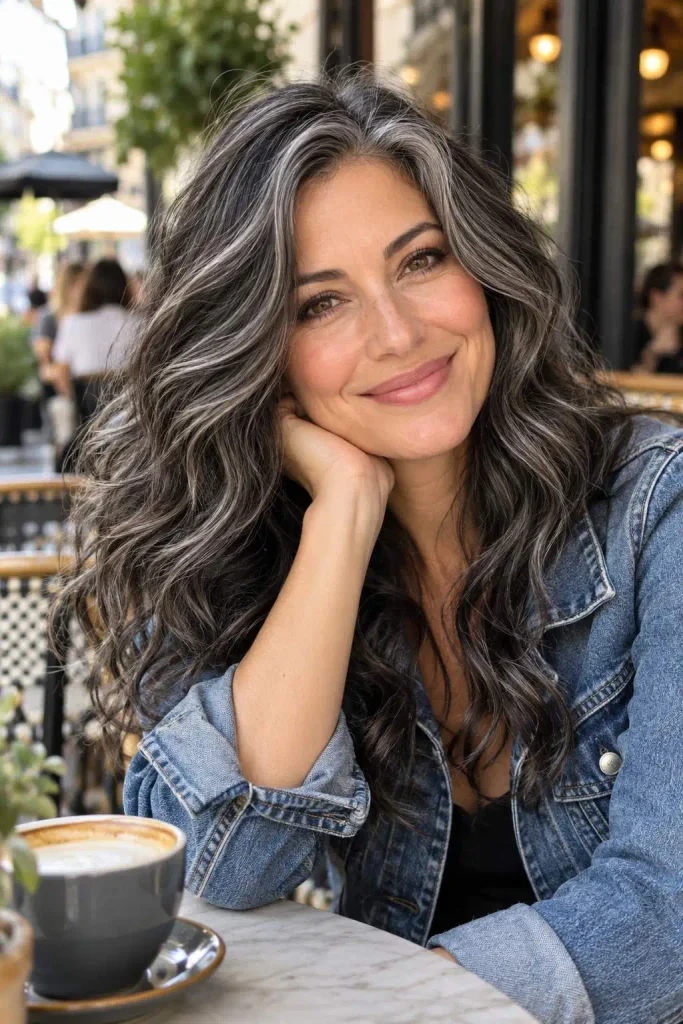
8. Face-Framing Gray Money Piece Blend
Two bright silver ribbons frame the face at the front hairline, then melt back into deep brunette lengths through a smudged transition. Placed this way, a Face-Framing Gray Money Piece Blend brightens the complexion and pulls attention toward the eyes. The silver pieces frame the face and make the contrast visible from the front. Ask your colourist how often toning will be needed based on the starting shade and how the silver fades.
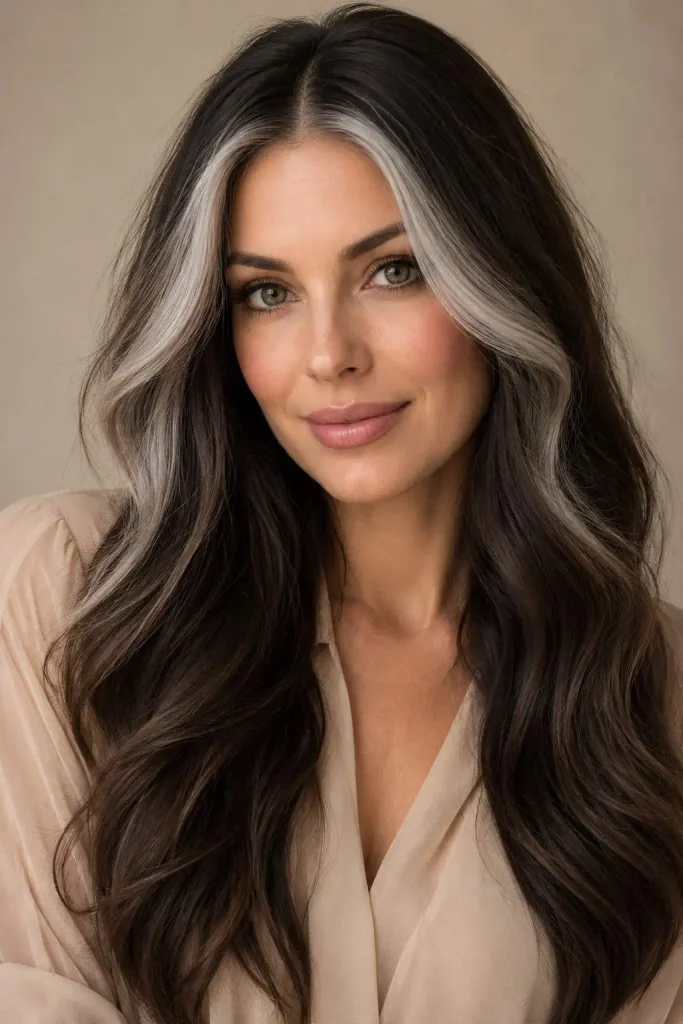
9. Dark Brown Gray Blending With Bangs
Wispy curtain bangs mix dark brown with pale silver and sweep across the forehead, with the gray concentrated at the front where it appears first. This look turns that early silver into a deliberate highlight around the hairline.
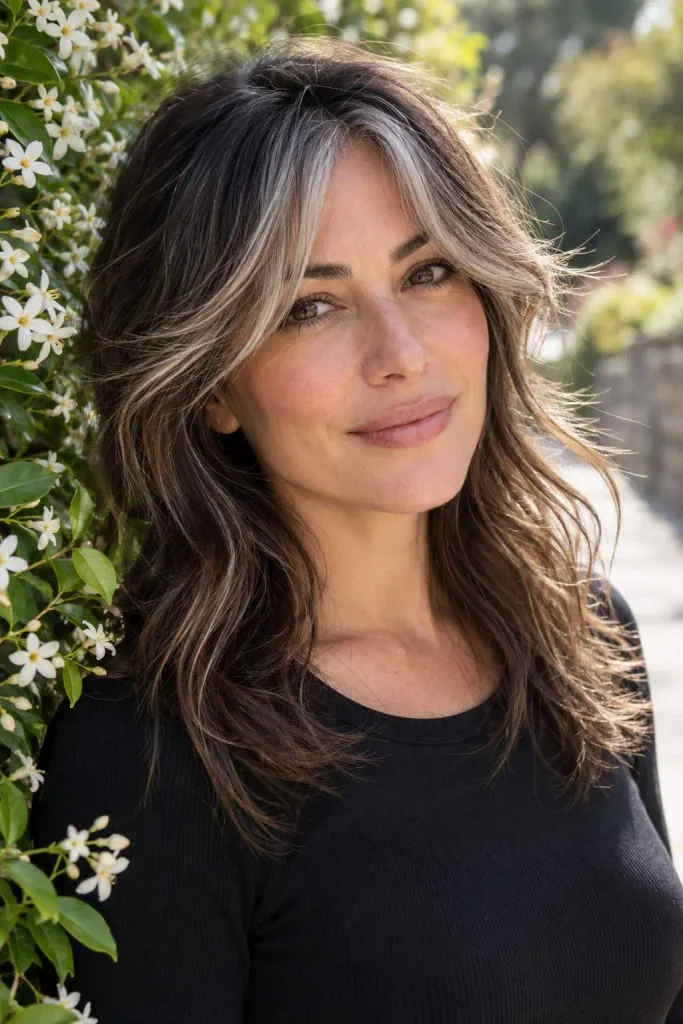
10. Gray Blended Bob for Dark Hair
Slender silver highlights sit at the crown of a sleek, chin-length bob in deep espresso brown. Its curved ends turn under and stay glossy, which gives the color transition a crisp edge along the jawline.

11. Gray Blending Pixie for Short Dark Hair
Silvery highlights are feathered through the top and fringe of an inky dark brown pixie. With such a short length and a deep, dark nape, the short length may make new grey growth easier to blend, although the transition depends on the existing colour and placement.
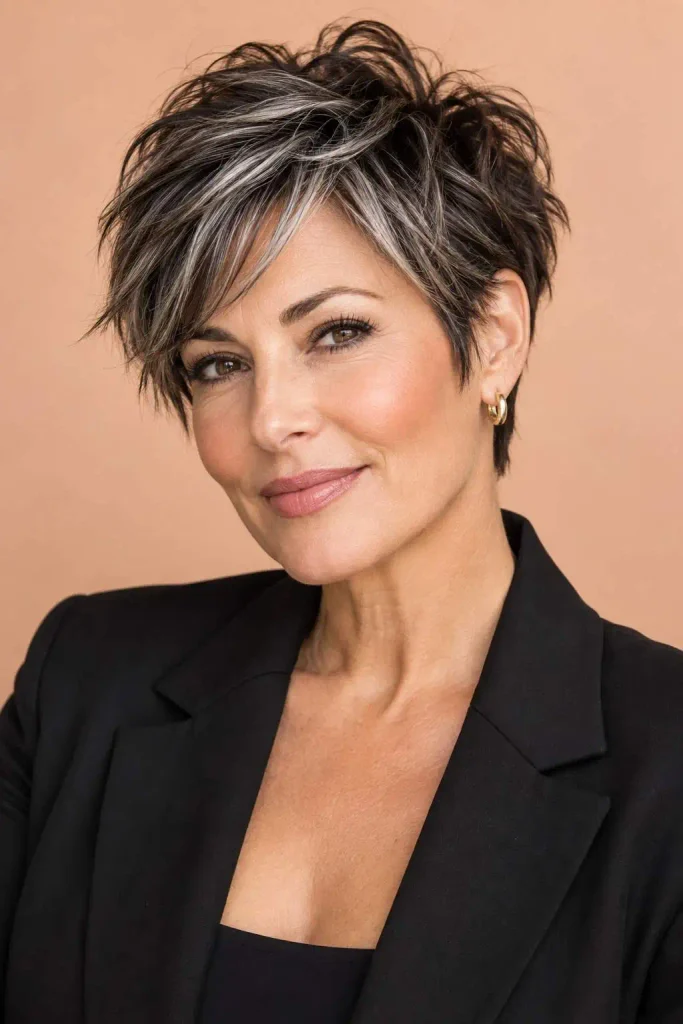
12. Dark Brown Curly Short Gray Blending
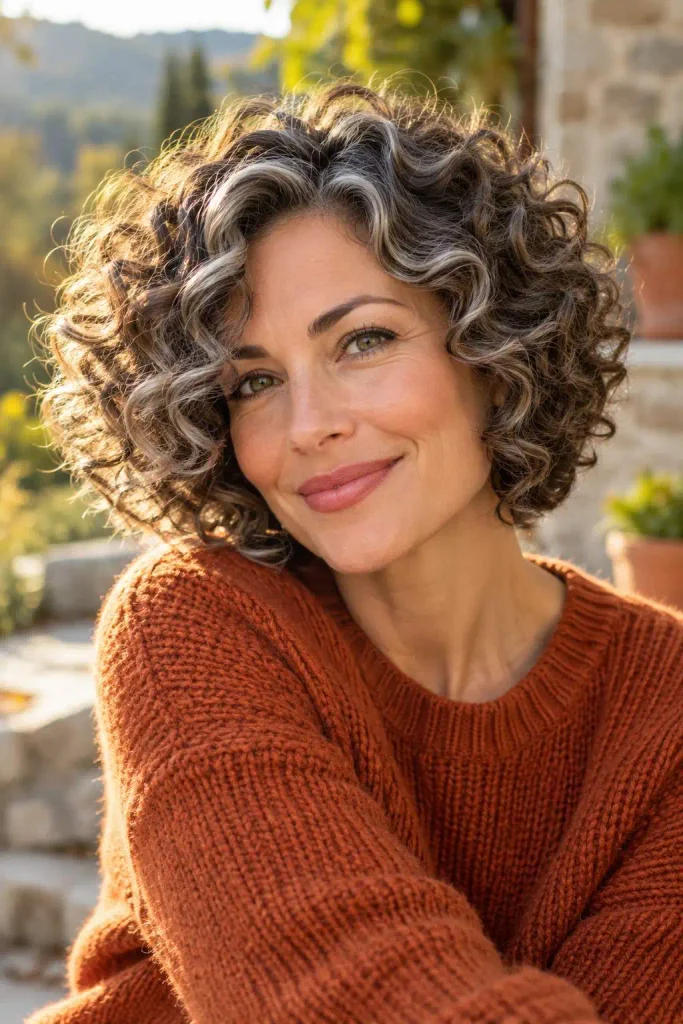
Bouncy dark brown curls are cut short and shaped around the face. Ash-silver and mushroom-brown tones laced through the coils make Dark Brown Curly Short gray Blending work, because the spiral pattern scatters the color so gray at the roots is hard to spot. Type 3A to 3C curls suit it best, and a sulfate-free purple conditioner once a week keeps the ash tones cool.
13. Shoulder-Length Gray Blending for Dark Hair
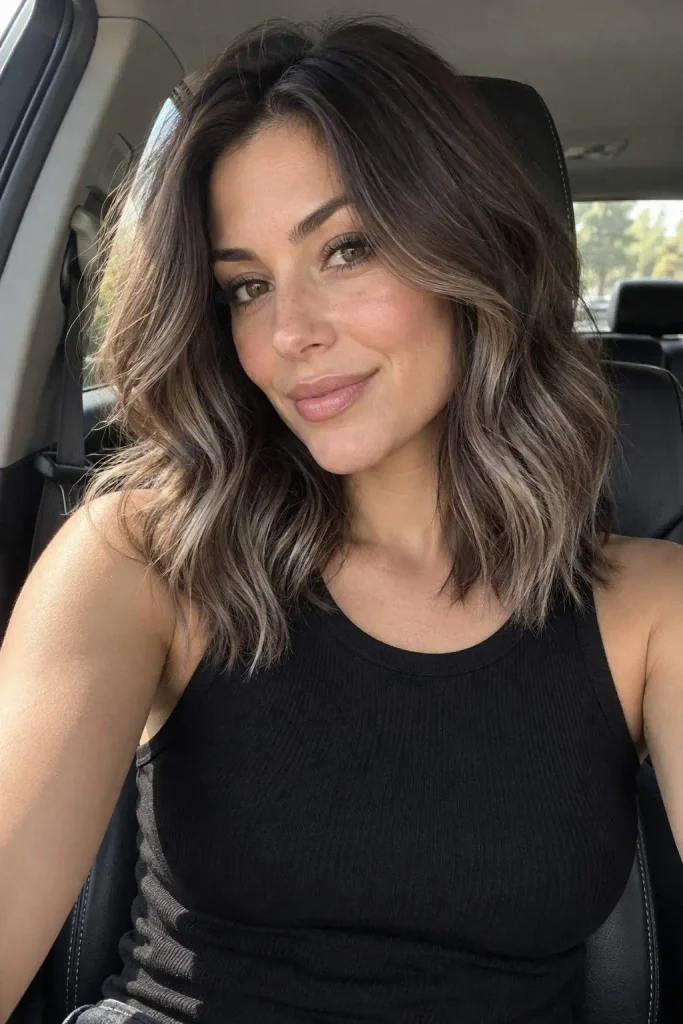
Waves falling to the shoulders in dark chestnut are dusted with silver and smoky taupe that begin near the cheekbones. Through this look, the gray dissolves gradually toward the ends, giving the color room to move with each bend of the wave.
14. Long Dark Hair Gray Blending Waves
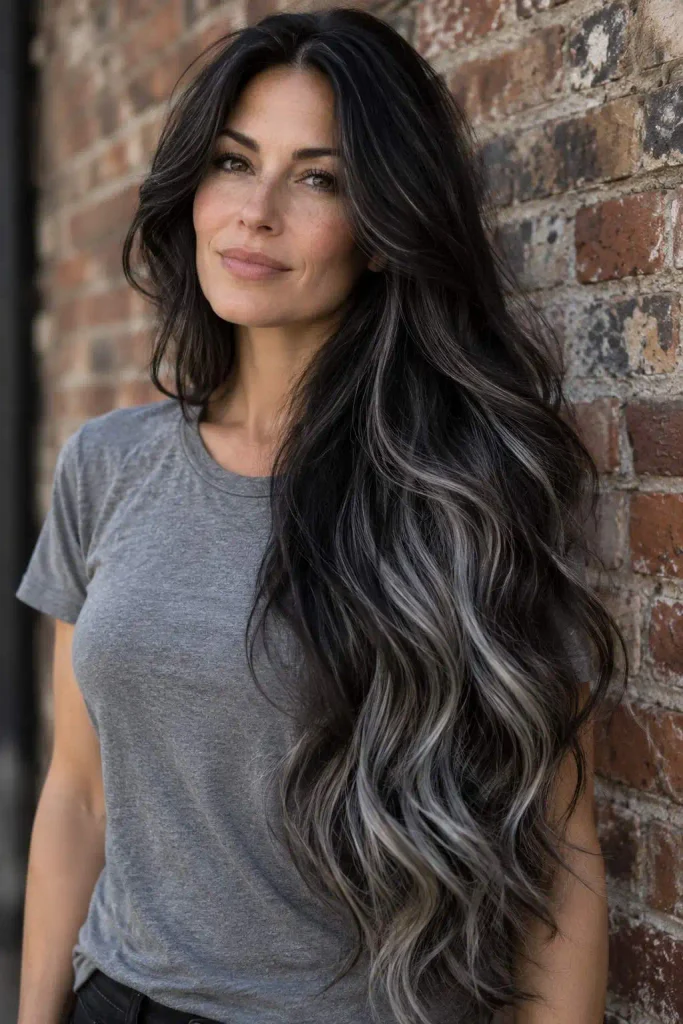
Near-black hair falls well past the shoulders in long, loose layered waves, streaked with silver and graphite that gather toward the ends. The layering lets each highlight ripple at a different depth.
15. Dark Blonde Gray Blending Ideas
Honey-beige and sandy dark blonde lengths are woven with pearl and platinum threads from the roots to the mid-lengths. Of all this look, this tone-on-tone approach hides regrowth best, because the silver melts into the base instead of standing apart.
16. Gray Blending for Dark Skin Tones
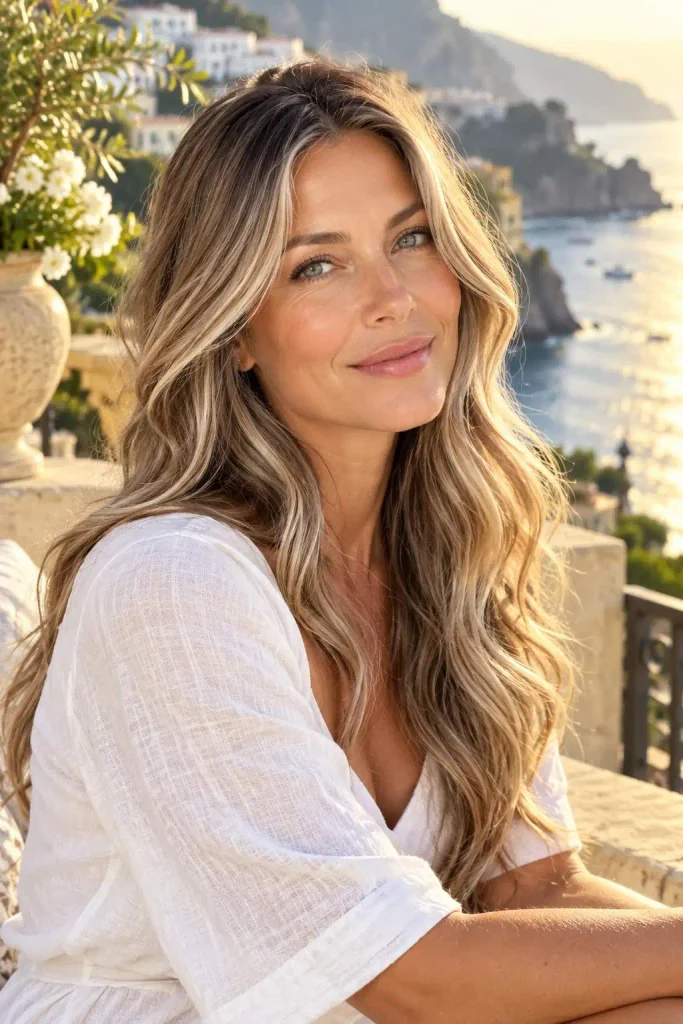
Rich espresso hair is accented with cool pewter and charcoal highlights chosen to sit comfortably against deep, golden-brown skin. Keeping the silver muted is the key to this look, since it avoids harsh contrast and gives the gray a brushed-metal sheen. Highlights should stay within two levels of the base, and a light oil on the lengths holds the shine.
17. Gray Blending on Dark Indian Hair
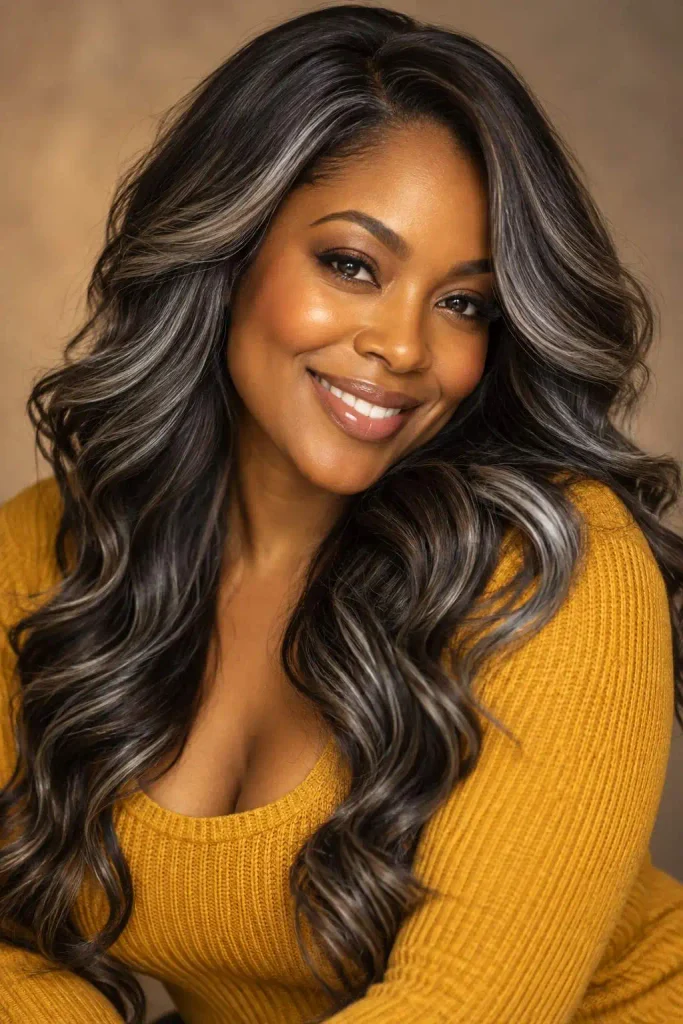
Thick, glossy black-brown hair is brightened with silvery-ash and smoky mocha strands painted through the lengths. This look hides the gray at the parting and stays free of brassiness when the lift is followed by a cool toner.
18. Gray Blending Dark Brown Over 50
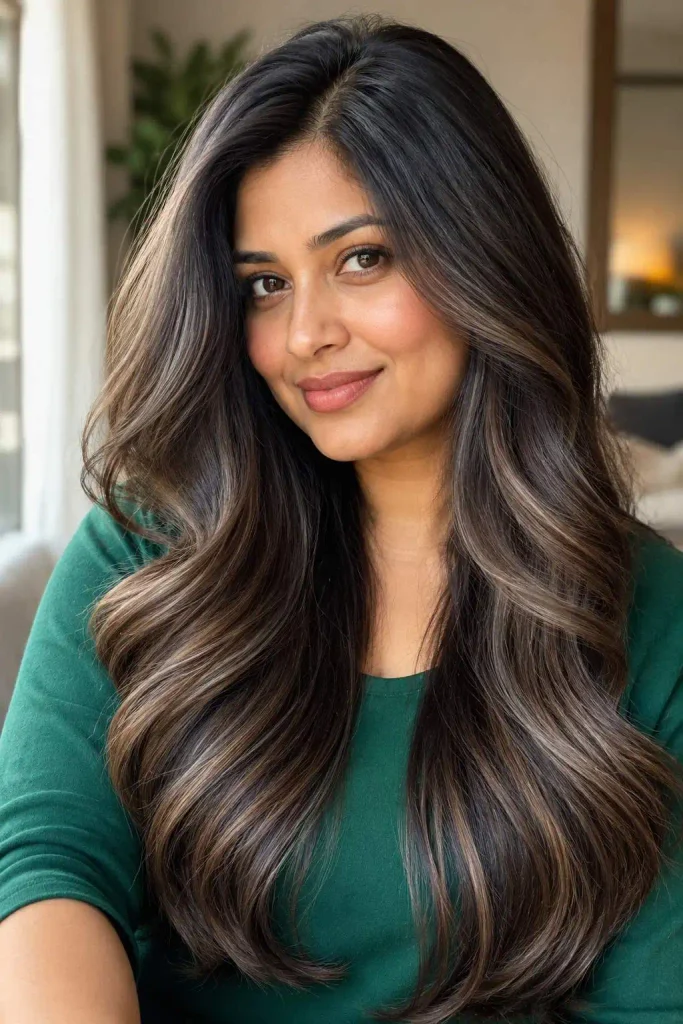
Delicate silver highlights and shadowy lowlights run through dark brown hair cut in shoulder-grazing, face-framing layers. The mix of tones eases harsh contrast and adds lift around the cheekbones while letting real gray show through. For this look, a round-brush blow-dry adds crown volume, and a lowlight refresh every twelve weeks keeps the balance.
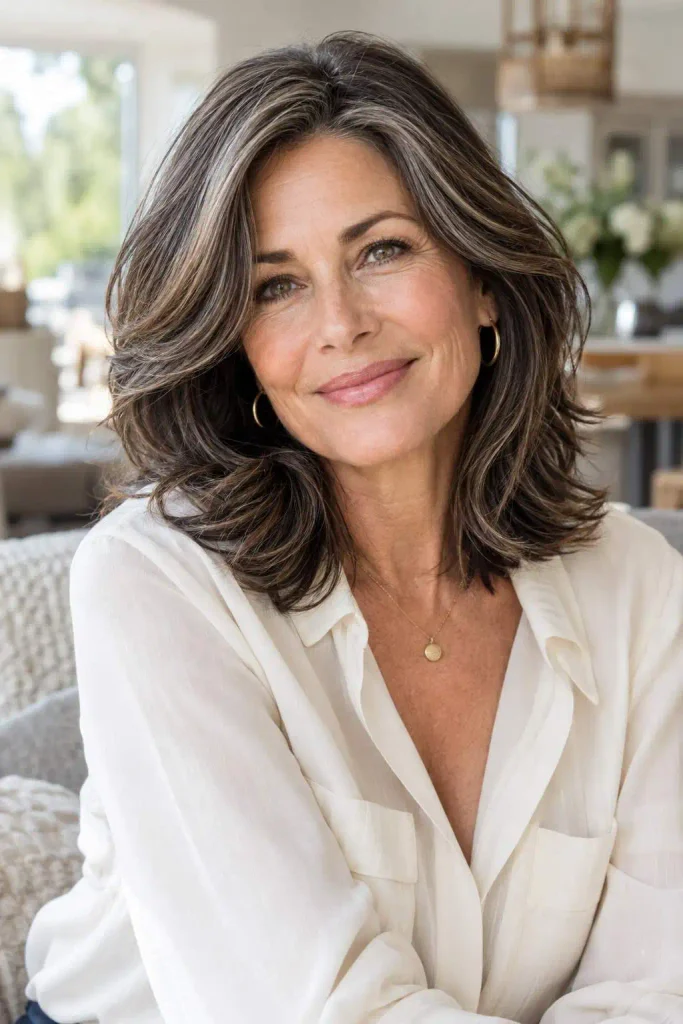
19. Gray Blending Without Bleach at Home
Semi-permanent gloss in cool espresso and ash tones is worked through dark hair, blurring the first silver strands into the surrounding color. No lightening is involved in this look, so the cuticle stays smooth and shiny.
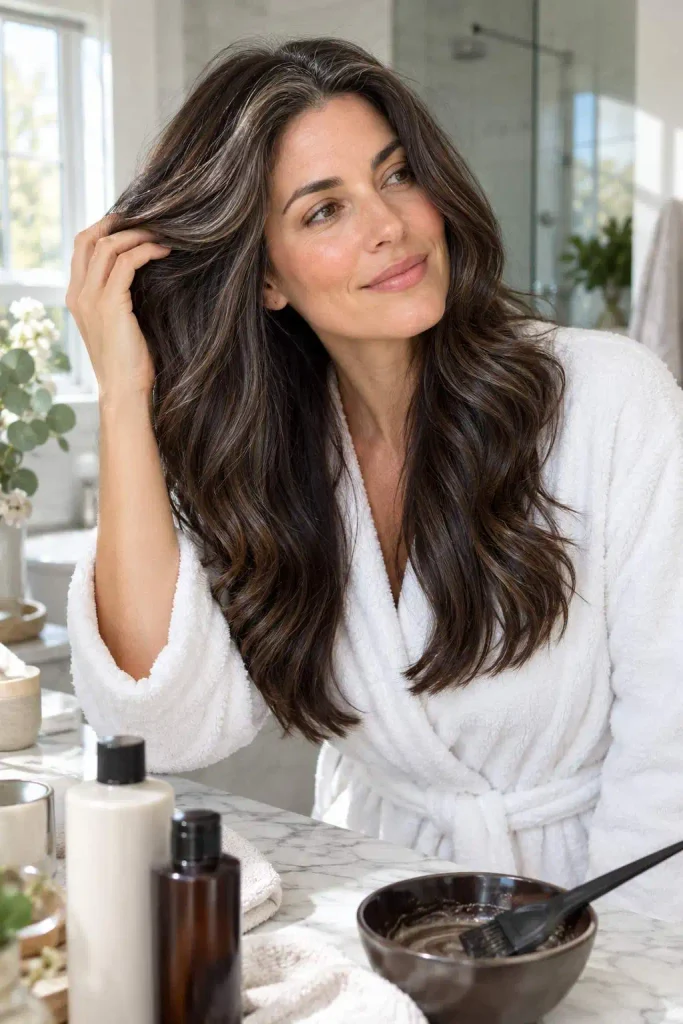
20. Growing Out Gray Blending Dark Hair
Dark brown lengths with a shadowed root and scattered silver highlights make the grow-out phase look planned. As gray advances from the parting, this look keeps the contrast low between the new silver and the remaining brown.
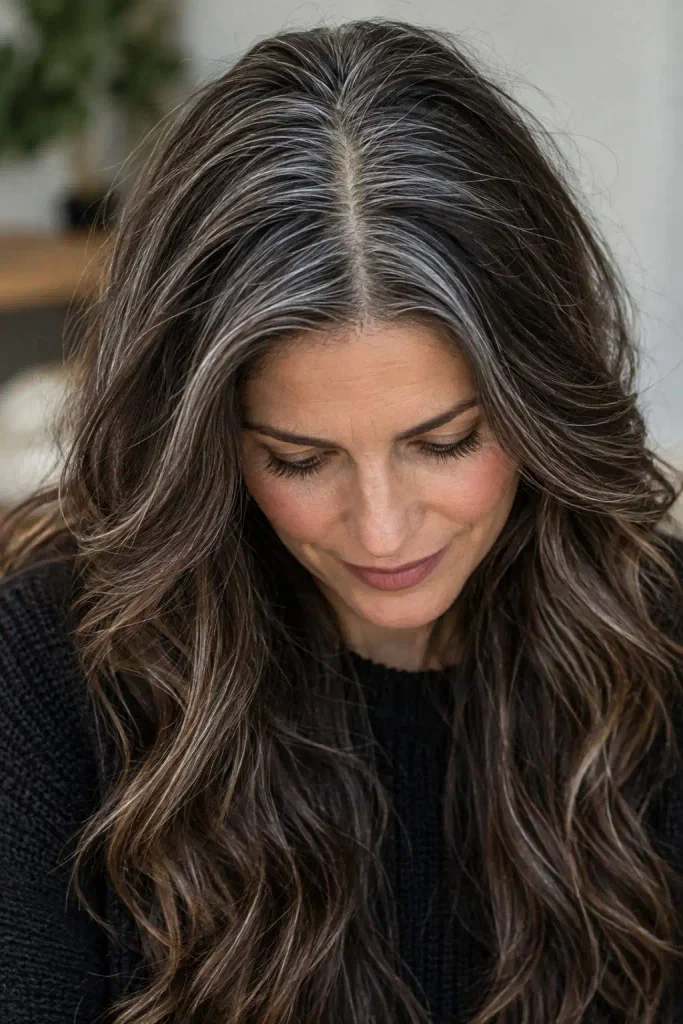
Styling and upkeep
Gray blending looks its best when the silver stays bright and the dark pieces stay deep. Wash with a sulfate-free shampoo for color-treated hair and keep the water lukewarm, since hot water fades the toner and lets the lowlights go flat. A purple shampoo once a week keeps the silver from turning yellow, but use it sparingly if your hair is mostly dark, because too much violet can dull the brown pieces. A toner or gloss at the salon every six to eight weeks refreshes both the highlights and the lowlights, and it is the easiest way to keep the blend looking deliberate as the gray grows in. Silver strands are often drier and coarser than the colored hair around them, so a rich conditioner or a weekly mask helps the texture stay even. Heat tools are fine at a moderate temperature with a heat protectant, but daily high heat fades the toner faster and makes the silver look brassy. When the roots grow in, the blend is designed to soften the line, so most people wait eight to twelve weeks between appointments, and a quick face-frame refresh is enough if the pieces around the parting start to look tired sooner than the rest.
Frequently asked questions
How long does gray blending last?
The blend is designed to grow out softly, so most people go eight to twelve weeks between full appointments. A toner or gloss every six to eight weeks keeps the silver bright and the lowlights rich in the meantime. Pieces around the face may need attention sooner, since that is where regrowth shows first.
Does gray blending work on very dark hair?
Yes, dark hair is a good starting point, because the contrast is what blending is made to soften. The colorist works with fine highlights close to your silver tones, so the result looks natural rather than stripey. Very dark hair may need more than one session to reach the lightest pieces without damage.
Is gray blending better than covering gray?
It depends on what you want. Covering gray gives a solid color and no visible silver, but the regrowth line returns in a few weeks. Blending lets some silver show and stretches the time between appointments to two or three months. Many people switch to blending when they are tired of dyeing their roots so often.
Will gray blending damage my hair?
Blending uses fine highlights, so only part of the hair is lightened, and a good colorist will work with a bond builder to protect it. The lightened pieces do need more moisture than the rest of your hair. Regular conditioning and keeping heat tools at a moderate temperature help the lengths stay in good shape.
How do I keep my silver from turning yellow?
Use a purple shampoo once a week if the silver starts to look yellow or brassy, and keep wash water lukewarm. A salon toner puts the cool tone back without more lightening. Sun and chlorine can also push silver warm, so rinse after swimming and use a hat or UV spray on bright days.
If one of these 20 looks matches the amount of gray you have and the way you want it to show, save two or three photos and take them to your next appointment. Pick images that match your hair length and how much silver is already coming in, and note which part of each one you like, whether it is the soft root, the fine highlights or the amount of silver left visible. Showing your stylist a small set of references makes it much easier to agree on the depth and the tone before the color is mixed, and it gives you both something concrete to come back to at the next visit.